
Key Takeaways:
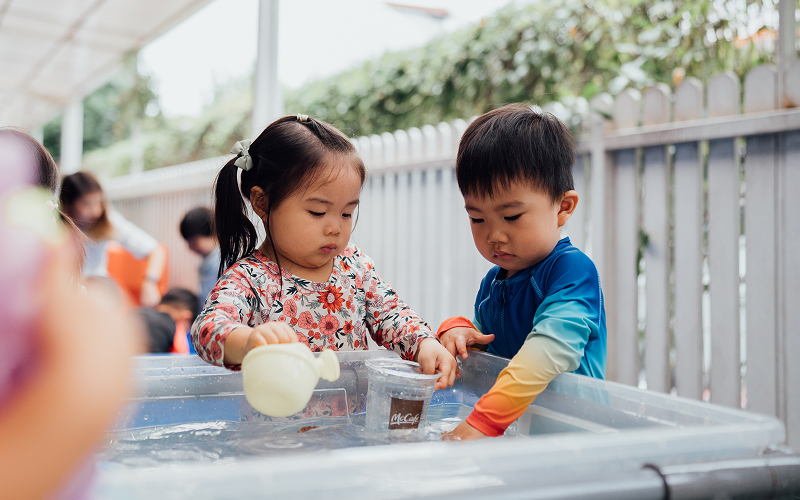
- Play-based learning helps children build thinking skills naturally through exploration, experimentation, and everyday discovery.
- Social interaction during play supports empathy, communication, cooperation, and emotional awareness in meaningful real-life situations.
- Open-ended experiences such as storytelling, construction activities, art, music, and movement encourage creativity, confidence, and independent thinking.
- Guided exploration allows children to remain curious and engaged while educators thoughtfully support reflection, problem-solving, and deeper understanding.
Introduction
Play is sometimes misunderstood as something separate from learning, when in reality, it is often how young children learn best.
Through play, preschoolers explore ideas, test possibilities, express emotions, build relationships, and make sense of the world around them in ways that feel natural and meaningful. A cardboard box becomes a rocket ship. A balancing game turns into problem-solving. A familiar song repeated during group time strengthens memory, rhythm, and communication almost without children realising it.
This is why play-based learning remains such an important part of early childhood education. Meaningful learning does not always happen through formal instruction alone. Often, it develops through curiosity, experimentation, conversation, movement, and the small everyday discoveries children make for themselves.
At Little Seeds Preschool, we value these moments as part of the learning journey itself. Rather than focusing only on outcomes, we believe children grow most meaningfully when they are given space to explore, question, create, and actively engage with the world around them.
How Play Supports Thinking and Problem-Solving
Children engage in surprisingly complex thinking during play, even when their activities appear simple on the surface.
Building with blocks encourages children to experiment with balance, proportion, weight, and spatial relationships. Outdoor play requires them to assess movement, adjust their actions, and respond to changing situations in real time. Even deciding how to organise materials during an activity involves planning, sequencing, and decision-making.
These moments may look effortless, yet children are constantly testing ideas, observing outcomes, and adapting their approach based on what happens next. A collapsing tower becomes an opportunity to rethink structure and stability. A game that does not go as planned encourages children to problem-solve, negotiate, and try again in different ways.
This is one of the strengths of learning through play in early childhood. Understanding develops through active participation and discovery rather than memorisation alone.
Within our learning environments, children are encouraged to revisit ideas, experiment freely, and work through challenges independently using open-ended materials and guided exploration. More than simply absorbing information, children learn how to question, connect ideas, and think more deeply about the world around them.
Learning to Relate to Others Through Play
Play creates some of the most natural opportunities for children to develop social and emotional understanding.
During collaborative activities, children learn how to negotiate roles, share materials, take turns, and navigate moments of disagreement. A pretend cafe game may involve deciding who will be the chef or the customer. A playground activity may require children to cooperate, wait patiently, or work through small conflicts together as they arise.
These interactions may seem ordinary, yet they help children build important life skills over time. Through shared play, preschoolers gradually learn how to recognise emotions, communicate their thoughts, respond to others with empathy, and regulate their reactions within group settings.
They also begin noticing how their actions affect those around them. A child who includes someone in a game experiences how kindness changes the group dynamic. A disagreement over toys becomes an opportunity to practise listening, compromise, and problem-solving in real time.
Within our values-based environment, these moments are not treated as interruptions to learning. They are part of the learning itself. This is one reason why a play-based preschool environment can support children’s social and emotional growth in ways that feel meaningful and lasting. Through everyday interactions, children are encouraged to develop respect, honesty, openness, and care within a supportive community of learners.
This is one of the meaningful benefits of play in early years education. Social understanding tends to grow most naturally through participation, observation, and authentic interaction rather than instruction alone.
How Play Encourages Creativity and Imagination
Open-ended play gives children the freedom to explore ideas without worrying about getting the “right” answer.
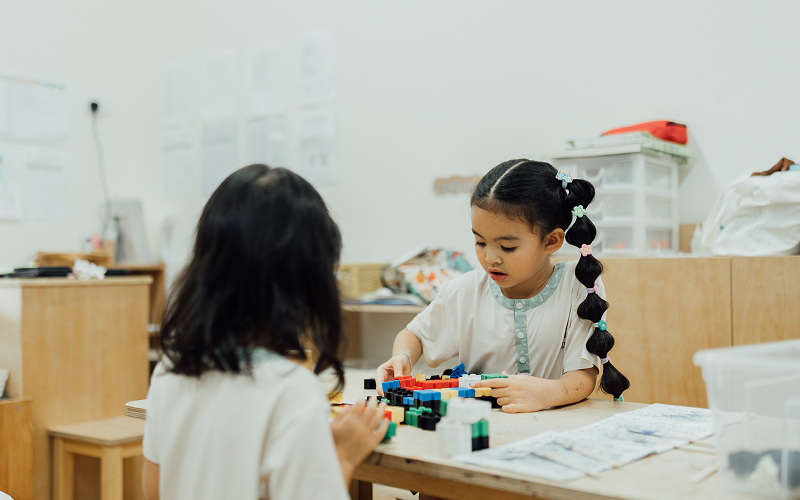
Arts and crafts activities encourage children to experiment with textures, colours, and materials while making their own creative choices. Construction play allows them to test designs, solve practical challenges, and think through different possibilities. Role-play activities invite children to imagine perspectives beyond their own as they create stories, characters, and situations together.
One child may transform loose parts into an imaginary city, while another creates an elaborate story around a collection of painted shapes. What matters is not producing identical outcomes but the thinking, experimentation, and self-expression that take place throughout the process.
Within play-based learning, creativity often develops most naturally when children feel safe to explore ideas openly, revisit them, and approach challenges in their own way rather than follow fixed instructions or expected outcomes.
We believe children express themselves differently and develop through different pathways. Thoughtfully prepared spaces, open-ended materials, and opportunities for exploration allow children to investigate ideas more freely while building confidence in their own creativity, thinking, and imagination.
Building Language and Communication Through Interaction
Play naturally creates meaningful opportunities for children to communicate.
Children talk while building structures together, negotiate roles during pretend play, and excitedly share discoveries made during outdoor exploration. Songs and rhymes introduce rhythm, vocabulary, and listening patterns in ways that feel engaging rather than instructional, while storytelling activities encourage children to organise ideas, express thoughts, and respond to others during conversations.
Because these interactions happen within emotionally meaningful and socially engaging experiences, children often communicate more confidently and authentically. Language becomes connected to curiosity, relationships, imagination, and shared experiences rather than repetition alone.
Group singing, for example, supports far more than musical enjoyment. Repetition strengthens memory and listening skills, while rhythm and rhyme help children recognise patterns connected to early literacy development. Storytelling and collaborative play also encourage children to experiment with new words, express emotions more clearly, and build confidence in sharing their ideas with others.
Over time, these everyday moments help children develop not only stronger communication skills but also a deeper understanding of how language helps them connect, collaborate, and participate within a group.
Supporting Physical Development Through Active Play
Movement forms an essential part of how young children learn and develop. Running, climbing, balancing, jumping, and navigating physical environments strengthen coordination, motor control, and body awareness. Yet active play also supports cognitive and emotional development in ways that are sometimes less visible.
Within play-based learning, movement often becomes an opportunity for children to test limits, build confidence, and respond to challenges independently. A child balancing across playground equipment is learning persistence, concentration, and self-adjustment alongside physical coordination. Climbing activities encourage children to assess risks carefully and adapt their actions based on experience, while running games develop spatial awareness, self-control, and awareness of others within shared spaces.
These moments may appear simple, but they involve constant decision-making, observation, and adaptation in real time.
We view development as deeply interconnected during the early years. Cognitive, emotional, social, and physical growth continually influence one another, which is why movement and exploration remain meaningful parts of our everyday learning experiences and broader preschool programmes.
Fostering Independence and Motivation Through Choice
Children often become more engaged in learning when they feel a sense of ownership over their experiences.
Choosing materials during an activity, deciding how to approach a challenge, or following a personal interest during exploration helps children gradually build confidence, independence, and self-motivation. These moments encourage children to see themselves as active participants in learning rather than passive recipients of instruction.
Even small decisions can carry a meaningful impact. A child deciding how to build a structure, organise materials, or continue an activity after encountering difficulty is learning to think independently, make choices, and persist through challenges.
This forms an important part of child-led learning through play, where children are given space to explore their interests while still being thoughtfully supported by educators who understand when to observe, when to guide, and when to extend learning through gentle interaction.
We recognise that every child develops differently and brings unique ways of thinking, expressing, and exploring into the classroom. Respecting these differences helps children approach learning with greater confidence, curiosity, and genuine engagement over time.
Why Guided Play Makes Learning More Meaningful
Play may be child-led, but the educator’s role remains deeply important throughout the learning process.
A well-timed question can encourage a child to think more deeply about an idea. Introducing a new material may extend an activity in an unexpected direction. Sometimes, meaningful guidance comes through quiet observation, recognising when to step back and allow children to continue exploring independently.
Within play-based learning, this balance between freedom and guidance helps learning remain purposeful without taking away the child’s sense of curiosity and discovery. Children are encouraged to explore ideas openly, while educators support them in making connections, solving problems, reflecting on experiences, and revisiting their thinking over time.
Our pedagogy draws inspiration from the Reggio Emilia approach, where the child, the teacher, and the environment are viewed as interconnected parts of the learning journey. Rather than rushing children towards fixed answers, we value exploration, reflection, creativity, and authentic experiences that allow learning to unfold more naturally through relationships and discovery.
Growing Through Play Every Day
Play may appear simple from the outside, yet beneath these everyday moments, children are constantly learning how to think, communicate, adapt, and relate to the world around them.
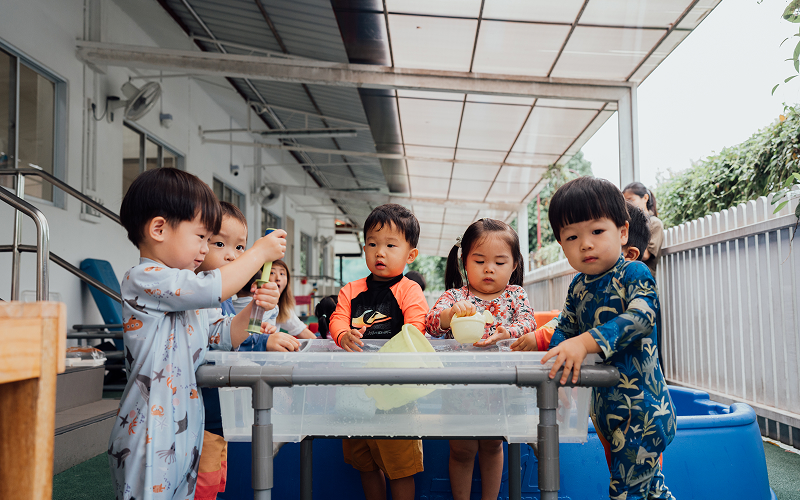
Through climbing, storytelling, creating, singing, building, and collaborative exploration, children develop skills that extend far beyond the preschool years. These experiences help nurture confidence, curiosity, resilience, empathy, and a lasting sense of engagement with learning itself.
At Little Seeds Preschool, we believe children grow most meaningfully when they are supported by caring relationships, thoughtful experiences, and environments that respect their individuality and developmental pace. Play remains an important part of how children discover their strengths, build connections with others, and engage more confidently with the world around them.
If you would like to learn more about how Little Seeds Preschool nurtures children through exploration, values-based learning, and authentic everyday experiences, visit one of our centres or enquire with our team today.

