
Key Takeaways:
- Effective communication skills are a vital tool for preschoolers to navigate shared spaces and seek support, helping them feel secure and understood in the classroom.
- Supporting language development involves recognising that children communicate through a blend of words, gestures, and behaviour, requiring adults to respond with patience and thoughtful observation.
- A play-based learning approach creates natural opportunities for children to practise negotiating roles and expressing needs, which helps link language skills to real-life social situations.
- Consistency between home and school environments reinforces a child’s confidence, as similar language expectations in both settings help them articulate their needs more clearly.
Introduction
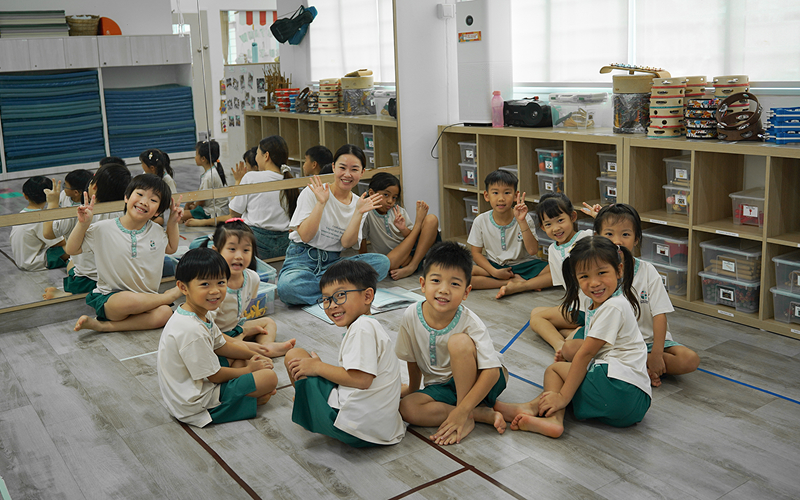
Young children often know what they need but struggle to express it clearly. In a bustling classroom, preschoolers are learning to navigate shared spaces, communicate with peers, and seek support from teachers. When supported to express their needs with clarity and confidence from an early age, children feel more secure and understood. Developing strong communication skills in preschoolers is, therefore, essential for their active participation and emotional well-being.
At Little Seeds Preschool, communication acts as a vital bridge, empowering children to participate meaningfully in their learning environment and find their unique voice.
Why Clear Communication Matters in the Early Years
Effective communication skills provide preschoolers with a crucial buffer against frustration, enabling them to navigate the complexities of a group environment more smoothly. When children can express their needs, whether by asking for help with a difficult puzzle, sharing a new idea, or setting a boundary with a peer, they are significantly less likely to withdraw or act out when misunderstood.
This progress marks a key aspect of language development in preschoolers, as they learn to translate internal feelings into external requests. By articulating their thoughts, children move from reactive behaviours to proactive engagement with those around them.
These early skills support both emotional well-being and positive social interaction, forming the core of a child’s social-emotional competence.
At Little Seeds Preschool, we recognise ‘Communicating’ as one of the seven essential life skills identified through brain development research, which are crucial for success in both school and life. By mastering the ability to articulate their needs, children build a strong foundation for a lifetime of healthy relationships, confident problem-solving, and positive classroom experiences.
Understanding How Preschoolers Communicate Their Needs
Young children are multimodal communicators, often combining words, gestures, tone of voice, and behaviour. Misunderstandings often arise when a child’s language development hasn’t quite caught up with the complexity of their intended message. Developing strong communication skills in preschoolers means bridging this gap between intention and articulation.
Recognising these early signals, such as a tug on a sleeve or a specific facial expression, enables adults to respond thoughtfully. This respectful approach aligns with Little Seeds’ belief in observing and listening closely to each child, ensuring they feel seen even before they have the perfect words.
Creating a Classroom Culture That Encourages Expression
Children are more likely to speak up when they feel safe and accepted within their learning environment. A classroom culture that values listening, patience, and respectful responses encourages children to take the social risk of expressing themselves, a step fundamental to their personal growth.
At Little Seeds Preschool, we believe in celebrating each child’s unique ideas and expressions, ensuring they feel their voice is valued from the very start.
Within the Little Seeds Preschool curriculum, consistent routines and calm interactions create a predictable environment where children can thrive. We intentionally engage in unhurried conversations about life and its challenges, giving children the space they need to articulate complex thoughts.
When children know they will not be judged for a “wrong” word or a hesitant request, they gain the courage to share their needs and ideas openly. This nurturing space allows us to respect each child’s unique way of expressing themselves and tailor our learning approach to suit their individual needs better.
Supporting Language Development Through Everyday Interactions
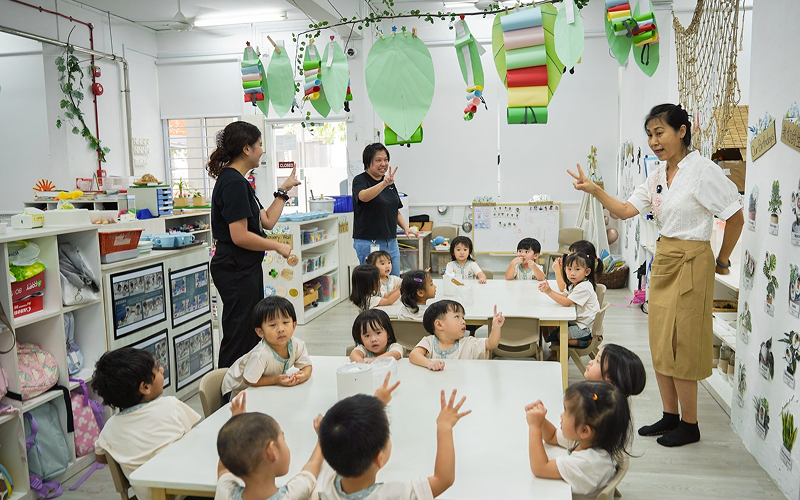
Everyday interactions provide natural opportunities to model clear and respectful communication. A few simple practices can be highly effective:
- Rephrasing: Gently rephrasing a child’s words with slightly more structure helps them grasp proper syntax.
- Emotional Vocabulary: Introducing words such as ‘frustrated’ or ‘excited’ helps children to label their internal states, fostering their social-emotional competencies.
- The Power of the Pause: Allowing children ample time to process and respond, without rushing them, is crucial for fostering their self-directed learning.
These techniques collectively enable children to gradually articulate their needs in ways that are easily understood by others.
Using Play and Group Activities to Practise Communication
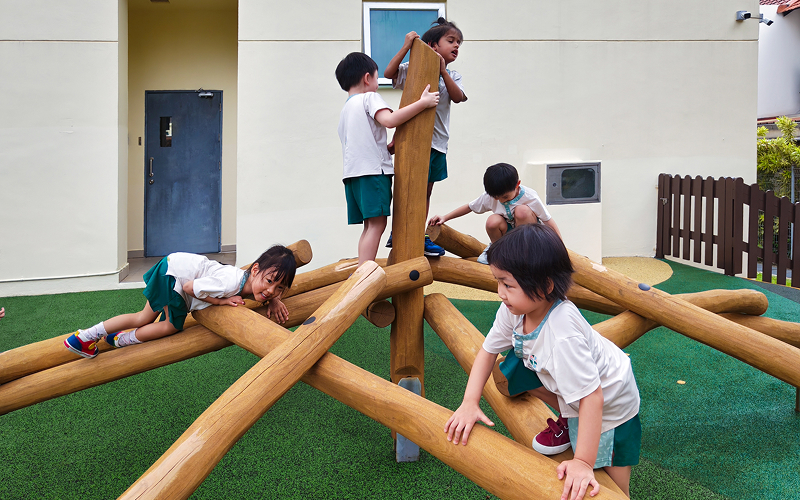
Play-based learning offers the most meaningful context for children to practise their developing skills. Through activities such as dramatic role-play at a ‘grocery store’ or collaborative building projects in the block corner, play encourages children to:
- Negotiate roles and responsibilities with their peers.
- Ask clarifying questions to gain a clearer understanding of shared goals.
- Express changes to their plans or propose new ideas during collaborative tasks.
These experiences help children connect language with real-world situations in a natural, engaging way that formal lessons simply cannot match.
Navigating Two Worlds: The Bilingual Experience
Children in a bilingual preschool in Singapore are often navigating two languages simultaneously, leading to unique communication needs. Switching between English and Mandarin (or other mother tongues) demands significant cognitive flexibility. It is not uncommon for a child to know a word for a need in one language but not the other.
We celebrate this linguistic journey, providing a supportive space where “code-switching” is recognised as a stepping stone towards fluency. Supporting classroom communication skills in a bilingual context means being doubly patient and encouraging as children learn to express themselves across different cultural and linguistic settings.
Responding to Children With Gentle Guidance
When children struggle to find the right words, gentle guidance is more effective than direct correction. Instead of saying, “That’s not how you ask,” a teacher might say, “Are you trying to say you would like a turn?”
Acknowledging their effort and offering simple sentence structures preserves their confidence. At Little Seeds, we are committed to guiding children thoughtfully rather than speaking on their behalf, empowering them to eventually articulate their thoughts.
The Role of Consistency Between Home and School
Consistent communication practices across home and school help reinforce learning and provide a stable foundation for a child’s growth. When children experience similar language expectations and supportive listening in both settings, their confidence soars because they feel consistently understood.
We work closely with parents as a child’s first teachers, building upon the foundations already laid at home and inviting families directly into the learning process.
This partnership reflects our deep commitment to collaborating with families to support children holistically. By aligning our approaches, we ensure that the “voice” children find at school carries over into their home life and vice versa.
This shared commitment helps us intentionally nurture every child’s development and well-being, ensuring they feel valued and ready to engage with the world around them.
Conclusion
Helping young children express their needs clearly is an essential part of supporting their growth. Through respectful listening, supportive language, and meaningful practice, preschoolers develop the communication skills needed to gain confidence and engage with the world.
At Little Seeds Preschool, fostering clear communication is part of nurturing children who feel understood, valued, and ready to contribute to their learning community. As a faith-based, bilingual preschool in Singapore, we are dedicated to celebrating each child’s unique potential.
Our play-based approach supports the development of essential life skills, including perspective-taking and effective communication. With 17 centres nationwide catering to children from 6 months to 6 years old, we invite you to see how our curriculum can support your child’s journey.
Are you ready to join our community? Enquire today to learn more about our programmes and find the perfect nurturing space for your child to grow.

