
Key Takeaways:
- Early learning is shaped as much by values as by academic exposure, influencing how children think, behave, and relate to others over time.
- Social and emotional growth develops through everyday interactions, where children learn to recognise feelings, respond thoughtfully, and build meaningful relationships.
- Resilience and adaptability are strengthened through real experiences, allowing children to approach challenges with patience, reflection, and confidence.
- Values education provides a lasting foundation that supports both personal development and a positive, lifelong relationship with learning.
Introduction
In early childhood, we are often tempted to measure learning by visible milestones like recognising letters or counting numbers. While these milestones offer a sense of progress, they only tell part of the story. For preschoolers, the most crucial foundations extend beyond academic achievements; they encompass the values that shape their self-perception, their interactions with others, and their responses to challenges. Values education, therefore, provides children with a stable moral and emotional framework that supports them well beyond their early years.
At Little Seeds Preschool, we view education as preparation for life itself, rather than merely a stepping stone to the next academic stage. Each child comes with abundant potential, and our learning approach is designed to honour their original design and nurture this potential through meaningful experiences. We value the journey of growth, recognising that the most profound and lasting impact on a child’s development often extends beyond academic learning.
Why Values Education Forms a Stronger Foundation Than Early Academics
While early academic skills are important, they do not consistently provide a lasting advantage as children grow. Over time, differences in reading and numeracy levels tend to equalise, especially once formal education becomes more structured. Values, however, continue to shape how children think, behave, and interact with the world around them.
As children acquire kindness, honesty, and responsibility, these qualities begin to guide their everyday decisions. For example, a child who understands fairness is more likely to consider others during play, and one who practises responsibility develops a growing sense of ownership over their actions.
At Little Seeds Preschool, we place character formation alongside academic learning, not secondary to it, ensuring that both develop together in a balanced way. Our curriculum is specifically designed to cultivate essential life skills and a lasting love for learning through a values-based approach.
How Values Education Supports Social and Emotional Growth
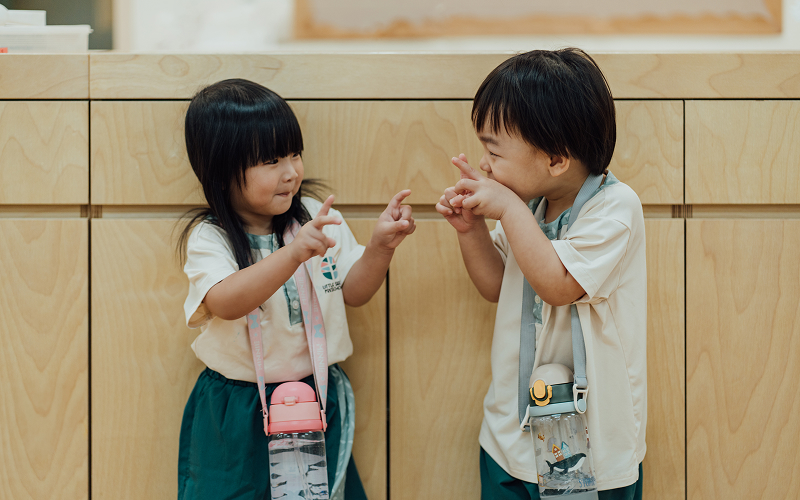
Social and emotional development does not happen in isolation. Instead, it unfolds through repeated interactions, small conversations, and moments that invite children to pause and reflect. In preschool, social-emotional learning experiences help children begin to recognise their own emotions while learning to understand those of others.
In practice, this may look like a teacher guiding a child through a moment of frustration, helping them put words to their feelings. Alternatively, it might involve children working through a disagreement, learning to listen, respond, and find a way forward together. These experiences support character development in early childhood, allowing children to build empathy, patience, and respect through real situations rather than abstract instruction.
Respectful interaction is not treated as a separate lesson. It is embedded in daily routines and relationships, where children learn through doing, observing, and reflecting.
Building Resilience and Adaptability Through Everyday Experiences
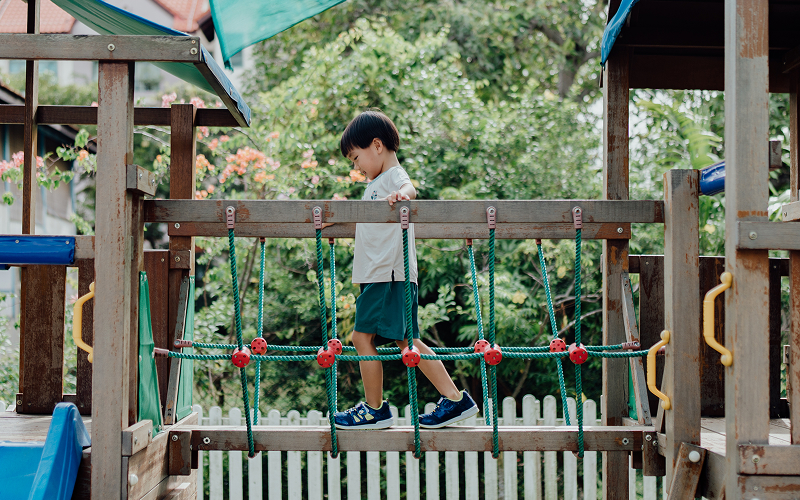
Daily life in a preschool setting naturally presents children with challenges. They might need to wait for a turn, adapt to a change in routine, or try again when something does not work out the first time. While these moments may seem small, they are crucial in shaping how children respond to difficulties.
Through values education, we support children in approaching these situations with patience and perseverance. Instead of focusing on immediate success, we encourage effort, reflection, and gradual improvement. Over time, children come to understand that mistakes are a natural part of the learning process, rather than something to be avoided.
This approach also fosters the development of executive function skills such as focus, self-control, and cognitive flexibility. These abilities empower children to manage impulses, consider different perspectives, and adapt to changing circumstances, laying a vital foundation for both learning and everyday life.
The Role of Play and Experience in Values Learning
Values cannot be effectively taught through memorisation or instruction alone. Instead, they are forged through experiences that enable children to practise them meaningfully. In a play-based learning environment, children naturally encounter situations requiring cooperation, negotiation, and shared decision-making.
For instance, when children build something together, they learn to listen to diverse ideas and collaborate towards a common goal. Through imaginative play, they adopt different roles, which helps them grasp perspectives beyond their own. Such experiences foster the natural development of values like empathy and fairness, rather than them being imposed externally.
At Little Seeds Preschool, learning is child-led and teacher-supported, with the environment actively shaping experiences. Open-ended materials and thoughtfully designed spaces encourage exploration and collaboration, enabling children to engage deeply with their learning and develop crucial social and emotional skills.
Why Values Education Encourages Lifelong Learning
A child’s approach to learning begins to form early, influenced by their experiences of success, challenge, and support. When children feel respected and capable, they are more inclined to engage with learning with curiosity and confidence.
Through holistic early childhood education, we cultivate positive learning dispositions such as persistence, responsibility, and openness to new experiences. These qualities naturally bolster academic development over time, as children become more willing to engage, ask questions, and persevere through challenges.
Rather than accelerating early academic outcomes, our approach centres on building a strong internal foundation. Children who develop these dispositions typically carry them forward, fostering a more consistent and meaningful learning journey as they grow.
Preparing Children to Participate Thoughtfully in Society
Children learn about community from their earliest group experiences. In a preschool setting, they have opportunities to share, cooperate, and contribute to a shared environment. These interactions help them understand they are part of something larger than themselves.
Through everyday routines and relationships, children experience values such as unity, integrity, and respect. They learn to appreciate differences, communicate openly, and build trust with others. At Little Seeds, we intentionally foster a sense of belonging, where each child is recognised and valued, and learns to support those around them.
Within our holistic preschool environment, these experiences help children grow into individuals who can participate thoughtfully and respectfully in their communities.
Conclusion
While early academics introduce important skills, they alone do not define a child’s long-term development. Instead, values provide the framework that gives these skills meaning, guiding children in applying what they learn in real-world contexts.
Values education remains central to the design of our preschool curriculum, shaping both the learning environment and the experiences within it. By focusing on character, relationships, and lived experiences, we help children grow into grounded, compassionate, and confident individuals.
If you are seeking a preschool that offers a thoughtful, balanced approach to your child’s development, we invite you to connect with Little Seeds Preschool and discover more about how we support each child’s unique journey.

