
Key Takeaways:
- The role of preschool teachers focuses on guiding children’s learning through experience and interaction
- A child-centred teaching approach supports deeper engagement and confidence over time
- Guided learning encourages children to think independently while feeling supported
- Strong relationships and a nurturing environment play a central role in early development
Introduction
In the early years, learning is shaped not only by what children are introduced to but also by how they are supported as they explore, question, and make sense of the world around them. This is precisely why the role of preschool teachers is so crucial. Instead of focusing solely on instruction, we adopt a guiding approach that enables children to engage actively in their own learning while receiving support at every stage.
At Little Seeds Preschool, we understand that every child possesses unique strengths, interests, and ways of understanding. Our aim is to acknowledge these individual differences and respond with care, crafting experiences that allow each child to flourish at their own natural pace.
When children are empowered to participate rather than merely follow, learning becomes a profound experience they truly own, not something they simply encounter.
Why Early Learning Is About the Process, Not Just Content
It is easy to assume that early education focuses solely on introducing foundational knowledge. Yet much of what children truly gain at this stage stems from how they learn, rather than what they learn. When children are encouraged to explore ideas, test possibilities, and revisit experiences, they begin to develop enduring habits of thought.
In our classrooms, our emphasis is on the learning process itself. This reflects a child-centred teaching approach, meaning children are not expected to progress in the same way or at the same pace. Instead, we observe how they engage and build upon that, allowing learning to unfold in a way that feels meaningful and connected to their individual experiences.
Over time, this helps children become more confident when approaching new situations, as they are accustomed to thinking, adapting, and trying again.
How We Cultivate Curiosity Through the Learning Environment
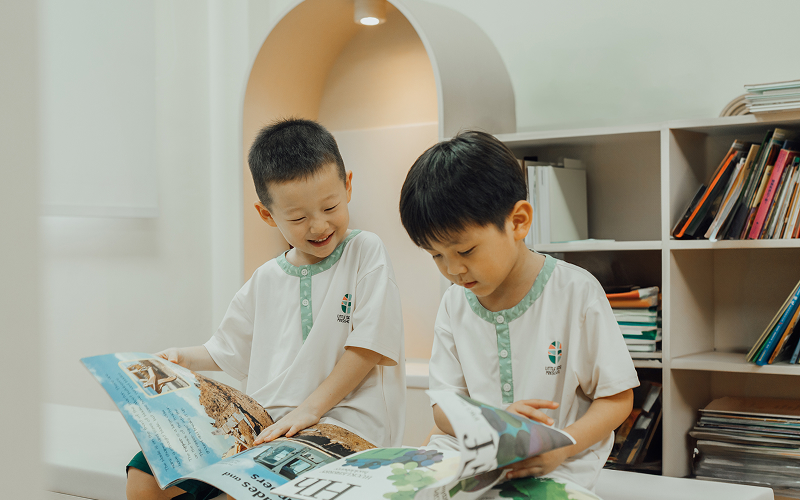
The environment plays a quiet but powerful role in shaping children’s learning. When spaces are thoughtfully prepared, they invite children to explore independently. This involves ensuring materials are accessible, activities are open-ended, and there is ample room for children to move freely between ideas as their curiosity develops.
Our approach is influenced by the Reggio Emilia philosophy, which views the environment as an active participant in the learning experience. Consequently, every element children encounter daily, what they see, touch, and interact with, is carefully considered to support exploration and discovery.
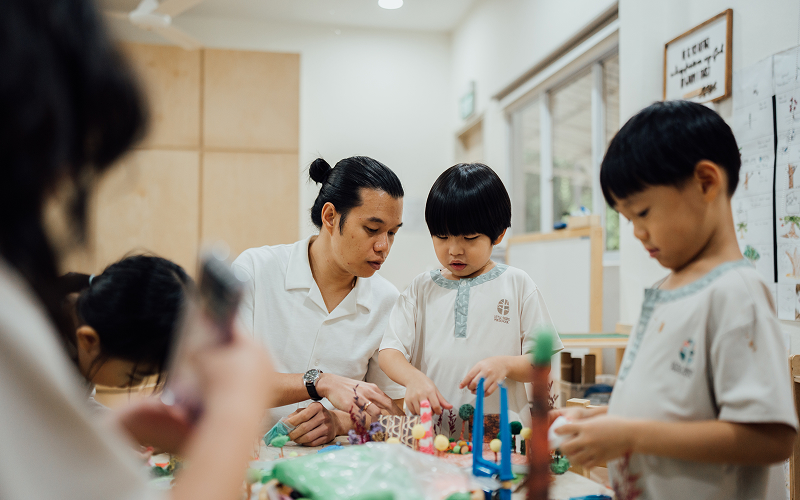
In this setting, we serve as teacher-facilitators. We observe what captures a child’s interest and thoughtfully extend it, rather than introducing something entirely separate. A moment of curiosity can thus become the starting point for deeper learning when given time and attention. This approach keeps children engaged, as the learning feels directly connected to their own thoughts and questions.
Supporting Learning Through Observation and Thoughtful Guidance
Observation is fundamental to guiding children’s learning, embodying the preschool teacher’s role in fostering development with intention and care. It allows us to understand not merely what a child is doing, but how they approach situations, respond to challenges, and interact with others.
Rather than stepping in with immediate answers, we often guide through prompts and conversation. For instance, during free play, a child’s block tower collapses, and we might ask, “What could you try differently?” Nearby, when two children reach for the same materials, we guide them to pause, share what they each had in mind, and find a way forward together. This approach characterises guided learning in preschool, where support is always present but never overrides the child’s own thought process.
In this way, children gradually become more confident in exploring ideas independently. They begin to view challenges as opportunities to work through, rather than obstacles to avoid. This subtle shift is crucial for building resilience and self-assurance over time.
Fostering Autonomy and Ownership in Young Learners
Children develop a sense of autonomy when they feel their choices and contributions are valued. In our daily routines, we create opportunities for them to make decisions about how they engage with activities, approach tasks, and express their ideas.
This does not mean that learning is unstructured. Instead, within a supportive framework, children are given the space to participate actively. As they experience this repeatedly, they begin to recognise their own abilities and develop a sense of ownership over what they are learning.
Over time, this cultivates a deeper sense of confidence. Children are not simply completing tasks; they are actively involved in the process, making decisions and observing the outcomes of their own efforts. This kind of engagement supports both motivation and self-awareness in a way that more directive approaches often do not.
Building Strong Relationships as the Foundation for Guidance
Effective guidance stems from strong relationships, and this forms the core of a preschool teacher’s role in shaping a child’s early learning experience. Children are more likely to engage, express themselves, and participate in learning when they feel secure and understood.
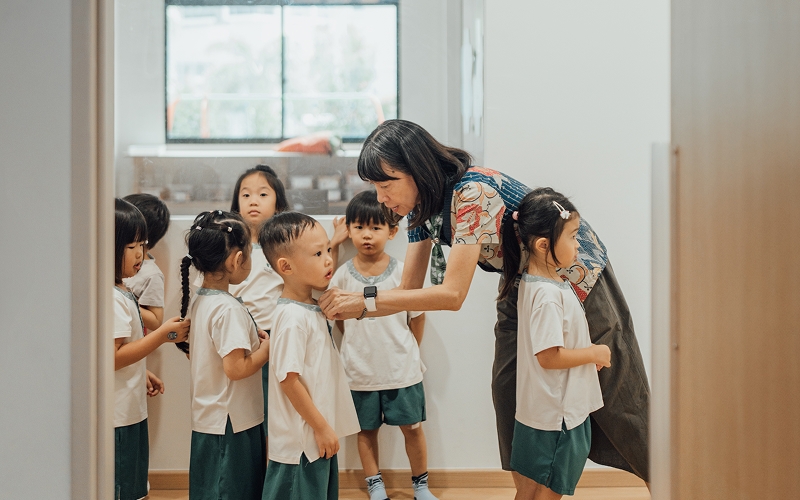
At Little Seeds Preschool, we prioritise building these connections. We dedicate time to understanding each child’s personality, interests, and emotional cues, enabling us to respond consistently and supportively. This familiarity helps children feel at ease, which in turn fosters deeper engagement in learning.
Beyond the classroom, we extend this care throughout our wider community. Our pastoral support reflects our commitment to creating a nurturing environment not only for children but also for their families, recognising that a child’s development is closely linked to the relationships around them.
Supporting Social and Emotional Growth Through Guided Interaction
Social and emotional development is woven into everyday experiences. Within these daily interactions, such as moments of sharing, negotiating, and expressing feelings, lie valuable learning opportunities.
We carefully guide children through these moments, helping them to understand their own emotions while recognising the perspectives of others. Through conversation and modelling, children learn how to communicate more clearly, respond with empathy, and work through challenges with others.
As these experiences gradually build, children become more aware of how their actions affect those around them. They begin to develop the skills needed to navigate relationships thoughtfully and respectfully.
Why Guiding Prepares Children for Lifelong Learning
When learning is shaped through exploration, reflection, and guided support, children begin to develop skills that extend beyond the classroom, underscoring the vital role of preschool teachers in creating meaningful learning experiences. Curiosity, persistence, and the ability to think through problems are cultivated through repeated experiences that actively encourage children’s engagement.
Our curriculum is designed with this in mind. We focus on developing essential life skills such as communication, critical thinking, and self-directed learning, recognising these as the foundation for future growth.
As a faith preschool, we also emphasise values and character, ensuring that learning supports not only cognitive development but also a sense of purpose and identity. Within a nurturing preschool environment, children receive support that respects their individuality and fosters their growth into thoughtful and capable individuals.
Conclusion
We see each child as an individual on their unique journey of growth, and our role is to walk alongside them as they explore and learn. Through careful observation, thoughtful guidance, and strong relationships, we cultivate an environment where children feel supported to participate, ask questions, and discover new ideas.
At Little Seeds Preschool, this philosophy informs our daily interactions with children. By focusing on meaningful experiences and consistent guidance, we aim to support not only what children learn but also how they develop as learners and as individuals.
If you are looking for a preschool environment that values balanced learning and development, we invite you to get in touch and discover more about how we can support your child’s journey.

