
Key Takeaways:
- Social development in preschoolers grows gradually through everyday group experiences, not instant results.
- Young children may find group settings overwhelming at first, especially when managing emotions and communication at the same time.
- Consistent routines, gentle guidance, and positive role modelling help children feel more secure and confident around others.
- Play, reflection, and guided interactions give children practical ways to build empathy, cooperation, and problem-solving skills.
Introduction
Learning to be part of a group is a quiet but important milestone in early childhood. For many young children, entering a shared space brings a whole new set of experiences. There are conversations happening all around them, turns to take, and emotions to navigate, often all at once. It can feel unfamiliar, and at times, a little overwhelming.
This is where social development in preschoolers begins to unfold in a more meaningful way. With steady guidance and familiar routines, children slowly learn how to participate, not just by being present, but by engaging with others thoughtfully and confidently.
At Little Seeds Preschool, group experiences are introduced gently, giving children the space to observe, participate at their own pace, and grow within a calm and supportive environment.
Why Group Settings Can Feel Overwhelming at First
Being part of a group is often more complex than it seems. A child isn’t simply playing alongside others; they are simultaneously learning how to express their needs, respond to different personalities, and adapt to shared expectations.
Some children may initially hold back, quietly observing and absorbing their surroundings. Others may find it difficult to wait, share attention, or find the words to communicate. These differences, shaped by temperament, language development, and confidence, influence each child’s experience of preschool peer interaction.
Recognising these challenges naturally leads to a more thoughtful response. Rather than expecting children to adjust immediately, adults can offer space, patience, and gentle support. A quieter child might be given time to observe before participating, while a more expressive child may be guided to pause and listen.
Within a nurturing preschool environment in Singapore, this balanced approach allows children to progress at their own pace. Gradually, what once felt overwhelming becomes more familiar, and children grow into group experiences with greater ease and confidence.
Building Emotional Awareness in Everyday Moments
Before children can navigate social situations, they first need to understand their own emotions. This growing awareness quietly lays the foundation for smoother, more confident interactions as they develop.
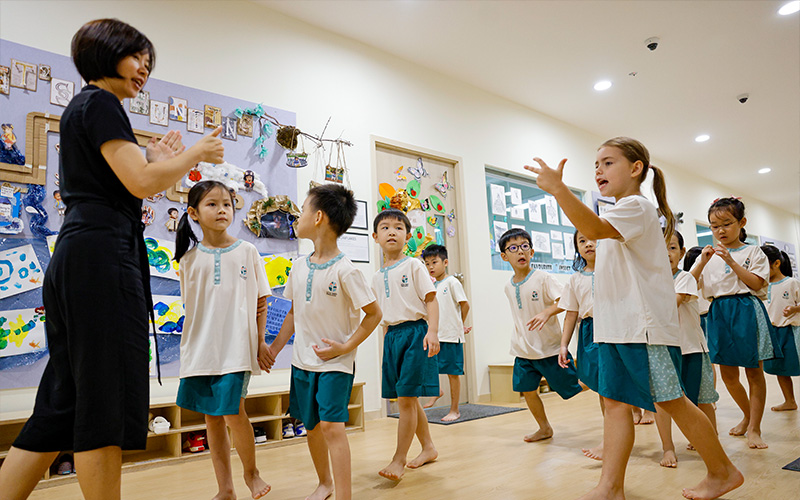
Often, it’s the small, everyday moments that leave the deepest impression. A teacher gently naming a feeling during a disagreement, a child pausing to notice that a friend seems upset, or a short, unhurried conversation after play to help make sense of what just happened. These moments may seem simple, yet they slowly shape how children understand themselves and those around them.
Stories and role-play offer another gentle pathway. Through these experiences, children begin to see situations from different perspectives, even if only in small ways at first. Over time, this encourages more thoughtful responses during group play in early childhood, where emotions and interactions naturally overlap.
At Little Seeds Preschool, these moments aren’t treated as separate from learning. Instead, they’re woven into the daily routine through respectful dialogue and shared reflection, supporting preschoolers’ social development in a way that feels natural, steady and meaningful.
How Children Learn Social Behaviour by Watching Others
Children learn a great deal by observing the adults around them. The way a teacher listens, responds, and interacts subtly demonstrates how relationships work.
For instance, a calm tone during a tense moment shows how to manage strong emotions, while taking the time to listen fully demonstrates respect. Even small gestures, such as acknowledging effort or thanking a child for waiting, begin to shape how children interact with one another.
This kind of modelling often speaks louder than instructions. Over time, children begin to mirror what they see, adopting similar behaviours and building their confidence in social situations through observation and repetition.
Such an approach aligns naturally with Reggio Emilia-influenced environments, where relationships are seen as central to learning and development.
Using Play as a Natural Way to Practise Social Skills
Play provides a space for children to practise social skills in a low-pressure environment. It offers sufficient structure to guide interaction, while still allowing room for exploration.
Activities with shared goals or clearly defined roles can be particularly beneficial. A simple storytelling circle, a collaborative building project, or a turn-taking game encourages children to engage with each other in manageable ways, making it easier to support them in group settings.
Through play, children begin to test their understanding, learning when to speak, when to listen, and how to react when things don’t go as planned. Some interactions may flow smoothly, while others may be less successful, but both are valuable parts of the learning process.
With time and repetition, these experiences help children to become more comfortable and confident in group environments.
Guiding Children Through Conflict with Care
Disagreements are a natural part of group activities. Whether it’s sharing toys, differing ideas, or quickly escalating emotions, these moments, though challenging, provide valuable opportunities for growth.
Instead of immediately intervening, gently guiding children allows them to navigate these situations with support. A teacher might help a child articulate their feelings, encourage them to consider another viewpoint, or steer them towards a mutually agreeable solution.
This approach isn’t about avoiding conflict, but about learning from it. Children begin to realise that disagreements can be resolved, and that they can express their feelings in a way that is heard and respected.
In well-designed preschool programmes, these everyday moments become crucial building blocks for developing empathy and problem-solving skills.
Why Routines Help Children Feel More Secure in Groups
Consistency fosters a sense of safety. When children know what to expect, they can focus on interacting with others, rather than navigating uncertainty.
Simple routines, visual cues, and predictable transitions all contribute to this stability. A familiar daily flow, clear expectations during group time, and gentle signals for transitioning between activities help children feel more at ease.
This structure supports preschoolers’ social development by reducing anxiety about what comes next. As a result, children participate more confidently in shared experiences.
At Little Seeds, carefully prepared routines provide this steady framework, allowing children to engage comfortably within a group environment.
A Gentle Approach to Growing Together
Social confidence doesn’t appear overnight. It builds slowly, shaped by everyday experiences, supportive relationships, and time.
This is where social development becomes more visible in preschoolers. Through repeated opportunities to interact, reflect, and try again, children begin to feel more at ease within a group.
By nurturing emotional awareness, modelling positive behaviour, and creating space for meaningful interaction, children gradually find their place among others. They learn not only how to participate but how to connect in ways that feel respectful and genuine.
At Little Seeds Preschool, this journey is guided with care and intention. Consistent routines and strong relationships create a stable environment in which children can grow into thoughtful and capable members of a community.
If you are looking for a preschool that supports your child’s social and emotional growth in a calm and considered way, please reach out to Little Seeds Preschool to learn more about our approach.

