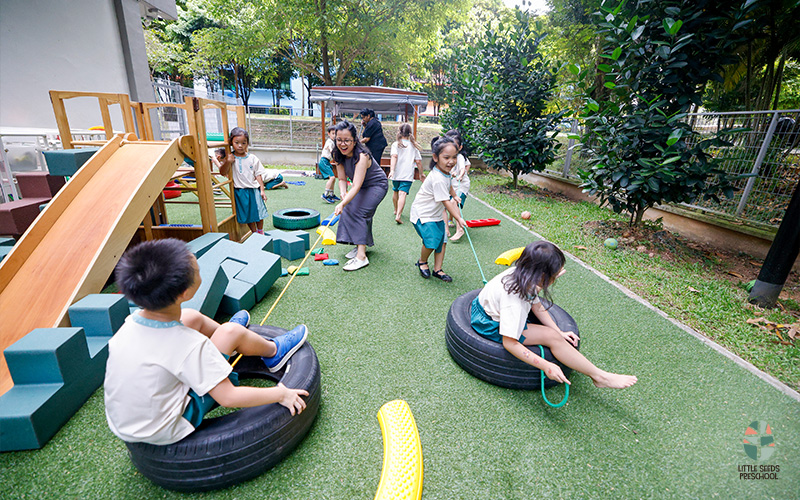
5 Healthy Ways to Introduce Technology to Preschoolers
Key Takeaways:
When technology is used intentionally with preschoolers, it can support learning without replacing play, movement, and real-world interaction.
High-quality, age-appropriate content is more beneficial than fast-paced or overly stimulating digital media.
Clear time limits help ensure screens do not crowd out outdoor play, creativity, and social experiences.
Co-viewing, active participation, and consistent adult modelling shape healthier digital habits in early childhood.
Understanding Technology in the Preschool Years
Technology is ubiquitous in modern life. It appears in homes, on commutes, and even in some preschool classrooms, so it feels natural that preschoolers are exposed to it too. When used with care, technology can spark curiosity, support creativity, and even extend learning in small but meaningful ways.
The challenge for many parents is not deciding whether screens are allowed, but figuring out how to use them wisely. How much screen time is appropriate? What kind of content is helpful? How do we ensure screens do not crowd out play, movement, and real conversation?
The goal is simple, even if it takes effort to maintain: technology should complement childhood, not compete with it. The ideas below offer practical ways to support mindful media use in early childhood, while protecting the balance that allows preschoolers to grow, explore, and thrive.
When it comes to screens, quality matters far more than quantity. One helpful way to think about digital content is in terms of low stimulation and high stimulation.
Low stimulation content is slower-paced, visually simple, and easier to follow. It usually has gentle sound effects, clear storylines, and space between transitions. This type of content gives preschoolers time to process what they are seeing and hearing, which better supports focus and comprehension.
High stimulation content, on the other hand, is fast-moving, visually intense, and packed with rapid scene changes or loud sound effects. It is designed to grab attention quickly and keep it there. While it may be entertaining, it can easily overwhelm young children and make it harder for them to regulate their attention afterwards.
When introducing technology to a preschooler, it helps to pause and ask: Does this content encourage curiosity and creativity, or is it simply designed to keep them watching? Thoughtful choices ensure technology supports development rather than distracting from it.
2. Follow Clear and Consistent Screen Time Limits
Even when content is educational, limits still matter. Clear screen time boundaries help families avoid daily power struggles and create a rhythm that feels steady rather than constantly negotiated. Children respond well to predictability, and transitions tend to feel calmer when they know what to expect.
Limits work best when they are not framed as punishment, but as part of a balanced routine. Screen use is easier to manage when the rest of the day includes outdoor movement, imaginative play, shared reading, building, and hands-on creative activities. This natural mix makes balancing screen time and play feel practical, not extreme.
Simple structures can make a big difference. For example, screen time might be limited to one short window a day, or offered only after active play. In a nurturing preschool environment, routines are designed with intention, ensuring that technology remains a small, supportive part of a child’s experience rather than the centre of it.
3. Make Screen Time Interactive Through Co-Viewing
Sitting with your child during screen time can transform the experience. When you watch or play together, you can ask simple questions, highlight interesting details, and help your preschooler connect what appears on the screen with real life. A short video about animals, for example, might lead to a conversation about pets, or a counting game could become an opportunity to spot numbers around the home.
Co-viewing supports mindful media use in early childhood because the screen becomes a shared activity, rather than an isolating one. Even a few minutes of engagement can make digital time more conversational and meaningful.
If you notice your preschooler zoning out or struggling to disengage from the device, it may indicate that the content is not well-suited or that it is time to switch to a hands-on activity. When introducing technology to a preschooler, connection should always come before convenience.
4. Encourage Active Participation Over Passive Consumption
Not all screen time is equal. Active use involves a child doing something, such as solving a problem, creating a drawing, making choices, or responding to prompts that require thought. Passive use, in contrast, mainly involves watching with little interaction.
To support healthy technology habits in children, it is helpful to prioritise digital activities that encourage creativity, movement, or simple problem-solving. Drawing apps, interactive storytelling, or age-appropriate puzzles can engage a child’s thinking more meaningfully than endless scrolling or autoplay videos.
A useful indicator is how your child feels afterwards. If they finish screen time feeling curious and wanting to discuss what they saw, this suggests engagement. If they seem listless or unusually irritable, the experience may have been too passive or overstimulating.
In well-designed preschool programmes, technology is used in ways that encourage participation rather than replace it. The goal is not to fill time, but to support learning while still allowing space for hands-on play and real-world discovery.
5. Model Healthy Technology Habits at Home
Children notice far more than we realise. They observe how often we check our phones, whether we stay present during conversations, and how we respond when a device pings for attention. When adults put away devices during meals, set phones aside during play, and demonstrate that screens have clear boundaries, children begin to see those limits as normal.
Modelling works because it shapes the overall tone of the home. Digital balance feels less like a restriction placed on the child and more like a shared family rhythm. Simple practices make a difference. Device-free dinners, phones kept out of bedrooms, and wind-down routines that rely on books or quiet conversation, rather than screens, all reinforce healthy patterns.
Over time, these small, consistent choices help children build healthy technology habits naturally, resulting in fewer battles, clearer expectations and a calmer relationship with screens.
Conclusion: Building a Balanced Digital Foundation
Technology is integral to childhood in the modern world, but it need not dominate it. At home and in preschool settings, the priority remains steady, balanced development. Choosing age-appropriate content, setting clear limits, co-viewing with intention, encouraging active participation, and modelling healthy boundaries all contribute to healthy technology habits for children.
The goal is not perfection; it is consistency. When screens are used purposefully, and alongside movement, conversation, creative expression and hands-on exploration, children begin to understand that technology is a tool, rather than a default setting.
At Little Seeds Preschool, this balanced philosophy shapes everything we do. Guided by the Reggio Emilia approach, we focus on inquiry, relationships, and meaningful real-world experiences. Children are encouraged to explore, question, create, and connect in ways that support deep and lasting learning.
To discover how we foster confident, thoughtful learners in today’s digital world, please connect with our team to discuss whether our preschool community is the right fit for your family.
A Singapore Parent’s Guide to Preschools
Understanding Anchor Operators (AOP), Partner Operators (POP), and non-POP Preschools – and what they mean for your child’s education.
Understanding Singapore’s Preschool Landscape
Choosing the right preschool for your child can feel overwhelming. With so many options available, how do you know which is the best fit for your family?
In Singapore, the Early Childhood Development Agency (ECDA) have established three main types of preschool schemes to cater to different family needs and ensure quality early childhood education across the board. These are:
Anchor Operator (AOP) preschools
Partner Operator (POP) preschools
Non-Partner Operator (non-POP) preschools, also known as private preschools
ECDA regulates all licensed preschools in areas such as childcare subsidy, safety standards, health and hygiene requirements. The different schemes offer varying levels of government support and fee structures.
In this guide, we’ll break down each scheme so you can make an informed decision for your family.
? Here We Grow! Little Seeds Preschool POP 3.0 Announcement
It’s official! We are thrilled to announce that 12 Little Seeds Preschools have been awarded Partner Operator (POP) status under ECDA’s POP 3.0 scheme (2026-2030).
? A warm congratulations to our two newly awarded centres:
We’re also grateful that all 10 of our existing POP centres from POP 2.0 have been renewed for this new term. That’s 12 centres committed to quality, affordability, and excellence in early childhood education!
What’s the Difference? AOP vs POP vs Private Preschools
Anchor Operators (AOP)
What it means: These are government-supported preschools with the most funding support from ECDA.
Fees (excluding GST):
Full-Day Childcare: $640/ month
Full-Day Infant Care: $1235/ month
Kindergarten: $150/ month
Key Features:
Capped monthly fees at $640/ month
Controlled fee increases
Significant ECDA investment in quality improvement
Strong professional development support for teachers
Who AOP is best for: Families prioritizing maximum affordability while maintaining quality standards.
Little Seeds Preschool does not have any centres under the Anchor Operator Scheme.
Partner Operators (POP)
What it means: These are government-partnered preschools that have demonstrated excellence in quality, inclusivity, and teacher development.
Fees (excluding GST):
Full-Day Childcare: $650/ month
Full-Day Infant Care: $ 1,290 / month
Key Features:
Monthly fees at $650/ month
Proven track record of quality education
Strong commitment to inclusivity
ECDA investment in organizational capabilities and teaching practices
Professional development support for educators and leaders
The POP Renewal Cycle:
POP 2.0: 2020-2025
POP 3.0: 2026-2030 (current)
Who POP is best for: Families seeking government-recognized quality with a balance of affordability and enhanced programmes.
Little Seeds Preschool has 12 centres under the Partner-Operator Scheme (3.0) from Jan 2026-Dec 2030:
What it means: These are independent preschools with flexibility to offer specialized programmes and premium facilities.
Fees (excluding GST): Can range from $600 – over $2,000+/month
Key Features:
Greater autonomy in curriculum design
Can offer specialized programmes (language immersion, arts, etc.)
Often smaller class sizes
Premium facilities and resources
At Little Seeds Preschool, we operate 6 Private (non-POP) centres that feature lower teacher-to-child ratios, private play spaces, and specialist-led enhanced curriculum modules (Language Arts, Chinese Creative Drama, and Music Exploration) at $1,750/month.
Who non-POP is best for: Families seeking specialized programmes, smaller class sizes, or specific educational approaches.
What Does POP status mean for your family?
When you choose a Partner Operator preschool like Little Seeds Preschool, you can be assured that:
Quality is Government-Recognized: Our centres have been assessed and awarded POP status based on demonstrated excellence in early childhood education.
Continuous Improvement: ECDA invests in our organizational capabilities, helping us strengthen teaching practices and maintain high standards.
Well-Trained Educators: Our teachers benefit from ongoing professional development support, ensuring they stay current with best practices in early childhood education.
Commitment to Inclusivity: We’re dedicated to providing quality education for all children, regardless of background.
Stable, Trusted Provider: The renewal of POP status demonstrates our consistent track record over time.
All while enjoying a distinctive values-based preschool experience grounded in Christian values, with a trusted team and quality curriculum!
Renewed Centres (10 from POP 2.0):
All our original POP centres continue their excellence into POP 3.0!
Little Seeds Preschool (Ascension)
Little Seeds Preschool (Capstone)
Little Seeds Preschool (Kiddy Ark)
Little Seeds Preschool (Praiseland)
Little Seeds Preschool (Sonshine)
Little Seeds Preschool (St. Andrew’s)
Little Seeds Preschool (TSA – Ang Mo Kio)
Little Seeds Preschool (TSA – Bukit Batok East)
Little Seeds Preschool (TSA – Bukit Panjang)
Little Seeds Preschool (TSA – Tampines)
Newly Awarded Centres (2 new for POP 3.0)
Our 2 new centres joining the POP 3.0 scheme!
Little Seeds Preschool (Church of the Ascension), located in Potong Pasir
Little Seeds Preschool (Church of the Good Shepherd), located in Queenstown
Our 6 Private (non-POP) centres:
They will continue to offer lower teacher-to-child rations, private play spaces and nd specialist-led enhanced curriculum modules (Language Arts, Chinese Creative Drama, and Music Exploration).
Ready to Visit Us?
Now that you understand the difference between AOP, POP and Non-POP preschools, the next step is to experience Little Seeds Preschool for yourself.
Come see our learning environments, meet our educators, and discover why families choose Little Seeds Preschool with their children’s early education journey.
What types of programmes are available at Little Seeds Preschool?
We offer both half-day (7am to 1pm) and full-day programmes (7am to 7pm). Note: Half-day programmes are only offered at our Non-POP Centres, with limited spaces available.
Are there any subsidies or discounts on school fees?
Yes! Subsidies on school fees are available for Singaporean working mothers. Learn more about subsidies and school fees here.
What’s the difference between your POP and non-POP centres?
Our 12 POP centres are under ECDA’s POP 3.0 scheme, which is given to centres recognized quality standards and support for continuous improvement in teaching practices.
Our 6 Private Centres offer lower teacher-to-child ratios, private play spaces, and specialist-led enhanced curriculum modules (Language Arts, Chinese Creative Drama, and Music Exploration) at $1,750/month.
Effective Strategies for Fostering Sharing in Your Child
For children, the concept of sharing may be difficult to grasp. The desire to possess and control objects is a natural part of their growth, and sharing requires delaying gratification and managing impulses, which is particularly challenging with limited impulse control. However, teaching your little one to share is crucial for their social and emotional development. Not only does it foster empathy and teamwork, but it also lays the groundwork for positive relationships throughout their life. Drawing on our expertise in designing a preschool curriculum that prioritises values, we share a few strategies you can leverage to encourage sharing in your child.
Lead by Example
Mimicry is a fundamental mechanism with regard to children’s development. By observing and replicating the behaviour of adults, children learn acceptable ways to act and behave. As such, leading by example is highly effective when trying to teach your little one. During playtime, involve another adult to demonstrate the idea of sharing. Pass a toy or object to the other adult when requested and get them to do the same with you. After a few repetitions, include your child in the activity. In addition to sharing objects, express your joy with phrases like, “I’d love to share this with you,” or “let’s share so everyone can enjoy”’ Positive language reinforces the good feelings associated with sharing, motivating children to repeat the behaviour willingly.
Practise Taking Turns
When the thought of sharing comes to mind, we tend to picture giving something to another person, but sharing can manifest in various ways and taking turns is one of them! Engage in turn-taking activities with your little one to cultivate fairness and patience. For instance, a simple game of snakes and ladder, where each player waits for their turn to roll the dice, is a great way to practise turn-taking. Instead of just having your child wait, involve them by pointing out what the other person is doing during their turn. This keeps them interested while waiting and perhaps even excited for someone else’s turn.
Beyond the confines of home, we believe that sharing is a valuable lesson in schools too. Our hands-on preschool curriculum helps children internalise that sharing is collaborative, promoting a positive attitude towards cooperation in their interaction with others.
Before embarking on the journey of sharing with your child, it is important to acknowledge their developmental capabilities and understand that this venture may not always be smooth sailing. At their tender, young age, children are still learning impulse control, which means certain lessons including sharing might take time. Setting achievable goals is the first step. Start with small, manageable activities including sharing a snack or playing a cooperative game. As your child becomes more comfortable with basic sharing, gradually incorporate situations that involve the principle with more people or for longer durations. Allowing mistakes as part of the learning process and adapting your expectations to your child’s developmental level in this manner creates an environment that supports their progress and fosters a sense of accomplishment.
If you are keen on this notion of accommodating to your child’s progression, then our preschool curriculum may suit both you and your little one’s needs. We celebrate each milestone within an environment that loves and respects each child!
Ultimately, do recognise that sharing is a skill that evolves over time, empowering effective communication skills, generosity and an understanding of cultural and social norms. Early exposure to sharing equips children with the tools required for successful social interactions and relationships well beyond their formative years.
At Little Seeds Preschool, we focus on teaching children values and equipping them with life skills, enabling them to kickstart their journey of growth and discovery of self, others and the world. With centres located across Singapore including our Tampines preschool, Bukit Batok preschool and more, we ensure every child has easy access to a holistic education experience.
3 Essential Skills Your Child Can Pick Up at Infant Care
Today, a dual-income household has become the norm in Singapore, as the nation continues to embrace a professional workforce. As such, infant care centres have grown in popularity, allowing parents to focus on their careers with greater peace of mind, knowing that their little ones are in a safe and nurturing environment while they are working. In 2023, the enrolment rate for infant and child care services in Singapore was 10,485 and 152,634 respectively. While enrolling their child in an infant care centre remains a great solution for busy parents, children can benefit from this as well. Let’s explore the three essential skills your child can pick up at an infant care centre in Singapore.
Social and Emotional Development
Through bonding and connecting with the teachers, children learn to form attachments, develop trust and regulate their emotions. The consistent presence of teachers provides a secure base for exploration, promoting a sense of security and confidence. Infant care centres also enable children to engage with each other, an opportunity that is rarely granted at home. Peer interaction differs from adult-child interactions due to distinct social dynamics, communication styles and developmental needs. These interactions are characterised by spontaneity and shared interests, motivating good habits such as sharing, taking turns and cooperating. With scheduled group activities and playtime, infants can observe, imitate and build rapport with their peers, further developing their social and emotional capabilities.
Infant care centres in Singapore emphasise a rich and stimulating environment that fosters curiosity and discovery. These specially designed spaces are equipped with age-appropriate toys and materials, allowing children to engage in sensory investigation, tactile experiences and visual stimulation. Trained teachers and caregivers are there to facilitate and support such explorations, encouraging infants to reach, grasp, manipulate objects and navigate their surroundings. Building up exploratory skills in infants is crucial as it stimulates neural connections and forms the foundation for their cognitive, physical and social development. Furthermore, this curiosity contributes to an interest in learning, problem-solving and critical thinking, which are all critical for academic success.
Motor Skills
In early childhood, the nervous system, muscles and joints are still maturing, leading to a temporary lack of precision and coordination. As children grow, they undergo various stages of motor skills development, and professional educators at infant care centres can accelerate this process. Through guided activities from reaching to crawling and eventually walking, the gradual progression of an infant’s motor abilities is carefully monitored and supported. Strategically introducing toys also engages infants in manipulative activities, which promotes hand-eye coordination and muscle control. Ultimately, fine-tuning a child’s motor skills and physical dexterity plays a pivotal role in empowering independence and self-confidence as children learn to navigate, explore and interact with the world around them.
As parents, it is only natural to want the best for your children to watch them grow into happy, healthy and compassionate individuals. Enrolling your little one into a quality infant care centre can be a great start to help shape their character and perspectives, unleashing their potential and moulding them into the best versions of themselves.
At Little Seeds Preschool, we are a faith-based preschool born out of a desire to honour each child’s original design and allow them to discover their identity and purpose in life. Our preschool curriculum is created to develop life skills and positive learning dispositions.
Enrolling a child in preschool is a significant milestone for many parents as they learn to entrust the care of their little one to someone else. The new environment also plays a vital role in shaping a child’s growth, underscoring the importance of choosing the right preschool. However, with the variety of preschools in Singapore, selecting the ideal one can be quite the challenge. Fret not, in this article, we share some primary factors to consider to help you make a more informed decision that is best for you and your child.
Curriculum and Learning Opportunities
At their tender age, preschool children naturally exhibit heightened curiosity and possess greater neuroplasticity. During this time, the information that they absorb throughout their learning journey is most impactful. This is where curriculum and learning opportunities come into play, laying the foundation for your little one’s education. A well-designed preschool curriculum tailored to early childhood development fosters essential skills such as language acquisition, social interaction, problem-solving and emotional regulation. Diverse learning experiences also enhance cognitive abilities and creativity, preparing children for future academic success.
At Little Seeds Preschool, we offer values-based education for lifelong learning Our preschool curriculum focuses on teaching children the values of life by nurturing their confidence in self-expression, encouraging creative and critical thinking skills, and cultivating a love for learning.
Dedicated and Caring Staff
Did you know that next to parents, teachers and childhood educators are adults with the most impression and impact on children? Preschool staff directly influence a child’s early learning, creating a nurturing environment where children feel safe, supported and encouraged to explore and learn. Furthermore, their expertise and dedication contribute to the implementation of a well-rounded preschool curriculum, adapting teaching methods to individual learning styles and facilitating positive relationships with both children and parents. Ultimately, the best educators possess the necessary expertise to identify and address developmental needs, ensuring that each child receives personalised attention.
Providing a positive, safe and secure space, Little Seeds Preschool educators celebrate children for who they are. While academic success is important, we respect each individual’s original design, allowing them to grow and flourish at their own pace.
Child Safety: Creating a Space Where Your Child Feels Secure
When choosing a preschool, safety is often one of the first things parents look for. Beyond physical measures, a truly safe environment is one where children feel comfortable, supported, and able to express themselves freely.
A well-designed preschool space helps children move with confidence. Clear layouts, child-friendly furniture, and supervised play areas allow children to explore while staying within safe boundaries. Daily routines are also structured in ways that provide consistency, helping children know what to expect and feel at ease throughout the day.
Equally important is the presence of attentive educators who guide children with care. Through warm interactions and gentle support, teachers help children feel secure enough to try new things, build relationships, and develop independence over time.
When children feel safe, they are more open to learning, forming friendships, and engaging meaningfully with their surroundings. This sense of security becomes the foundation for both their well-being and their early learning journey.
Location and Facility: Finding a Preschool That Fits Your Family’s Routine
Location plays an important role in making daily routines smoother for both parents and children. Choosing a centre near your home, workplace, or along your commute can ease drop-offs and pick-ups. For example, families considering a preschool may prioritise proximity for greater convenience during busy mornings.
The surrounding environment also matters. Preschools located within familiar neighbourhoods help children feel more at ease, supporting a sense of comfort and belonging. This is often a key consideration for parents comparing options across different areas, whether they are exploring a preschool closer to home, or family support elsewhere.
Little Seeds Preschool offers centres across Singapore’s North/Central, South, West, and East regions, giving families flexibility to choose what works best, whether you’re looking for a preschool in Bukit Panjang, a preschool in Kovan, or a preschool in Dover. This network also makes it easier for families who may relocate to other parts of Singapore but wish to keep their child in Little Seeds.
Alongside location, well-designed facilities create a safe and engaging space for children to learn and grow. When both come together, families can begin each day with greater ease and confidence.
As preschool marks the first step in a child’s education, parents naturally involve themselves in their little one’s learning adventure, spanning from essential logistics like the kindergarten or childcare fees to more personal details such as their child’s social interactions.
Choosing a preschool that not only collaborates with parents but actively seeks their involvement can help families feel more included. Parental engagement fosters a strong partnership between home and school, building a supportive atmosphere for children to learn. Parents who participate in their child’s preschool experience get to stay informed about their progress, reinforce learning at home and work with teachers to address any concerns or specific needs. Moreover, parental involvement promotes a sense of belonging and security for the child, enhancing their overall social and emotional well-being.
Little Seeds Preschool values community and we encourage open communication between staff, parents and children. Our Pastoral Care Team, together with the Chaplains, seek to empower a caring and supportive community around each child.
Choosing the right preschool benefits both children and parents, providing a stimulating environment conducive to the holistic growth of children and giving parents greater peace of mind.
With a desire to improve the quality of childhood education, Little Seeds Preschool prepares children for life so that they may become beacons that impact the community. To date, we have 18 faith-based preschools including childcare centres and kindergartens all across Singapore. Interested to find out more about our schools or preschool curriculum? Register here today!
Faith and Values
For some families, education goes beyond academics to include the values and beliefs that guide everyday life. Choosing a preschool that reflects and reinforces these same principles in its curriculum helps create continuity between home and school. When children experience consistent messages about values such as kindness, respect, and empathy, they are better able to understand expectations and develop a strong sense of identity and belonging.
At Little Seeds Preschool, we weave faith and values are woven into daily learning through routines, interactions, and meaningful experiences. Our educators model positive behaviours while guiding children to practise these values in simple, everyday moments. This approach supports not just how children learn, but who they are becoming, nurturing their character alongside their growth and development.
Frequently Asked Questions
What should I look for when choosing a preschool curriculum?
Parents often look for a balanced curriculum that supports both academic readiness and overall development. A play-based preschool in Singapore typically combines structured learning with hands-on experiences, helping children build confidence, curiosity, and essential skills in a natural way.
How do I know if a preschool’s curriculum suits my child?
It helps to observe how your child responds to the environment during visits. Look for programmes that allow children to learn at their own pace, with opportunities for exploration, interaction, and guided learning that match your child’s needs.
What is the difference between POP and private preschools?
A Partner Operator Preschool (POP) follows ECDA guidelines for affordability and quality, with capped fees and structured standards. Private preschools may offer additional programmes, facilities, or specialised learning experiences.
How important is play in a preschool curriculum?
Play is a key part of early learning. Through play, children develop problem-solving skills, communication, and social understanding while staying engaged and motivated to learn.
Should I prioritise academic or holistic development?
A well-rounded curriculum supports both. Strong early literacy and numeracy foundations are important, but so are social, emotional, and character development, which help children adapt and thrive in primary school.
How can I compare different preschool curricula effectively?
Visiting centres, asking about daily routines, and understanding teaching approaches can help. Comparing how each preschool balances structure and flexibility gives a clearer picture of what suits your child best.
Why We Need Caring and Compassionate Educators during a Child’s Early Preschool Stage
In the crucial early years of a child’s life, educators play an important role that extends far beyond the classroom walls. Beyond imparting academic knowledge, they serve as the architects of a child’s future, shaping young minds with care, compassion, and understanding.
Let’s explore the significance of supportive teachers from Little Seeds Preschool during this critical period and how their influence lays a solid foundation for a child’s educational journey and personal growth.
1. Creating a Safe and Supportive Environment
One of the fundamental roles of caring and kind-hearted educators in the early preschool stage is creating a safe and supportive environment for their young learners. Children need to feel secure to explore and learn effectively. When teachers exhibit kindness, patience, and understanding, they foster a sense of safety that allows children to express themselves freely and confidently. In such an environment, children are more likely to engage in learning activities, ask questions, and develop essential cognitive skills. This safety net of support becomes the foundation where a child’s self-esteem and determination are built, setting the stage for a positive attitude towards learning.
2. Instilling a Lifelong Love of Learning
Caring educators possess a unique ability to instil a lifelong love of learning in their students, especially through creative and interactive teaching methods, making the whole process enjoyable and exciting. These educators also create a more personalised and engaging experience by recognising the diverse learning styles of each child and tailoring their approach accordingly. They can transform mundane lessons into captivating adventures, sparking curiosity and a thirst for knowledge that lasts a lifetime.
For instance, our preschool including Little Seeds Preschool (St. Paul’s Church) in Kovan adopts an approach that emphasises child-led learning, encourages exploration, and fosters creativity. This approach, combined with a nurturing environment, ensures children develop a strong foundation for lifelong learning, curiosity, and self-confidence, preparing them for future challenges and successes. When children find joy in learning through these approaches, they are more likely to carry this enthusiasm into their later stages of education.
3.Fostering Social and Emotional Development
Our educators, including the ones in Little Seeds Preschool (St. Andrew’s) in Jurong West, excel in nurturing social and emotional development in children by emphasising the importance of emotional intelligence alongside academic expertise. They teach important life skills such as empathy, cooperation, and conflict resolution. Moreover, these teachers also create a classroom atmosphere where children feel comfortable expressing their emotions, fears, and aspirations. This emotional support enables kids to develop a strong sense of self-awareness and empathy, paving the way for healthy relationships and emotional well-being in the future.
4.Inspiring a Sense of Belonging and Confidence
Children learn not just about the world but also about themselves in the early stages of their education. By celebrating each child’s uniqueness and encouraging them to embrace their individuality, our Little Seeds Preschool (TSA – Tampines) educators instil a sense of belonging and confidence in their students. Through positive reinforcement and genuine encouragement, these teachers empower children to believe in their abilities. As a result, the younger generation develops the confidence to explore, take risks, and overcome challenges. This newfound self-assurance becomes the driving force behind their academic achievements and personal growth, shaping them into bold individuals who are unafraid to pursue their dreams.
The influence of loving and compassionate educators during a child’s early preschool stage cannot be overstated. They create a nurturing environment where children feel safe, valued, and inspired to learn. As we celebrate the role of these remarkable teachers, we acknowledge their dedication and kindness in shaping the future of our society one young mind at a time.
At Little Seeds Preschool, our dedicated team of professionals is committed to providing a safe haven where your child can thrive emotionally, socially, and academically. Join our preschool family and give your child the gift of a strong foundation for a successful future. Contact us today to know more!
How To Raise Your Child To Be A Team Player
In an ever-evolving world that places a growing emphasis on collaboration and teamwork, it becomes imperative to nurture children who can not only shine as individuals but also flourish as team players. Teamwork not only builds stronger communities but also lays the foundation for success in the workplace and beyond.
At Little Seeds Preschool,, we recognise the crucial role teamwork plays in a child’s development. Read on as we explore the essential strategies for nurturing your child into a team player.
Foster empathy and understanding
Empathy is the cornerstone of effective teamwork. It allows individuals to understand and share the feelings of others, making it easier to connect and collaborate. To cultivate empathy in your child, begin by setting a positive example through your own actions. Display empathy towards family members, friends, and even strangers, as your child will learn most effectively through observation.
Additionally, stimulate discussions about emotions and feelings with your child. When they express their own emotions, provide validation by saying something like, “I can see that you’re feeling sad at the moment.” This approach helps your child not only identify and accept their emotions but also develop the capacity to empathise with others.
Teach conflict resolution skills
Equipping your child with the ability to handle conflicts constructively is a crucial life skill. Start by explaining that disagreements are a normal part of relationships and don’t necessarily indicate a lack of teamwork. Encourage your child to listen attentively during conflicts, avoiding interruptions and defensiveness. This practice helps them better grasp the other person’s perspective before responding. Furthermore, emphasise the importance of open and respectful communication. Guide your child in expressing their thoughts and emotions calmly and respectfully, using “I” statements like “I feel hurt when…” instead of assigning blame.
Additionally, actively engage your child in collaborative problem-solving when conflicts arise. Encourage them to brainstorm ideas and consider potential outcomes for each option. This approach empowers them to take an active role in resolving conflicts, strengthening their teamwork skills in the process.
Encourage participation in team activities
Participating in team activities provides an excellent opportunity to cultivate your child’s teamwork abilities. These activities include team sports to school group projects. Through active participation in these experiences, your child gains valuable experience in collaboration, sharing responsibilities, and working towards a shared goal.
For instance, at Little Seeds Preschool, our preschool curriculum actively involves students in upcycling projects. This hands-on experience reinforces the practical application of teamwork skills in real-life situations, simultaneously imparting an understanding of the significance of environmental conservation.
Cultivating teamwork skills in your child is a journey filled with essential life lessons. As they internalise and apply these principles, your child will evolve into both a team player and a responsible, empathetic individual, equipped to confidently navigate life’s myriad challenges and opportunities.
Ready to offer your child a holistic education that instils vital teamwork and life skills? Contact Little Seeds Preschool today to find out more about our curriculum and childcare fees, and witness your child flourish into a self-assured team player, fully equipped for a promising future!