
Key Takeaways:
- Executive functioning skills shape how children manage emotions, follow instructions, solve problems, and develop independence.
- Daily routines and self-help tasks such as dressing, tidying, and making simple choices strengthen focus, planning, and follow-through.
- Predictable structure supports calmer transitions and helps children build steady self-regulation over time.
- Space for trial and error encourages adaptability, resilience, and confidence when facing challenges.
- Valuing effort and attitude over perfection nurtures long-term motivation and a positive approach to learning.
How Executive Functioning Skills Shape Confident, Capable Learners
Executive functioning skills shape how children handle everyday moments. They help a child wait patiently, follow simple instructions, cope with frustration, or decide what to do when something does not go to plan. These are not academic skills in the usual sense, yet they form the foundation for learning, relationships, and growing independence.
At their core, executive functioning skills include three key components. Working memory allows children to hold and use information, such as remembering a two-step instruction. Inhibitory control helps them pause before acting, manage impulses, and regulate behaviour. Cognitive flexibility enables them to adapt when plans change or when a different approach is needed. Together, these abilities support how children think, respond, and grow each day.
In the preschool years, these abilities develop most naturally through daily life. Routines, relationships, and repeated practice strengthen executive function development in early childhood far more effectively than drills or worksheets. When guided with care, these skills support emotional balance, steady focus, and lasting confidence.
Below are practical, age-appropriate ways families and preschools can nurture this growth.
1. Build Self-Help Skills Through Practice
Self-help tasks require children to plan their actions, sustain attention, and complete steps in order. Dressing supports working memory. Tidying builds organisation and follow-through. Washing hands reinforces sequencing and focus. Repeated daily routines strengthen preschoolers’ self-regulation skills in ways that feel natural and consistent rather than pressured.
Building independence in young children is not about expecting flawless results. It is about allowing time, offering guidance, and encouraging effort. When adults pause before stepping in, children learn to persist through small frustrations and experience the satisfaction of completing a task on their own. Confidence grows gradually, rooted in repeated practice.
In a nurturing preschool environment, these opportunities are woven into the day. Independence is guided with intention and patience, giving children steady support as they learn to manage tasks more confidently on their own.
2. Support Decision-Making with Simple Choices
Young children are learning how to weigh options and think ahead. Offering limited choices supports this growth. A question such as, “Would you like to read a book or build with blocks?” encourages a child to pause, consider, and decide.
Making small decisions strengthens working memory and early reasoning. It supports executive function development in early childhood by helping children reflect before acting instead of responding impulsively. Over time, they begin to think through preferences and possible outcomes more carefully.
Choice-making also builds a sense of agency. When children feel heard, they are more likely to participate and take responsibility for their actions. Simple decisions, repeated daily, lay the groundwork for confident and thoughtful judgement later on.
In a holistic preschool environment, choice is woven naturally into the day. Options are intentional and manageable, guiding children toward steady, thoughtful decision-making without overwhelming them.
3. Use Predictable Routines to Strengthen Self-Regulation
Children feel more secure when they know what to expect. Predictable routines reduce uncertainty and free up energy for learning. Consistency supports self-regulation skills by helping them anticipate transitions and respond more calmly.
Morning greetings, snack times, stories, outdoor play, and tidy-up periods create a rhythm that feels safe. With steady expectations, children practise waiting, listening, and moving from one activity to another without becoming overwhelmed. Impulse control develops within this sense of stability.
Routines also guide emotional regulation. When a child knows that outdoor play follows circle time, frustration is less likely to surface. Patience and sequencing are gradually internalised through repetition.
In a play-based preschool, routines provide structure without rigidity. The balance of consistency and flexibility allows children to strengthen executive function abilities within a steady, reassuring environment.
4. Encouraging Confidence Through Trial and Error
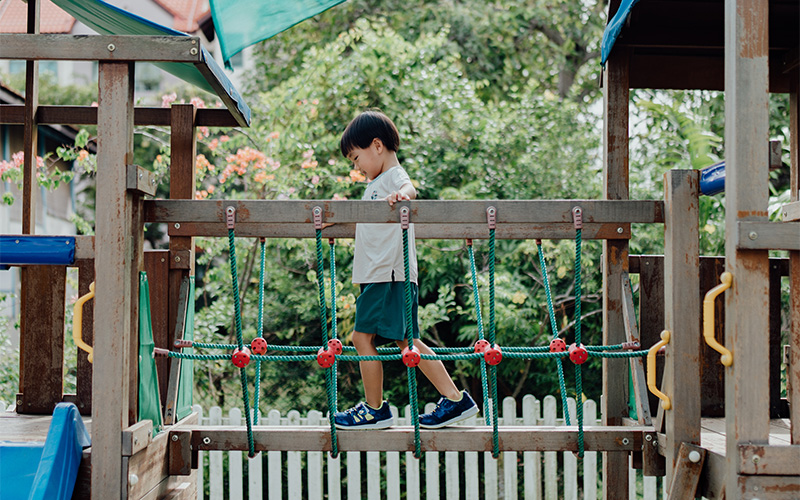
When a child tries something new, and it does not work, whether a puzzle piece will not fit, a tower collapses, or a drawing turns out differently than expected, that moment shapes how the child responds to challenge and builds confidence over time.
When children are given space to pause, adjust, and try again, they strengthen cognitive flexibility and resilience that extend well beyond the preschool years. Challenges become opportunities to rethink and adapt rather than signals to stop.
Executive functioning skills include the ability to shift strategies and persist. Cognitive flexibility allows children to consider alternatives. Resilience supports continued effort instead of withdrawal. These habits develop through steady guidance and calm encouragement.
A simple prompt such as, “What could you try next?” encourages reflection without criticism. Over time, children begin to internalise this approach. Mistakes are recognised as part of learning, strengthening both confidence and adaptability.
5. Valuing Attitude, Effort, and Growth
Focusing only on outcomes such as a finished drawing, a correct answer, or a neatly arranged shelf limits deeper growth. Executive function abilities develop more strongly when attention centres on effort, persistence, and approach rather than results alone.
Recognising how a child listens carefully, keeps trying, or adjusts after a mistake reinforces habits that matter over time. A comment such as, “Good job, you kept working on that even when it felt tricky,” draws attention to the process and encourages reflection.
When improvement is valued more than flawless performance, children are more willing to attempt new tasks and take manageable risks. Resilience strengthens. Confidence becomes grounded in effort rather than praise. These qualities support executive function development in meaningful and lasting ways.
Over time, children begin to evaluate their own effort and notice their progress. They adjust strategies independently and take greater ownership of their learning. This gradual shift towards self-motivation lies at the heart of building independence in young children.
Why Executive Function Abilities Matter for the Long Term
Strong executive functioning skills shape far more than classroom behaviour. They influence how children manage friendships, handle setbacks, organise tasks, and adapt to new situations. Early strengths in these areas are closely linked to later academic progress and social confidence.
Development does not look the same for every child. Some need more time to build impulse control. Others benefit from added support with working memory or emotional regulation. Growth unfolds gradually and is shaped by consistent relationships and the environment.
This is why early childhood settings matter. In Singapore’s context, a strong foundation in these skills is essential for a smooth transition into primary school and beyond. In a preschool grounded in shared values, character and self-discipline grow alongside thinking skills. In a holistic setting, emotional and social development are seen as essential to school readiness. Within an inquiry-led programme, children learn actively through exploration and guided practice.
Supporting Executive Function Abilities at Little Seeds Preschool
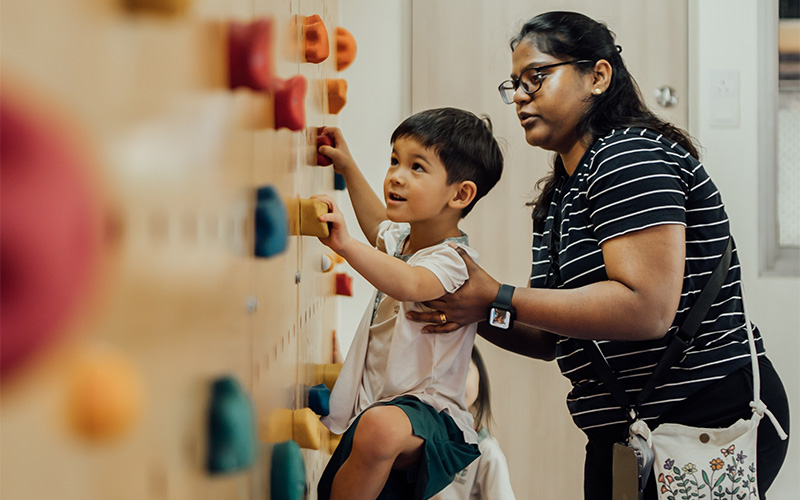
At Little Seeds, executive functioning skills are woven into everyday classroom life. Children practice them when they tidy up, work through disagreements, take part in group activities, and explore new ideas. Educators model calm guidance, maintain predictable routines, and create space for thoughtful choices and reflection.
As a faith-based preschool that values character and community, we approach executive function development with care and purpose. Our focus is on nurturing children who are self-aware, emotionally steady, and able to adapt to challenges.
If you would like to learn more about how we strengthen self-regulation skills and support growing independence through daily practice, we invite you to connect with our team through a school tour and see whether our preschool community is the right fit for your family.

