
Key Takeaways:
- Kindness is shaped through everyday interactions, where children observe how adults and peers communicate, respond, and relate to one another.
- Teaching kindness becomes more effective when it is embedded into daily routines, allowing children to practise cooperation, sharing, and consideration naturally.
- Guided conversations, storytelling, and role-play help children recognise emotions and understand different perspectives in a safe and meaningful way.
- A consistent environment that reflects inclusion, belonging, and clear values supports children in developing respectful and caring relationships over time.
Introduction
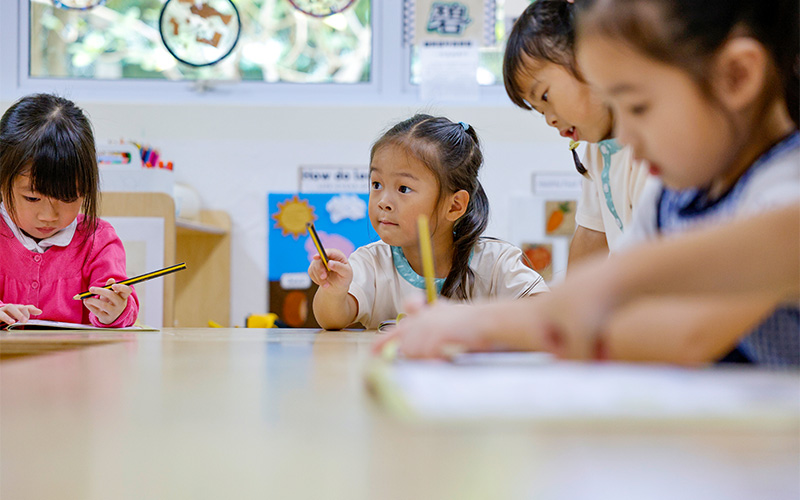
Kindness and respect are not instilled through one-off lessons or simple reminders. They grow slowly, shaped by the everyday moments children experience and participate in. In the early years, teaching kindness is less about instruction and more about immersion. Children begin to understand empathy, gratitude, and inclusion by observing how people around them speak, listen, and respond.
At Little Seeds Preschool, this understanding is embedded within a faith-based preschool rooted in strong values, where character formation is an integral part of daily life. Through our “Values Matter” curriculum, children consistently experience these values across routines, relationships, and learning experiences, rather than in isolation. Each interaction thus becomes an opportunity to nurture respect, shaping how children relate to others with care and intention.
How Young Children Learn Kindness by Observing Others
Young children are keen observers. The way a teacher kneels to listen, pauses before responding, or acknowledges a child’s feelings clearly conveys messages about how people interact respectfully. These actions are rarely labelled as lessons, yet they carry lasting influence.
In our classrooms, educators model attentiveness, patience, and thoughtful communication. Simple moments, such as guiding a child to say, “I hear you,” or “May I have a turn after you?” transform abstract concepts into tangible interactions. Over time, these repeated experiences shape behaviour. Children begin to mirror what they see, thus laying the foundations for empathy in preschoolers through observation and active participation.
Using Daily Routines to Practise Kindness and Respect
Kindness gains its true meaning through practice, not mere discussion. Daily routines provide a consistent rhythm for children to experience cooperation and shared responsibility, naturally teaching kindness throughout their day rather than treating it as a separate lesson.
During mealtimes, children learn to wait, pass items, and notice others. While tidying up, they work together towards a shared goal. In group activities, they practise turn-taking and collaboration. These are not separate lessons; rather, they are embedded within the day’s natural flow. Through these experiences, children begin to understand that respect in early childhood is expressed through small, consistent actions.
In a play-based preschool setting, these routines feel natural rather than imposed. Children engage readily because the environment invites participation, and expectations are clear yet gentle.
Encouraging Empathy Through Stories and Shared Conversations
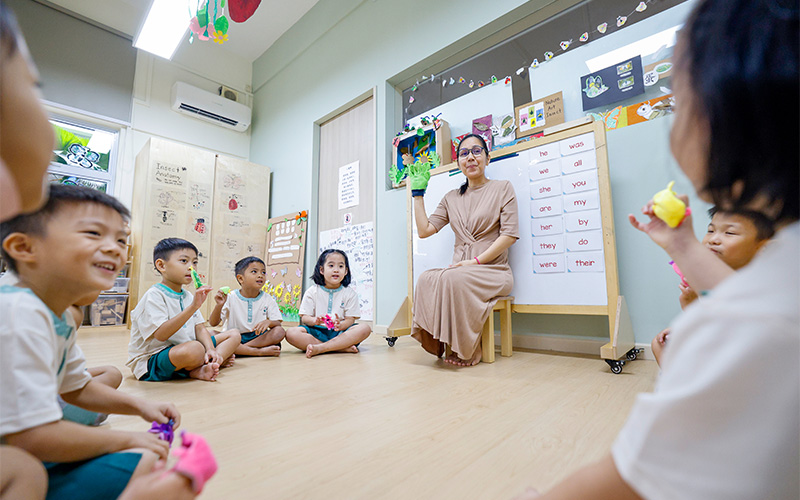
Stories offer a unique glimpse into perspectives beyond a child’s own. Through characters and narratives, children naturally explore a range of feelings, challenges, and relationships, sparking their own reflections.
In our classrooms, reading sessions are often followed by quiet conversations. A teacher might ask, “How do you think the character felt when that happened?” or “What could someone do to help?” These questions do not demand one correct answer. Instead, they encourage children to think, listen, and respond.
This approach mirrors principles of the Reggio Emilia approach, where dialogue and shared understanding are central to learning. Children begin to connect stories with their own real-life experiences, strengthening their capacity to recognise and respond to the emotions of others.
Supporting Children as They Learn to Express Care for Others
Young children are still developing the ability to express care in ways others can understand. They may experience concern but not yet know how to act upon it.
Through role-play and guided interactions, children are provided with opportunities to practise. A classroom scenario might involve comforting a distressed friend, offering assistance during a task, or resolving a disagreement with appropriate support. Educators gently guide these moments, not by dictating outcomes but by helping children consider their choices.
When a child shares a toy or checks in on a peer, such actions are purposefully acknowledged. Over time, children begin to associate kindness with connection. It becomes an intrinsic part of their interactions with others, rather than an act performed solely for approval.
Creating an Inclusive Environment That Reinforces Respect
The environment itself carries messages about belonging and value. A thoughtfully prepared space reflects diversity, encourages participation, and invites children to see themselves and others within it, thereby supporting the teaching of kindness through everyday experiences rather than isolated instruction.
At Little Seeds Preschool, we recognise that an inclusive environment supports children in understanding both difference and unity. Our displays, materials, and interactions are designed to reflect a range of cultures, languages, and family experiences. This helps children feel seen, while also learning to appreciate perspectives beyond their own.
This sense of belonging is not incidental; it is nurtured intentionally. It is rooted in our belief that each child has unique potential and purpose, and that community is built through mutual respect and care.
Reflecting on Kindness at the End of the Day
Reflection helps children connect actions with meaning. A simple end-of-day conversation, for instance, can illuminate moments that might otherwise go unnoticed, prompting children to pause and consider how their actions affected others.
A teacher might ask, ‘What was something kind you did today?’ or ‘Did someone help you?’ At times, children may need gentle prompts to recall specific moments, especially if an experience felt small or routine. Such discussions encourage them to consider not just the events, but also the feelings they elicited in themselves or others.
Over time, children begin to recognise patterns in their behaviour. They become more aware of how listening, sharing, or offering help shapes their relationships. Gradually, kindness becomes a deliberate choice. Instead of being externally prompted, it is guided by an emerging sense of awareness and responsibility.
Conclusion
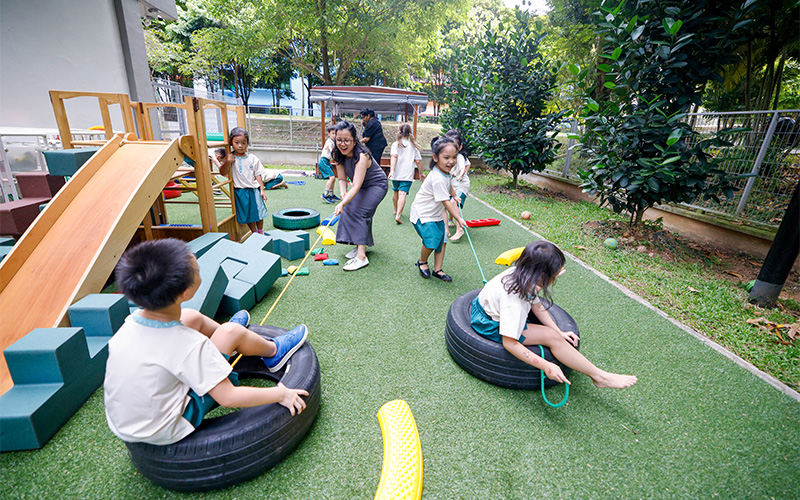
Kindness and respect are nurtured through the countless small interactions that fill a child’s day. They are evident as children listen, respond, share, and include others. With consistent modelling, meaningful routines, and opportunities for reflection, teaching kindness becomes an intrinsic part of a child’s experience.
At Little Seeds Preschool, we do not overlook these moments; rather, we recognise them as essential for a child’s growth. Rooted in our values-based and faith-driven philosophy, we support children in developing empathy, building relationships, and thoughtfully engaging with the world.
If you are seeking a preschool where character, community, and learning are intrinsically linked, we invite you to reach out and discover how we nurture each child’s unique journey.

