Our Preschool Curriculum
Educational Philosophy
Celebrating and growing each child’s unique potential
Creating a nurturing space for growth and discovery
Cultivating life skills and a passion for learning through values-based education
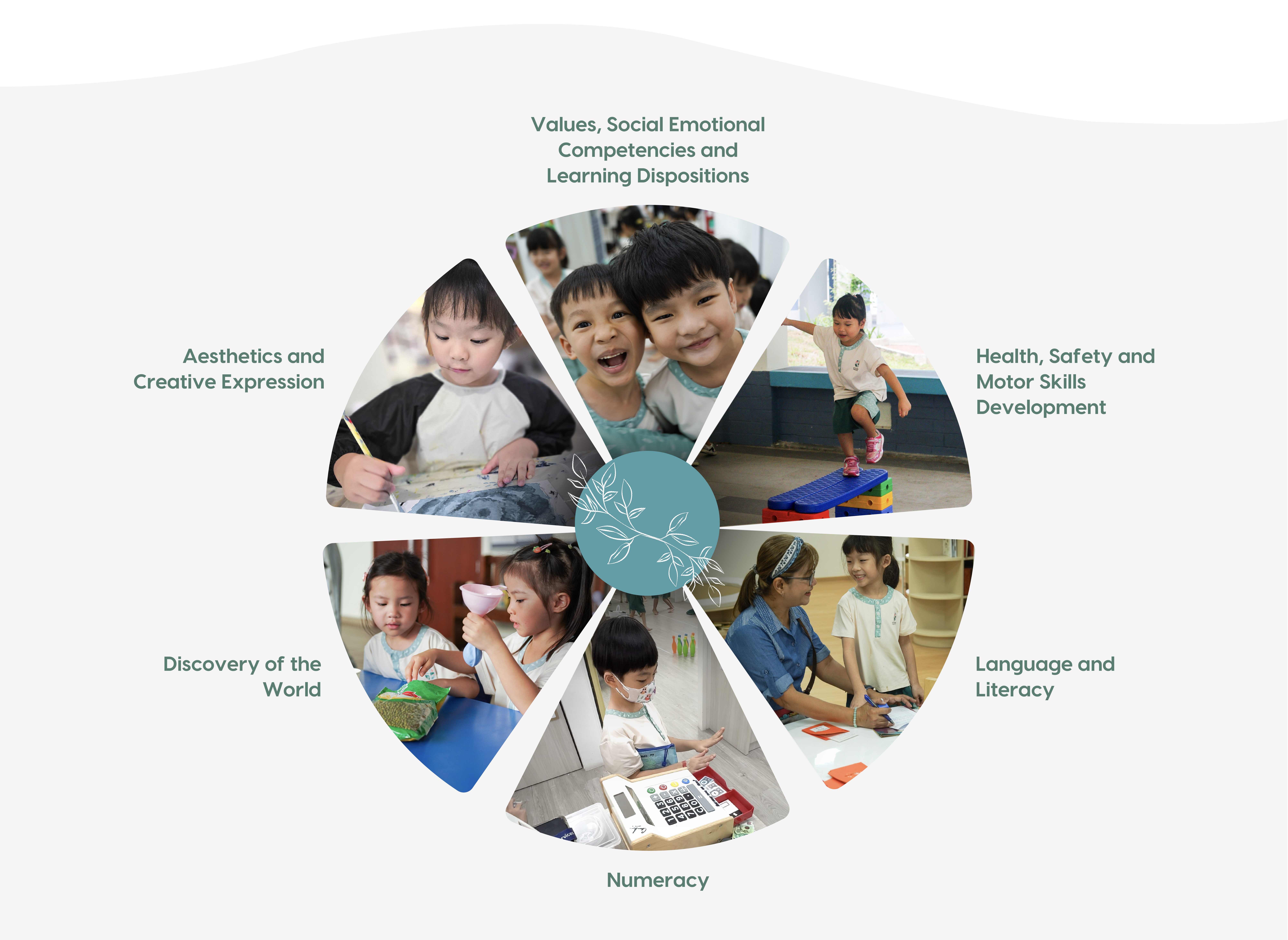
Domains of Development
Our Curriculum Framework
Little Seeds Preschool’s curriculum is thoughtfully designed to support children’s growth across values, skills, and knowledge, while remaining aligned with Singapore’s preschool curriculum and guided by the NEL curriculum framework. Learning experiences are carefully sequenced, age-appropriate, and responsive, forming a strong foundation across our preschool programmes.
Values Matter (PG-K2)
- Our “Values Matter” programme for all levels lays the foundation for moral and character development, at the core of all learning and education for the future.
- Children learn 3 – 4 values and dispositions per term.
- Values are integrated into all other curriculum components, including daily devotions.
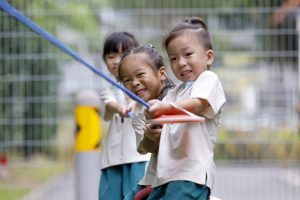
Motor Skills Development (PG-K2)
- Our children enjoy daily outdoor play and daily routines where movement is integrated into all areas of learning
- We conduct structured skill-based motor skills development (MSD) sessions weekly
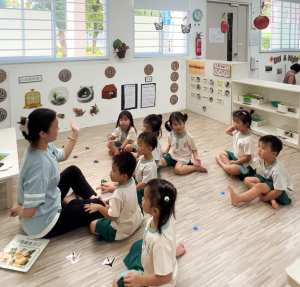
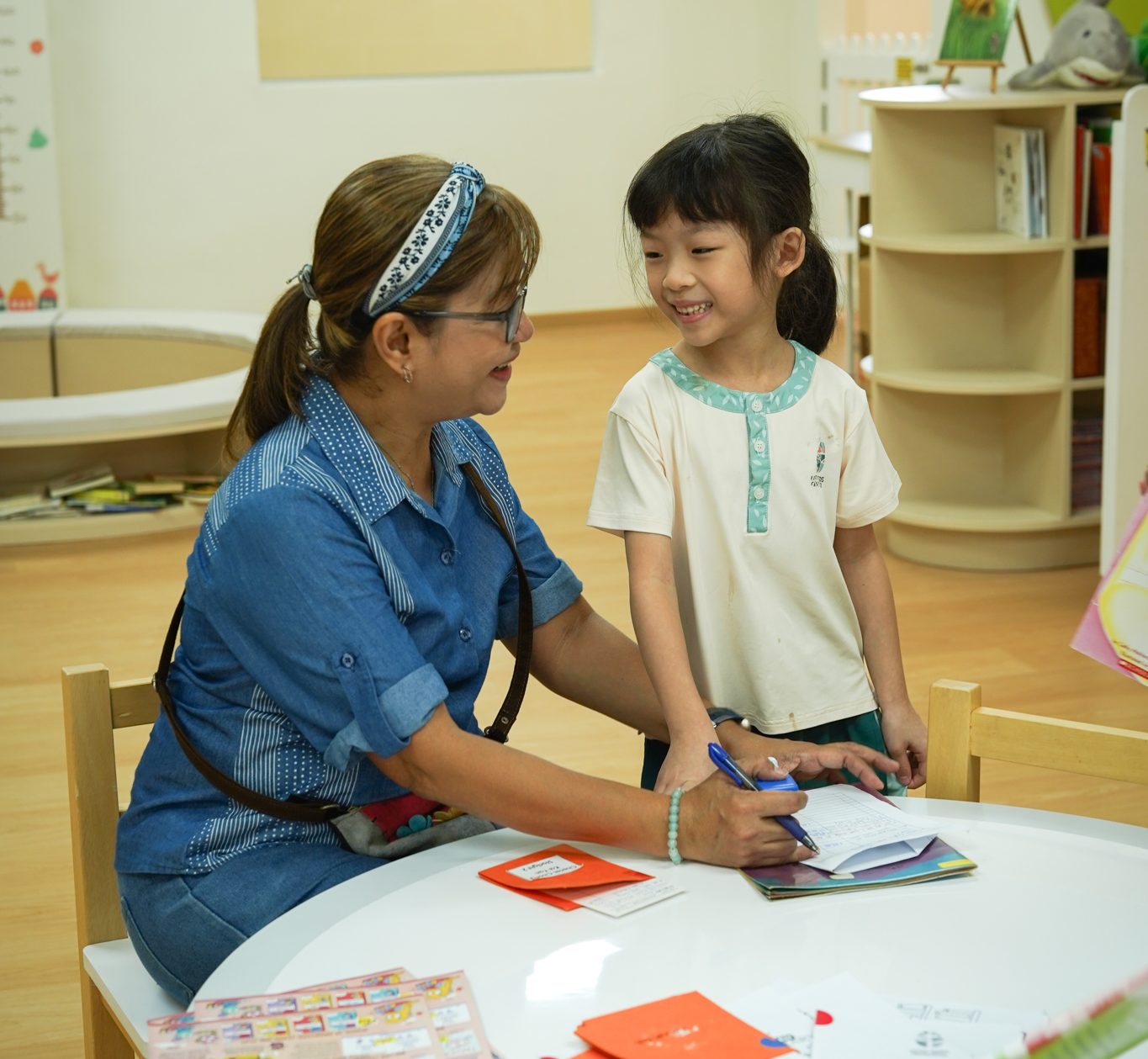
Phonics & Reading (English) N-K2
- Our programme accelerates the learning of phonics by using the structured phonics methodology based on the “Phonics Foundation” programme
- Children will receive a Code Cracker activity book (for reading and spelling) and Readers every term
- Using Readers (with accompanying activity sheets) and curated picture books, we integrate Chinese lessons with themes closely related to children’s environments.
- Our children learn through specific key vocabulary & word recognition
![]() |
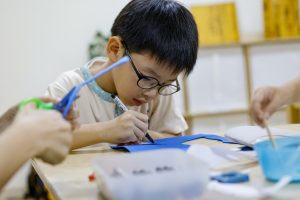
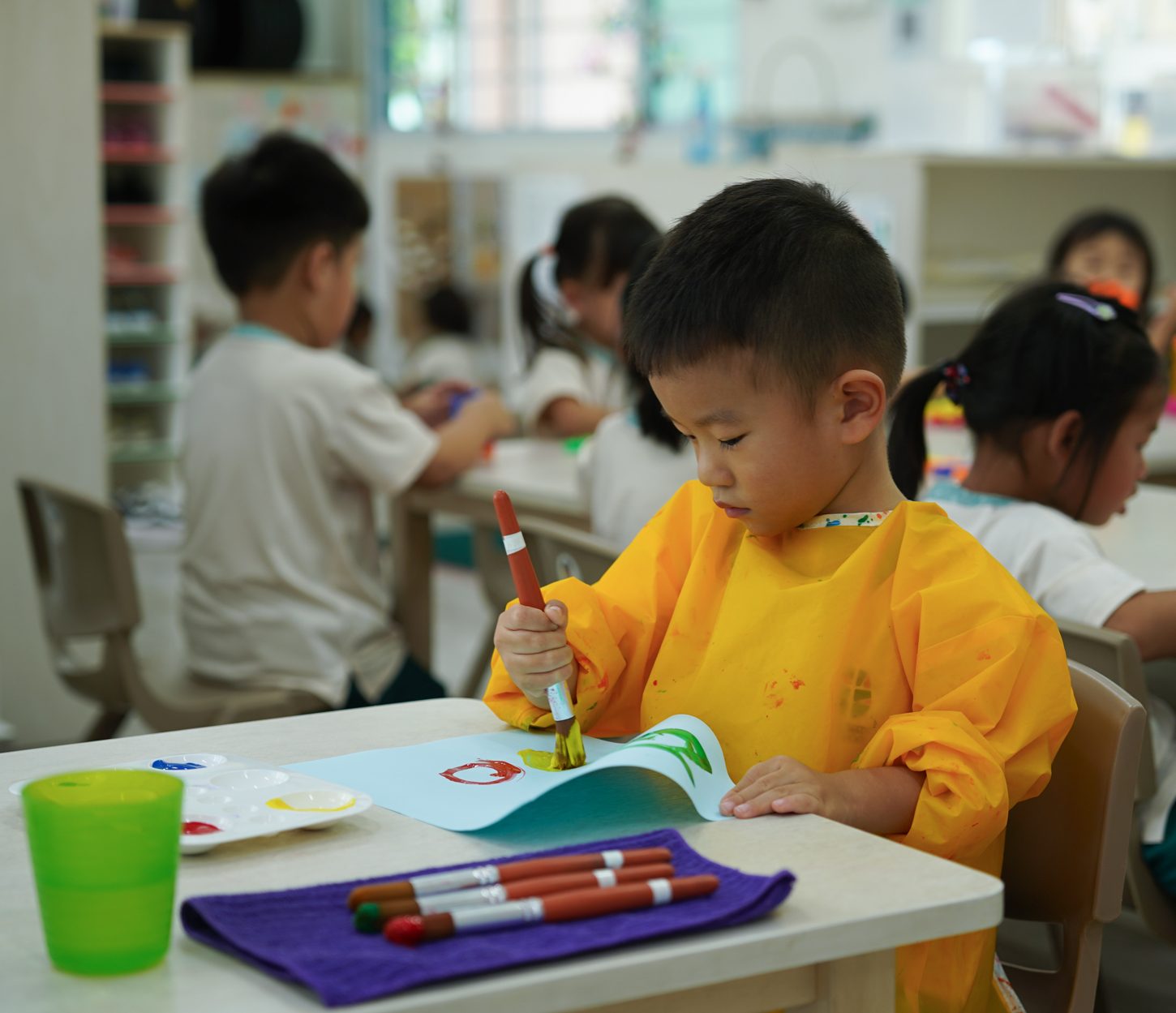
ART
|
![]() |
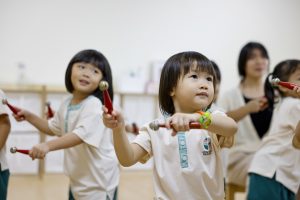
MUSIC & MOVEMENT
|
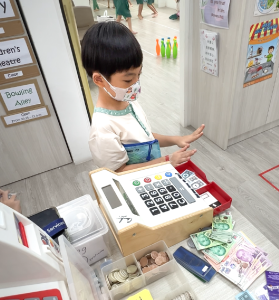
Math (Key to Learning) PG-K2
- We focus on quality of understanding over quantity with regular revisiting of concepts, providing a strong foundation for retention and application of concepts.
- Instead of rote learning, we encourage play-based lessons with a strong focus on the use of mathematical language for clear expression of thought and understanding.
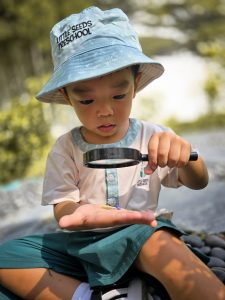
Sensory Play & Inquiry PG-K2
- Sensory Play & Inquiry is highly integrated into our curriculum with lots of hands-on experiences, questions and conversations to develop curiousity and a sense of wonder in our children
- We encourage children to dig deeper and ask why, allowing them first-hand self discovery of concepts
- We develop values and learning dispositions through self-led explorations that majors on the process of learning, not just the product
What Sets Our Preschool Curriculum Apart?
Child-Led Learning
- We believe that there are multiple pathways to learning and each child develops at a different pace.
- We celebrate children’s unique ideas and expressions.
- We value the process of learning over the product.
- We respect each child’s way of expression and tailor the learning to better match their needs
- We work with parents as a child’s first teachers, we build upon the foundations laid from home and invite them into the learning process
Values for Life
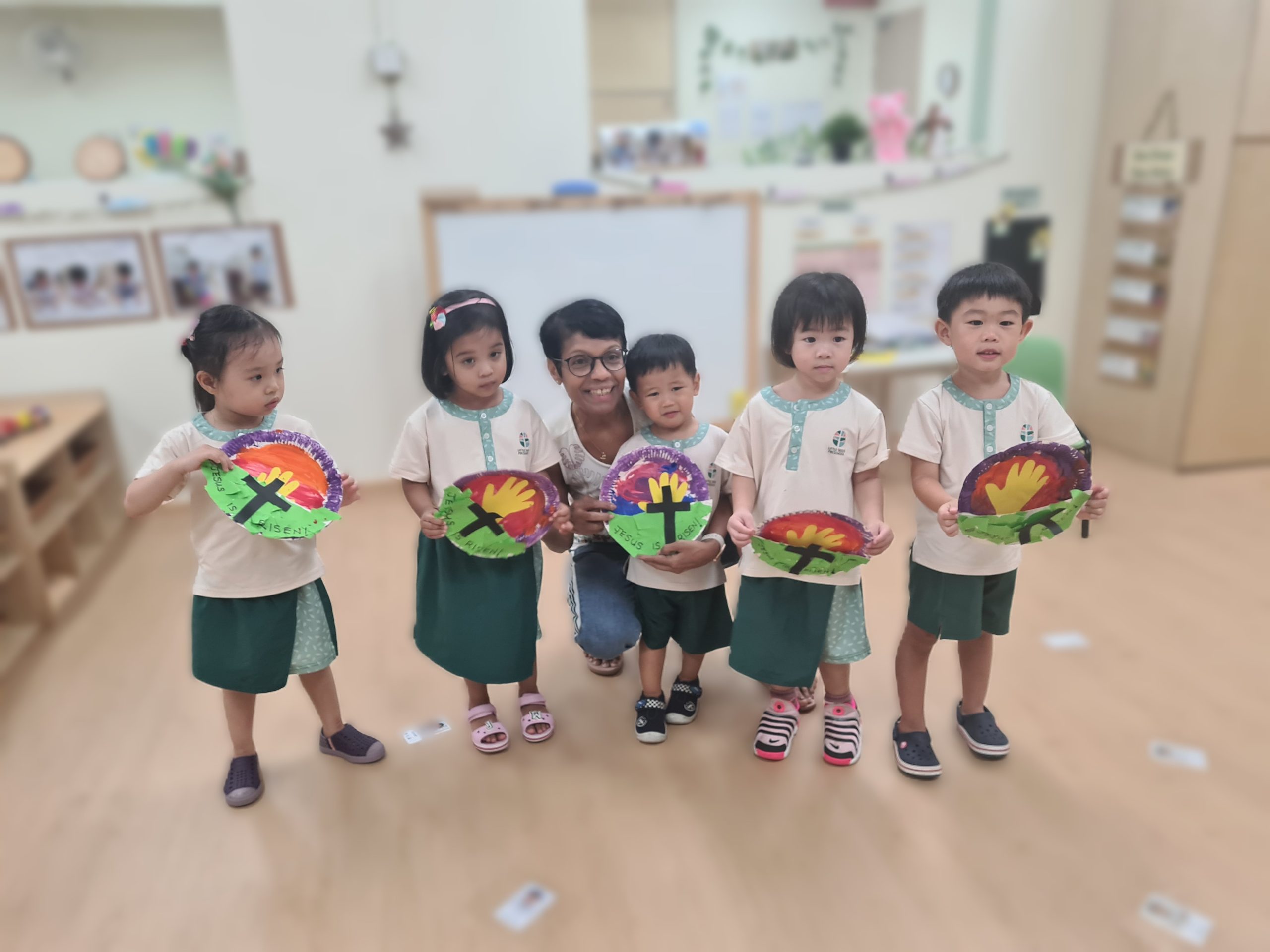
- We develop children’s moral and character based on Christian values
- Host unhurried conversations about life and its challenges
- Promote values-in-action
- Catch real-life situations and turn them into incidental but valuable learning moments
- Intentionally mould the personhood and well-being of every child
Executive Function & Life Skills
Based on neuroscience and brain research, everything we do builds children’s 3 core brain functions.
- Cognitive flexibility – consider alternative perspectives and respond to changing circumstances
- Working memory – retain information so it can be well used
- Inhibitory control – resist automatic and impulsive behaviour
We intentionally equip children with 7 essential life skills necessary for all lifelong learning, engage in goal-directed reasoning and problem solving.
These are:
- Focus and Self-Control
- Perspective Taking
- Communicating
- Making Connections
- Critical Thinking
- Taking On Challenges
- Self-Directed Engaged Learning
- Our programme covers the necessary academic learning concepts and prepare children well for the MOE programme and routines
- We instill the joy of learning, confidence to ask for help and perseverance amidst failure
- We teach children to navigate friendships and conflict resolution
- Offer interesting enrichment programmes across disciplines – technology, performing arts, etc.
|
Values Matter (PG-K2)
|
![]() |
Motor Skills Development (PG-K2)
|
|
Phonics & Reading (English) N-K2
|
|
ART
|
|
MUSIC & MOVEMENT
|
|
Math (Key to Learning) PG-K2
|
|
Sensory Play & Inquiry PG-K2
|
- We believe that there are multiple pathways to learning and each child develops at a different pace.
- We celebrate children’s unique ideas and expressions.
- We value the process of learning over the product.
- We respect each child’s way of expression and tailor the learning to better match their needs
- We work with parents as a child’s first teachers, we build upon the foundations laid from home and invite them into the learning process
Values for Life
- We develop children’s moral and character based on Christian values
- Host unhurried conversations about life and its challenges
- Promote values-in-action
- Catch real-life situations and turn them into incidental but valuable learning moments
- Intentionally mould the personhood and well-being of every child
Executive Function & Life Skills
Based on neuroscience and brain research, everything we do builds children’s 3 core brain functions.
- Cognitive flexibility – consider alternative perspectives and respond to changing circumstances
- Working memory – retain information so it can be well used
- Inhibitory control – resist automatic and impulsive behaviour
We intentionally equip children with 7 essential life skills necessary for all lifelong learning, engage in goal-directed reasoning and problem solving. These are:
- Focus and Self-Control
- Perspective Taking
- Communicating
- Making Connections
- Critical Thinking
- Taking On Challenges
- Self-Directed Engaged Learning
- Our programme covers the necessary academic learning concepts and prepare children well for the MOE programme and routines
- We instill the joy of learning, confidence to ask for help and perseverance amidst failure
- We teach children to navigate friendships and conflict resolution
- Offer interesting enrichment programmes across disciplines – technology, performing arts, etc.
Our Inspiration
The Reggio Emilia Approach
At the heart of the approach are these 3 main components: the Child, the Environment and the Teacher. We value every child’s unique way of thinking, playing, sharing, interacting, etc. The familiar phrase – “the environment as the 3rd teacher” indicates that the learning spaces are developed with concrete open-ended materials. Teachers allow space for exploration where children experiment, problem-solve and discover within safe boundaries.
Mind in the Making (MITM)
MITM’s 7 essential life skills are based on the science and research of children’s brain development. We intentionally encourage executive function skills that are linked to children’s success in school and life. These skills are: Focus and Self Control, Perspective Taking, Communicating, Making Connections, Critical Thinking, Taking on Challenges and Self-directed, Engaged Learning.
The Social Constructivist Approach
We develop children’s cognitive learning abilities through the “Key to Learning” programme. This playful and collaborative approach is based on Vygotsky’s theory of social constructivism, where all learning takes place in a social context. It builds children’s logical reasoning, creative thinking and symbolic representation. It’s primary focus is on how children learn.
FAQs About Our Preschool Curriculum
How does play-based learning help my child’s development?
Play-based learning encourages children to explore ideas, solve problems, and express themselves in ways that feel natural and enjoyable. These experiences support social skills, communication, confidence, and a genuine love for learning.
What is the MOE-aligned preschool curriculum in Singapore?
Preschools in Singapore follow national early childhood guidelines that focus on holistic development, ensuring learning is age-appropriate, balanced, and meaningful.
What age is appropriate for structured preschool learning?
Structured learning is introduced gradually from the nursery years, alongside play, routines, and exploration, helping children transition comfortably as they grow.
How does Little Seeds Preschool prepare children for primary school?
Children develop strong foundations in values, literacy, numeracy, and learning habits, supporting a smooth and confident transition to primary school.
How are preschool fees determined?
Fees are based on factors such as programme type, age group, enrolment duration, and any applicable subsidies.
How do curriculum choices impact preschool fees?
Programme structure, learning resources, and daily schedules may influence preschool fees, reflecting the support provided for children’s learning experiences.