Teaching Values Through Everyday Experiences in Preschool
Key Takeaways:
Developing core values in preschool occurs through repeated, meaningful everyday experiences that help children see how their actions affect others.
Consistent routines such as tidying up, taking turns, and caring for shared materials help children understand responsibility and their role within a community.
Guided conversations during moments of conflict or mistake help children learn honesty, fairness, and how to make things right.
Shared classroom experiences encourage generosity, cooperation, and consideration for others in practical and age-appropriate ways.
Strong relationships and adult modelling shape how children understand integrity, empathy, and accountability over time.
Introduction: Where Values Begin
The preschool years shape far more than early academic skills. They are also a time when children begin forming habits that influence how they relate to others and understand concepts such as fairness, responsibility, and honesty. These lessons are rarely absorbed through instruction alone. They tend to grow through daily experiences in a steady and caring environment.
When a child waits for a turn, helps a friend, or tidies up shared materials, those small moments begin to matter. Through such interactions, children gradually start developing core values, recognising that their choices affect the people around them.
At Little Seeds Preschool, character formation is woven into everyday routines and relationships. Guided by values of respect, love, community, and truth, children are supported in practising self-control, generosity, responsibility, and honesty in ways that feel natural and meaningful. One of the first areas where this growth becomes visible is in how children learn to manage their impulses and make thoughtful choices.
Supporting Self-Control Through Choice and Patience
Learning self-control takes time. Young children are still learning to manage impulses and navigate strong emotions, and preschool provides a consistent setting where this growth can develop step by step.
Waiting for a turn, completing one activity before moving on, or choosing between two options may seem minor. Yet these everyday situations give children opportunities to develop self-control and generosity. With adult support, they begin to recognise how they feel and consider how to respond. Rather than intervening immediately, educators often remain present and guide children through the moment, helping them understand their choices.
In classrooms influenced by the Reggio Emilia approach, an educational philosophy that values child-led inquiry and collaborative learning, independence sits alongside clear expectations. Children are encouraged to make decisions while also learning that shared spaces require awareness of others. Over time, repeated experiences like these help children see that self-control is not simply about rules. It is about learning to pause, reflect, and act with consideration.
This process forms part of social-emotional learning in early childhood, as children gradually build the awareness and confidence needed to respond thoughtfully in different situations.
Encouraging Generosity Through Shared Experiences
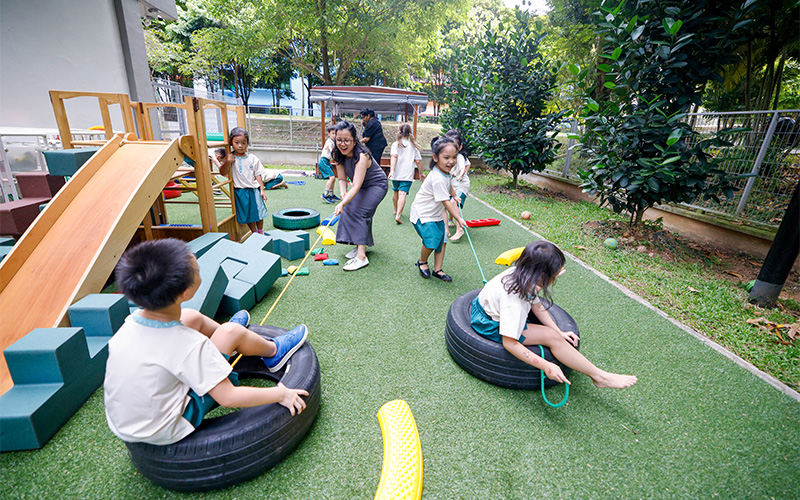
Children begin to understand generosity when they see its effect on others. Sharing materials during art time, taking turns in group activities, or helping a classmate complete a task helps them see how small actions can make a difference.
These everyday interactions form part of values education in preschool, linking empathy with practical behaviour. When educators draw attention to what happened and how it affected others, children gain clearer insight into why generosity matters. They start to notice that cooperation supports friendships and mutual trust.
With repeated opportunities to share and contribute, giving gradually becomes less dependent on reminders. This steady progression supports early childhood moral development, as children come to understand that consideration and mutual respect strengthen relationships.
Teaching Responsibility Through Daily Routines
Responsibility in preschool is usually introduced through steady, manageable routines. Packing away after play, returning materials to their place, and taking on simple classroom roles give children practical ways to contribute.
When these expectations are part of everyday life, teaching responsibility to young children feels natural rather than corrective. Children begin to see that shared spaces work best when everyone contributes.
Across our centres, including our childcare campus in Bukit Batok, classrooms are arranged to encourage independence. Materials are within reach and routines are clear, making it easier for children to take ownership of their surroundings. In our bilingual preschool setting, expectations are reinforced consistently across languages, helping children build understanding through repetition.
As children take part in these routines day after day, they grow more assured in their ability to contribute. These experiences gradually support the wider process of developing core values rooted in accountability and consideration for others.
Nurturing Honesty and Integrity Through Reflection
Disagreements and mistakes are part of everyday life in preschool. How these moments are handled can shape a child’s understanding of honesty and fairness.
When a child admits to taking something without asking or describes what happened during a conflict, the adult’s response matters. Instead of reacting quickly or focusing only on consequences, educators guide children to reflect on what took place and who was affected. This helps children consider both fairness and responsibility in a way they can understand.
Conversations often focus on understanding what happened and how to make it right. Children are encouraged to think about how their actions affect others and what they can do next. Gradually, they begin to see that honesty strengthens trust and keeps friendships steady.
These repeated reflections strengthen social-emotional learning in early childhood and contribute to moral development, as children come to see integrity not as a rule to follow but as part of who they are becoming.
The Role of Environment and Relationships
Children take in far more than spoken instructions. They watch how adults respond, how routines are carried out, and how people treat one another. The classroom tone, how conflicts are handled, and the consistency of expectations all shape how values are understood.
When educators show fairness, follow through on their words, and take responsibility for their actions, children see what integrity looks like in practice. In environments influenced by the Reggio Emilia methodology, collaboration and shared exploration are part of daily learning. Children work alongside one another, discuss ideas, and solve problems together, which gives them regular opportunities to practise cooperation and consideration.
With repeated practice, these shared experiences and relationships make developing core values part of everyday life, rather than something taught in isolation.
Conclusion: Foundations That Extend Beyond the Classroom
The preschool years offer daily opportunities for children to practise patience, generosity, responsibility, and honesty in ways that connect directly to their lived experiences. Through steady routines and strong relationships, these moments gradually shape how children see themselves and how they participate in a community. In this way, developing core values becomes part of their growing identity rather than a lesson to memorise.
As a nurturing preschool in Singapore, Little Seeds Preschool integrates character development into everyday learning in practical, consistent ways. Our educators model the behaviours they hope to see, guide children through moments of reflection, and create classroom environments where respect, responsibility, and cooperation are part of daily life.
If you would like to learn more about our values-centred approach and how we support children’s development in the early years, we warmly invite you to connect with our team through a school tour and explore our preschool community.
Encouraging Executive Function Skills in Preschoolers
Key Takeaways:
Executive functioning skills shape how children manage emotions, follow instructions, solve problems, and develop independence.
Daily routines and self-help tasks such as dressing, tidying, and making simple choices strengthen focus, planning, and follow-through.
Predictable structure supports calmer transitions and helps children build steady self-regulation over time.
Space for trial and error encourages adaptability, resilience, and confidence when facing challenges.
Valuing effort and attitude over perfection nurtures long-term motivation and a positive approach to learning.
How Executive Functioning Skills Shape Confident, Capable Learners
Executive functioning skills shape how children handle everyday moments. They help a child wait patiently, follow simple instructions, cope with frustration, or decide what to do when something does not go to plan. These are not academic skills in the usual sense, yet they form the foundation for learning, relationships, and growing independence.
At their core, executive functioning skills include three key components. Working memory allows children to hold and use information, such as remembering a two-step instruction. Inhibitory control helps them pause before acting, manage impulses, and regulate behaviour. Cognitive flexibility enables them to adapt when plans change or when a different approach is needed. Together, these abilities support how children think, respond, and grow each day.
In the preschool years, these abilities develop most naturally through daily life. Routines, relationships, and repeated practice strengthen executive function development in early childhood far more effectively than drills or worksheets. When guided with care, these skills support emotional balance, steady focus, and lasting confidence.
Below are practical, age-appropriate ways families and preschools can nurture this growth.
1. Build Self-Help Skills Through Practice
Self-help tasks require children to plan their actions, sustain attention, and complete steps in order. Dressing supports working memory. Tidying builds organisation and follow-through. Washing hands reinforces sequencing and focus. Repeated daily routines strengthen preschoolers’ self-regulation skills in ways that feel natural and consistent rather than pressured.
Building independence in young children is not about expecting flawless results. It is about allowing time, offering guidance, and encouraging effort. When adults pause before stepping in, children learn to persist through small frustrations and experience the satisfaction of completing a task on their own. Confidence grows gradually, rooted in repeated practice.
In a nurturing preschool environment, these opportunities are woven into the day. Independence is guided with intention and patience, giving children steady support as they learn to manage tasks more confidently on their own.
2. Support Decision-Making with Simple Choices
Young children are learning how to weigh options and think ahead. Offering limited choices supports this growth. A question such as, “Would you like to read a book or build with blocks?” encourages a child to pause, consider, and decide.
Making small decisions strengthens working memory and early reasoning. It supports executive function development in early childhood by helping children reflect before acting instead of responding impulsively. Over time, they begin to think through preferences and possible outcomes more carefully.
Choice-making also builds a sense of agency. When children feel heard, they are more likely to participate and take responsibility for their actions. Simple decisions, repeated daily, lay the groundwork for confident and thoughtful judgement later on.
In a holistic preschool environment, choice is woven naturally into the day. Options are intentional and manageable, guiding children toward steady, thoughtful decision-making without overwhelming them.
3. Use Predictable Routines to Strengthen Self-Regulation
Children feel more secure when they know what to expect. Predictable routines reduce uncertainty and free up energy for learning. Consistency supports self-regulation skills by helping them anticipate transitions and respond more calmly.
Morning greetings, snack times, stories, outdoor play, and tidy-up periods create a rhythm that feels safe. With steady expectations, children practise waiting, listening, and moving from one activity to another without becoming overwhelmed. Impulse control develops within this sense of stability.
Routines also guide emotional regulation. When a child knows that outdoor play follows circle time, frustration is less likely to surface. Patience and sequencing are gradually internalised through repetition.
In a play-based preschool, routines provide structure without rigidity. The balance of consistency and flexibility allows children to strengthen executive function abilities within a steady, reassuring environment.
4. Encouraging Confidence Through Trial and Error
When a child tries something new, and it does not work, whether a puzzle piece will not fit, a tower collapses, or a drawing turns out differently than expected, that moment shapes how the child responds to challenge and builds confidence over time.
When children are given space to pause, adjust, and try again, they strengthen cognitive flexibility and resilience that extend well beyond the preschool years. Challenges become opportunities to rethink and adapt rather than signals to stop.
Executive functioning skills include the ability to shift strategies and persist. Cognitive flexibility allows children to consider alternatives. Resilience supports continued effort instead of withdrawal. These habits develop through steady guidance and calm encouragement.
A simple prompt such as, “What could you try next?” encourages reflection without criticism. Over time, children begin to internalise this approach. Mistakes are recognised as part of learning, strengthening both confidence and adaptability.
5. Valuing Attitude, Effort, and Growth
Focusing only on outcomes such as a finished drawing, a correct answer, or a neatly arranged shelf limits deeper growth. Executive function abilities develop more strongly when attention centres on effort, persistence, and approach rather than results alone.
Recognising how a child listens carefully, keeps trying, or adjusts after a mistake reinforces habits that matter over time. A comment such as, “Good job, you kept working on that even when it felt tricky,” draws attention to the process and encourages reflection.
When improvement is valued more than flawless performance, children are more willing to attempt new tasks and take manageable risks. Resilience strengthens. Confidence becomes grounded in effort rather than praise. These qualities support executive function development in meaningful and lasting ways.
Over time, children begin to evaluate their own effort and notice their progress. They adjust strategies independently and take greater ownership of their learning. This gradual shift towards self-motivation lies at the heart of building independence in young children.
Why Executive Function Abilities Matter for the Long Term
Strong executive functioning skills shape far more than classroom behaviour. They influence how children manage friendships, handle setbacks, organise tasks, and adapt to new situations. Early strengths in these areas are closely linked to later academic progress and social confidence.
Development does not look the same for every child. Some need more time to build impulse control. Others benefit from added support with working memory or emotional regulation. Growth unfolds gradually and is shaped by consistent relationships and the environment.
This is why early childhood settings matter. In Singapore’s context, a strong foundation in these skills is essential for a smooth transition into primary school and beyond. In a preschool grounded in shared values, character and self-discipline grow alongside thinking skills. In a holistic setting, emotional and social development are seen as essential to school readiness. Within an inquiry-led programme, children learn actively through exploration and guided practice.
Supporting Executive Function Abilities at Little Seeds Preschool
At Little Seeds, executive functioning skills are woven into everyday classroom life. Children practice them when they tidy up, work through disagreements, take part in group activities, and explore new ideas. Educators model calm guidance, maintain predictable routines, and create space for thoughtful choices and reflection.
As a faith-based preschool that values character and community, we approach executive function development with care and purpose. Our focus is on nurturing children who are self-aware, emotionally steady, and able to adapt to challenges.
If you would like to learn more about how we strengthen self-regulation skills and support growing independence through daily practice, we invite you to connect with our team through a school tour and see whether our preschool community is the right fit for your family.
Teaching Kindness and Respect in the Early Years Through Daily Interactions
Key Takeaways:
Kindness is shaped through everyday interactions, where children observe how adults and peers communicate, respond, and relate to one another.
Teaching kindness becomes more effective when it is embedded into daily routines, allowing children to practise cooperation, sharing, and consideration naturally.
Guided conversations, storytelling, and role-play help children recognise emotions and understand different perspectives in a safe and meaningful way.
A consistent environment that reflects inclusion, belonging, and clear values supports children in developing respectful and caring relationships over time.
Introduction
Kindness and respect are not instilled through one-off lessons or simple reminders. They grow slowly, shaped by the everyday moments children experience and participate in. In the early years, teaching kindness is less about instruction and more about immersion. Children begin to understand empathy, gratitude, and inclusion by observing how people around them speak, listen, and respond.
At Little Seeds Preschool, this understanding is embedded within a faith-based preschool rooted in strong values, where character formation is an integral part of daily life. Through our “Values Matter” curriculum, children consistently experience these values across routines, relationships, and learning experiences, rather than in isolation. Each interaction thus becomes an opportunity to nurture respect, shaping how children relate to others with care and intention.
How Young Children Learn Kindness by Observing Others
Young children are keen observers. The way a teacher kneels to listen, pauses before responding, or acknowledges a child’s feelings clearly conveys messages about how people interact respectfully. These actions are rarely labelled as lessons, yet they carry lasting influence.
In our classrooms, educators model attentiveness, patience, and thoughtful communication. Simple moments, such as guiding a child to say, “I hear you,” or “May I have a turn after you?” transform abstract concepts into tangible interactions. Over time, these repeated experiences shape behaviour. Children begin to mirror what they see, thus laying the foundations for empathy in preschoolers through observation and active participation.
Using Daily Routines to Practise Kindness and Respect
Kindness gains its true meaning through practice, not mere discussion. Daily routines provide a consistent rhythm for children to experience cooperation and shared responsibility, naturally teaching kindness throughout their day rather than treating it as a separate lesson.
During mealtimes, children learn to wait, pass items, and notice others. While tidying up, they work together towards a shared goal. In group activities, they practise turn-taking and collaboration. These are not separate lessons; rather, they are embedded within the day’s natural flow. Through these experiences, children begin to understand that respect in early childhood is expressed through small, consistent actions.
In a play-based preschool setting, these routines feel natural rather than imposed. Children engage readily because the environment invites participation, and expectations are clear yet gentle.
Encouraging Empathy Through Stories and Shared Conversations
Stories offer a unique glimpse into perspectives beyond a child’s own. Through characters and narratives, children naturally explore a range of feelings, challenges, and relationships, sparking their own reflections.
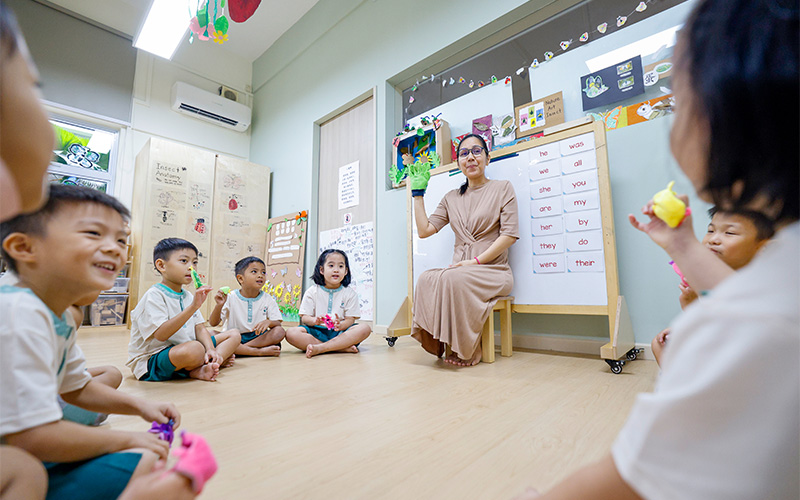
In our classrooms, reading sessions are often followed by quiet conversations. A teacher might ask, “How do you think the character felt when that happened?” or “What could someone do to help?” These questions do not demand one correct answer. Instead, they encourage children to think, listen, and respond.
This approach mirrors principles of the Reggio Emilia approach, where dialogue and shared understanding are central to learning. Children begin to connect stories with their own real-life experiences, strengthening their capacity to recognise and respond to the emotions of others.
Supporting Children as They Learn to Express Care for Others
Young children are still developing the ability to express care in ways others can understand. They may experience concern but not yet know how to act upon it.
Through role-play and guided interactions, children are provided with opportunities to practise. A classroom scenario might involve comforting a distressed friend, offering assistance during a task, or resolving a disagreement with appropriate support. Educators gently guide these moments, not by dictating outcomes but by helping children consider their choices.
When a child shares a toy or checks in on a peer, such actions are purposefully acknowledged. Over time, children begin to associate kindness with connection. It becomes an intrinsic part of their interactions with others, rather than an act performed solely for approval.
Creating an Inclusive Environment That Reinforces Respect
The environment itself carries messages about belonging and value. A thoughtfully prepared space reflects diversity, encourages participation, and invites children to see themselves and others within it, thereby supporting the teaching of kindness through everyday experiences rather than isolated instruction.
At Little Seeds Preschool, we recognise that an inclusive environment supports children in understanding both difference and unity. Our displays, materials, and interactions are designed to reflect a range of cultures, languages, and family experiences. This helps children feel seen, while also learning to appreciate perspectives beyond their own.
This sense of belonging is not incidental; it is nurtured intentionally. It is rooted in our belief that each child has unique potential and purpose, and that community is built through mutual respect and care.
Reflecting on Kindness at the End of the Day
Reflection helps children connect actions with meaning. A simple end-of-day conversation, for instance, can illuminate moments that might otherwise go unnoticed, prompting children to pause and consider how their actions affected others.
A teacher might ask, ‘What was something kind you did today?’ or ‘Did someone help you?’ At times, children may need gentle prompts to recall specific moments, especially if an experience felt small or routine. Such discussions encourage them to consider not just the events, but also the feelings they elicited in themselves or others.
Over time, children begin to recognise patterns in their behaviour. They become more aware of how listening, sharing, or offering help shapes their relationships. Gradually, kindness becomes a deliberate choice. Instead of being externally prompted, it is guided by an emerging sense of awareness and responsibility.
Conclusion
Kindness and respect are nurtured through the countless small interactions that fill a child’s day. They are evident as children listen, respond, share, and include others. With consistent modelling, meaningful routines, and opportunities for reflection, teaching kindness becomes an intrinsic part of a child’s experience.
At Little Seeds Preschool, we do not overlook these moments; rather, we recognise them as essential for a child’s growth. Rooted in our values-based and faith-driven philosophy, we support children in developing empathy, building relationships, and thoughtfully engaging with the world.
If you are seeking a preschool where character, community, and learning are intrinsically linked, we invite you to reach out and discover how we nurture each child’s unique journey.
The Role of Teachers as Guides Rather Than Instructors in Early Education
Key Takeaways:
The role of preschool teachers focuses on guiding children’s learning through experience and interaction
A child-centred teaching approach supports deeper engagement and confidence over time
Guided learning encourages children to think independently while feeling supported
Strong relationships and a nurturing environment play a central role in early development
Introduction
In the early years, learning is shaped not only by what children are introduced to but also by how they are supported as they explore, question, and make sense of the world around them. This is precisely why the role of preschool teachers is so crucial. Instead of focusing solely on instruction, we adopt a guiding approach that enables children to engage actively in their own learning while receiving support at every stage.
At Little Seeds Preschool, we understand that every child possesses unique strengths, interests, and ways of understanding. Our aim is to acknowledge these individual differences and respond with care, crafting experiences that allow each child to flourish at their own natural pace.
When children are empowered to participate rather than merely follow, learning becomes a profound experience they truly own, not something they simply encounter.
Why Early Learning Is About the Process, Not Just Content
It is easy to assume that early education focuses solely on introducing foundational knowledge. Yet much of what children truly gain at this stage stems from how they learn, rather than what they learn. When children are encouraged to explore ideas, test possibilities, and revisit experiences, they begin to develop enduring habits of thought.
In our classrooms, our emphasis is on the learning process itself. This reflects a child-centred teaching approach, meaning children are not expected to progress in the same way or at the same pace. Instead, we observe how they engage and build upon that, allowing learning to unfold in a way that feels meaningful and connected to their individual experiences.
Over time, this helps children become more confident when approaching new situations, as they are accustomed to thinking, adapting, and trying again.
How We Cultivate Curiosity Through the Learning Environment
The environment plays a quiet but powerful role in shaping children’s learning. When spaces are thoughtfully prepared, they invite children to explore independently. This involves ensuring materials are accessible, activities are open-ended, and there is ample room for children to move freely between ideas as their curiosity develops.
Our approach is influenced by the Reggio Emilia philosophy, which views the environment as an active participant in the learning experience. Consequently, every element children encounter daily, what they see, touch, and interact with, is carefully considered to support exploration and discovery.
In this setting, we serve as teacher-facilitators. We observe what captures a child’s interest and thoughtfully extend it, rather than introducing something entirely separate. A moment of curiosity can thus become the starting point for deeper learning when given time and attention. This approach keeps children engaged, as the learning feels directly connected to their own thoughts and questions.
Supporting Learning Through Observation and Thoughtful Guidance
Observation is fundamental to guiding children’s learning, embodying the preschool teacher’s role in fostering development with intention and care. It allows us to understand not merely what a child is doing, but how they approach situations, respond to challenges, and interact with others.
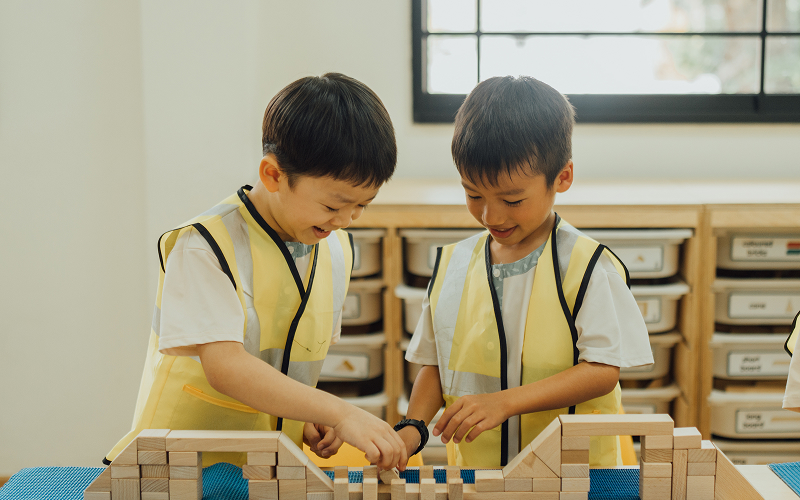
Rather than stepping in with immediate answers, we often guide through prompts and conversation. For instance, during free play, a child’s block tower collapses, and we might ask, “What could you try differently?” Nearby, when two children reach for the same materials, we guide them to pause, share what they each had in mind, and find a way forward together. This approach characterises guided learning in preschool, where support is always present but never overrides the child’s own thought process.
In this way, children gradually become more confident in exploring ideas independently. They begin to view challenges as opportunities to work through, rather than obstacles to avoid. This subtle shift is crucial for building resilience and self-assurance over time.
Fostering Autonomy and Ownership in Young Learners
Children develop a sense of autonomy when they feel their choices and contributions are valued. In our daily routines, we create opportunities for them to make decisions about how they engage with activities, approach tasks, and express their ideas.
This does not mean that learning is unstructured. Instead, within a supportive framework, children are given the space to participate actively. As they experience this repeatedly, they begin to recognise their own abilities and develop a sense of ownership over what they are learning.
Over time, this cultivates a deeper sense of confidence. Children are not simply completing tasks; they are actively involved in the process, making decisions and observing the outcomes of their own efforts. This kind of engagement supports both motivation and self-awareness in a way that more directive approaches often do not.
Building Strong Relationships as the Foundation for Guidance
Effective guidance stems from strong relationships, and this forms the core of a preschool teacher’s role in shaping a child’s early learning experience. Children are more likely to engage, express themselves, and participate in learning when they feel secure and understood.
At Little Seeds Preschool, we prioritise building these connections. We dedicate time to understanding each child’s personality, interests, and emotional cues, enabling us to respond consistently and supportively. This familiarity helps children feel at ease, which in turn fosters deeper engagement in learning.
Beyond the classroom, we extend this care throughout our wider community. Our pastoral support reflects our commitment to creating a nurturing environment not only for children but also for their families, recognising that a child’s development is closely linked to the relationships around them.
Supporting Social and Emotional Growth Through Guided Interaction
Social and emotional development is woven into everyday experiences. Within these daily interactions, such as moments of sharing, negotiating, and expressing feelings, lie valuable learning opportunities.
We carefully guide children through these moments, helping them to understand their own emotions while recognising the perspectives of others. Through conversation and modelling, children learn how to communicate more clearly, respond with empathy, and work through challenges with others.
As these experiences gradually build, children become more aware of how their actions affect those around them. They begin to develop the skills needed to navigate relationships thoughtfully and respectfully.
Why Guiding Prepares Children for Lifelong Learning
When learning is shaped through exploration, reflection, and guided support, children begin to develop skills that extend beyond the classroom, underscoring the vital role of preschool teachers in creating meaningful learning experiences. Curiosity, persistence, and the ability to think through problems are cultivated through repeated experiences that actively encourage children’s engagement.
Our curriculum is designed with this in mind. We focus on developing essential life skills such as communication, critical thinking, and self-directed learning, recognising these as the foundation for future growth.
As a faith preschool, we also emphasise values and character, ensuring that learning supports not only cognitive development but also a sense of purpose and identity. Within a nurturing preschool environment, children receive support that respects their individuality and fosters their growth into thoughtful and capable individuals.
Conclusion
We see each child as an individual on their unique journey of growth, and our role is to walk alongside them as they explore and learn. Through careful observation, thoughtful guidance, and strong relationships, we cultivate an environment where children feel supported to participate, ask questions, and discover new ideas.
At Little Seeds Preschool, this philosophy informs our daily interactions with children. By focusing on meaningful experiences and consistent guidance, we aim to support not only what children learn but also how they develop as learners and as individuals.
If you are looking for a preschool environment that values balanced learning and development, we invite you to get in touch and discover more about how we can support your child’s journey.
Supporting Preschoolers as They Learn to Navigate Group Settings
Key Takeaways:
Social development in preschoolers grows gradually through everyday group experiences, not instant results.
Young children may find group settings overwhelming at first, especially when managing emotions and communication at the same time.
Consistent routines, gentle guidance, and positive role modelling help children feel more secure and confident around others.
Play, reflection, and guided interactions give children practical ways to build empathy, cooperation, and problem-solving skills.
Introduction
Learning to be part of a group is a quiet but important milestone in early childhood. For many young children, entering a shared space brings a whole new set of experiences. There are conversations happening all around them, turns to take, and emotions to navigate, often all at once. It can feel unfamiliar, and at times, a little overwhelming.
This is where social development in preschoolers begins to unfold in a more meaningful way. With steady guidance and familiar routines, children slowly learn how to participate, not just by being present, but by engaging with others thoughtfully and confidently.
At Little Seeds Preschool, group experiences are introduced gently, giving children the space to observe, participate at their own pace, and grow within a calm and supportive environment.
Why Group Settings Can Feel Overwhelming at First
Being part of a group is often more complex than it seems. A child isn’t simply playing alongside others; they are simultaneously learning how to express their needs, respond to different personalities, and adapt to shared expectations.
Some children may initially hold back, quietly observing and absorbing their surroundings. Others may find it difficult to wait, share attention, or find the words to communicate. These differences, shaped by temperament, language development, and confidence, influence each child’s experience of preschool peer interaction.
Recognising these challenges naturally leads to a more thoughtful response. Rather than expecting children to adjust immediately, adults can offer space, patience, and gentle support. A quieter child might be given time to observe before participating, while a more expressive child may be guided to pause and listen.
Within a nurturing preschool environment in Singapore, this balanced approach allows children to progress at their own pace. Gradually, what once felt overwhelming becomes more familiar, and children grow into group experiences with greater ease and confidence.
Building Emotional Awareness in Everyday Moments
Before children can navigate social situations, they first need to understand their own emotions. This growing awareness quietly lays the foundation for smoother, more confident interactions as they develop.
Often, it’s the small, everyday moments that leave the deepest impression. A teacher gently naming a feeling during a disagreement, a child pausing to notice that a friend seems upset, or a short, unhurried conversation after play to help make sense of what just happened. These moments may seem simple, yet they slowly shape how children understand themselves and those around them.
Stories and role-play offer another gentle pathway. Through these experiences, children begin to see situations from different perspectives, even if only in small ways at first. Over time, this encourages more thoughtful responses during group play in early childhood, where emotions and interactions naturally overlap.
At Little Seeds Preschool, these moments aren’t treated as separate from learning. Instead, they’re woven into the daily routine through respectful dialogue and shared reflection, supporting preschoolers’ social development in a way that feels natural, steady and meaningful.
How Children Learn Social Behaviour by Watching Others
Children learn a great deal by observing the adults around them. The way a teacher listens, responds, and interacts subtly demonstrates how relationships work.
For instance, a calm tone during a tense moment shows how to manage strong emotions, while taking the time to listen fully demonstrates respect. Even small gestures, such as acknowledging effort or thanking a child for waiting, begin to shape how children interact with one another.
This kind of modelling often speaks louder than instructions. Over time, children begin to mirror what they see, adopting similar behaviours and building their confidence in social situations through observation and repetition.
Such an approach aligns naturally with Reggio Emilia-influenced environments, where relationships are seen as central to learning and development.
Using Play as a Natural Way to Practise Social Skills
Play provides a space for children to practise social skills in a low-pressure environment. It offers sufficient structure to guide interaction, while still allowing room for exploration.
Activities with shared goals or clearly defined roles can be particularly beneficial. A simple storytelling circle, a collaborative building project, or a turn-taking game encourages children to engage with each other in manageable ways, making it easier to support them in group settings.
Through play, children begin to test their understanding, learning when to speak, when to listen, and how to react when things don’t go as planned. Some interactions may flow smoothly, while others may be less successful, but both are valuable parts of the learning process.
With time and repetition, these experiences help children to become more comfortable and confident in group environments.
Guiding Children Through Conflict with Care
Disagreements are a natural part of group activities. Whether it’s sharing toys, differing ideas, or quickly escalating emotions, these moments, though challenging, provide valuable opportunities for growth.
Instead of immediately intervening, gently guiding children allows them to navigate these situations with support. A teacher might help a child articulate their feelings, encourage them to consider another viewpoint, or steer them towards a mutually agreeable solution.
This approach isn’t about avoiding conflict, but about learning from it. Children begin to realise that disagreements can be resolved, and that they can express their feelings in a way that is heard and respected.
In well-designed preschool programmes, these everyday moments become crucial building blocks for developing empathy and problem-solving skills.
Why Routines Help Children Feel More Secure in Groups
Consistency fosters a sense of safety. When children know what to expect, they can focus on interacting with others, rather than navigating uncertainty.
Simple routines, visual cues, and predictable transitions all contribute to this stability. A familiar daily flow, clear expectations during group time, and gentle signals for transitioning between activities help children feel more at ease.
This structure supports preschoolers’ social development by reducing anxiety about what comes next. As a result, children participate more confidently in shared experiences.
At Little Seeds, carefully prepared routines provide this steady framework, allowing children to engage comfortably within a group environment.
A Gentle Approach to Growing Together
Social confidence doesn’t appear overnight. It builds slowly, shaped by everyday experiences, supportive relationships, and time.
This is where social development becomes more visible in preschoolers. Through repeated opportunities to interact, reflect, and try again, children begin to feel more at ease within a group.
By nurturing emotional awareness, modelling positive behaviour, and creating space for meaningful interaction, children gradually find their place among others. They learn not only how to participate but how to connect in ways that feel respectful and genuine.
At Little Seeds Preschool, this journey is guided with care and intention. Consistent routines and strong relationships create a stable environment in which children can grow into thoughtful and capable members of a community.
If you are looking for a preschool that supports your child’s social and emotional growth in a calm and considered way, please reach out to Little Seeds Preschool to learn more about our approach.
Helping Young Children Express Needs Clearly in a Classroom Environment
Key Takeaways:
Effective communication skills are a vital tool for preschoolers to navigate shared spaces and seek support, helping them feel secure and understood in the classroom.
Supporting language development involves recognising that children communicate through a blend of words, gestures, and behaviour, requiring adults to respond with patience and thoughtful observation.
A play-based learning approach creates natural opportunities for children to practise negotiating roles and expressing needs, which helps link language skills to real-life social situations.
Consistency between home and school environments reinforces a child’s confidence, as similar language expectations in both settings help them articulate their needs more clearly.
Introduction
Young children often know what they need but struggle to express it clearly. In a bustling classroom, preschoolers are learning to navigate shared spaces, communicate with peers, and seek support from teachers. When supported to express their needs with clarity and confidence from an early age, children feel more secure and understood. Developing strong communication skills in preschoolers is, therefore, essential for their active participation and emotional well-being.
At Little Seeds Preschool, communication acts as a vital bridge, empowering children to participate meaningfully in their learning environment and find their unique voice.
Why Clear Communication Matters in the Early Years
Effective communication skills provide preschoolers with a crucial buffer against frustration, enabling them to navigate the complexities of a group environment more smoothly. When children can express their needs, whether by asking for help with a difficult puzzle, sharing a new idea, or setting a boundary with a peer, they are significantly less likely to withdraw or act out when misunderstood.
This progress marks a key aspect of language development in preschoolers, as they learn to translate internal feelings into external requests. By articulating their thoughts, children move from reactive behaviours to proactive engagement with those around them.
These early skills support both emotional well-being and positive social interaction, forming the core of a child’s social-emotional competence.
At Little Seeds Preschool, we recognise ‘Communicating’ as one of the seven essential life skills identified through brain development research, which are crucial for success in both school and life. By mastering the ability to articulate their needs, children build a strong foundation for a lifetime of healthy relationships, confident problem-solving, and positive classroom experiences.
Understanding How Preschoolers Communicate Their Needs
Young children are multimodal communicators, often combining words, gestures, tone of voice, and behaviour. Misunderstandings often arise when a child’s language development hasn’t quite caught up with the complexity of their intended message. Developing strong communication skills in preschoolers means bridging this gap between intention and articulation.
Recognising these early signals, such as a tug on a sleeve or a specific facial expression, enables adults to respond thoughtfully. This respectful approach aligns with Little Seeds’ belief in observing and listening closely to each child, ensuring they feel seen even before they have the perfect words.
Creating a Classroom Culture That Encourages Expression
Children are more likely to speak up when they feel safe and accepted within their learning environment. A classroom culture that values listening, patience, and respectful responses encourages children to take the social risk of expressing themselves, a step fundamental to their personal growth.
At Little Seeds Preschool, we believe in celebrating each child’s unique ideas and expressions, ensuring they feel their voice is valued from the very start.
Within the Little Seeds Preschool curriculum, consistent routines and calm interactions create a predictable environment where children can thrive. We intentionally engage in unhurried conversations about life and its challenges, giving children the space they need to articulate complex thoughts.
When children know they will not be judged for a “wrong” word or a hesitant request, they gain the courage to share their needs and ideas openly. This nurturing space allows us to respect each child’s unique way of expressing themselves and tailor our learning approach to suit their individual needs better.
Supporting Language Development Through Everyday Interactions
Everyday interactions provide natural opportunities to model clear and respectful communication. A few simple practices can be highly effective:
Rephrasing: Gently rephrasing a child’s words with slightly more structure helps them grasp proper syntax.
Emotional Vocabulary: Introducing words such as ‘frustrated’ or ‘excited’ helps children to label their internal states, fostering their social-emotional competencies.
The Power of the Pause: Allowing children ample time to process and respond, without rushing them, is crucial for fostering their self-directed learning.
These techniques collectively enable children to gradually articulate their needs in ways that are easily understood by others.
Using Play and Group Activities to Practise Communication
Play-based learning offers the most meaningful context for children to practise their developing skills. Through activities such as dramatic role-play at a ‘grocery store’ or collaborative building projects in the block corner, play encourages children to:
Negotiate roles and responsibilities with their peers.
Ask clarifying questions to gain a clearer understanding of shared goals.
Express changes to their plans or propose new ideas during collaborative tasks.
These experiences help children connect language with real-world situations in a natural, engaging way that formal lessons simply cannot match.
Navigating Two Worlds: The Bilingual Experience
Children in a bilingual preschool in Singapore are often navigating two languages simultaneously, leading to unique communication needs. Switching between English and Mandarin (or other mother tongues) demands significant cognitive flexibility. It is not uncommon for a child to know a word for a need in one language but not the other.
We celebrate this linguistic journey, providing a supportive space where “code-switching” is recognised as a stepping stone towards fluency. Supporting classroom communication skills in a bilingual context means being doubly patient and encouraging as children learn to express themselves across different cultural and linguistic settings.
Responding to Children With Gentle Guidance
When children struggle to find the right words, gentle guidance is more effective than direct correction. Instead of saying, “That’s not how you ask,” a teacher might say, “Are you trying to say you would like a turn?”
Acknowledging their effort and offering simple sentence structures preserves their confidence. At Little Seeds, we are committed to guiding children thoughtfully rather than speaking on their behalf, empowering them to eventually articulate their thoughts.
The Role of Consistency Between Home and School
Consistent communication practices across home and school help reinforce learning and provide a stable foundation for a child’s growth. When children experience similar language expectations and supportive listening in both settings, their confidence soars because they feel consistently understood.
We work closely with parents as a child’s first teachers, building upon the foundations already laid at home and inviting families directly into the learning process.
This partnership reflects our deep commitment to collaborating with families to support children holistically. By aligning our approaches, we ensure that the “voice” children find at school carries over into their home life and vice versa.
This shared commitment helps us intentionally nurture every child’s development and well-being, ensuring they feel valued and ready to engage with the world around them.
Conclusion
Helping young children express their needs clearly is an essential part of supporting their growth. Through respectful listening, supportive language, and meaningful practice, preschoolers develop the communication skills needed to gain confidence and engage with the world.
At Little Seeds Preschool, fostering clear communication is part of nurturing children who feel understood, valued, and ready to contribute to their learning community. As a faith-based, bilingual preschool in Singapore, we are dedicated to celebrating each child’s unique potential.
Our play-based approach supports the development of essential life skills, including perspective-taking and effective communication. With 17 centres nationwide catering to children from 6 months to 6 years old, we invite you to see how our curriculum can support your child’s journey.
Are you ready to join our community? Enquire today to learn more about our programmes and find the perfect nurturing space for your child to grow.
3 Activities to Do with Your Child on the Weekends in Singapore
The Early Childhood Development Agency (ECDA) has announced that with effect from 1 January 2025, childcare centres are no longer required to operate on Saturdays. Parents have also welcomed the news as 98% of surveyed families expressed that they did not require Saturday childcare services. This new policy not only enables early childhood educators to recharge and spend time with loved ones, but also grants parents more quality time with their children. While this change will only be strictly implemented in 2025, childcare centres may choose to close on Saturdays if there is no demand from 1 January 2024. As we embrace this shift, we have curated a list of enriching activities in Singapore for you to enjoy with your little one over the weekends!
With a diverse range of interactive exhibits and hands-on activities, Science Centre Singapore (SCS) is the perfect place to encourage curiosity in your child and foster a love of learning. Children get to explore various scientific concepts in a fun and accessible way, while parents can strengthen their bond with their kids by explaining certain ideas that may be challenging for young minds to grasp. SCS exemplifies that learning extends beyond the confines of school and preschool curriculum. Through engaging displays and immersive showcases, children discover new ways to think critically, solve problems and develop their creativity. Additionally, SCS often hosts educational shows and workshops that you can consider enrolling your child in to further elevate the overall learning experience.
A Picnic in Nature
While nurturing the mind is crucial for cognitive growth, the importance of a healthy body should not be overlooked. The harmonious development of both mind and body is essential to children’s development. Taking a family day out together in nature, such as a picnic, can help everyone to unwind and appreciate the beauty of the outdoors. A picnic is also a great way to strengthen bonds and create lasting memories, offering a unique blend of outdoor enjoyment, delicious food and shared experiences that promote family togetherness. It provides an opportunity to escape the routine of daily life and connect with nature. In this casual setting, communication, laughter and a sense of unity are enhanced. The Marina Barrage, Botanic Gardens, and Fort Canning Park are just some of the many scenic spots to have a picnic in Singapore.
Who says parents can’t have fun too when spending time with their little ones? While keeping your children happy and stimulated is every parent’s focus, the weekends are about you too!
Family events and festivals offer a wholesome and entertaining environment that caters to various age groups, ensuring that every family member finds something enjoyable. These gatherings typically feature a range of performances, attractions and specific activities that promote socialisation, allowing families to connect and foster a sense of belonging and community spirit. Children are introduced to new cultures, arts, ideas and other educational elements in a dynamic and interactive way; once again, learning and exploring outside their classroom and preschool curriculum. By participating in family-friendly events, families can build rapport and form positive traditions that extend beyond the event itself.
There is no denying that parents wield the most significant influence on their children, serving as role models while they grow. That is why dedicating time to engage in activities with your little one is so important throughout their early years. Not only does it shape their character and mindset for the future, but it also improves their overall relationship with you.
At Little Seeds Preschool, we celebrate our preschoolers for who they are. Providing a positive, safe and secure environment, our educators ensure that children are respected and free to express themselves. With centres spanning across Singapore including our preschool in Yishun, preschool in Bukit Batok, preschool in Kovan and more, our values-based education allows children to grow at their own pace, cultivating a love for discovery, exploration, and positive life-long learning habits.
3 Ways To Help Your Preschooler Develop A Love Of Reading
Today, the importance of encouraging reading especially at a young age cannot be understated. Early reading brings about a multitude of benefits, from language development and cognitive abilities to improving creativity and social skills. Children are exposed to a rich and diverse vocabulary, enhancing their communication both verbally and in writing. Furthermore, your little one can explore different worlds, characters and scenarios, nurturing them to think outside of the box.
As a trusted preschool in Singapore with a preschool curriculum that enhances the quality of early childhood education, we are here to share several ways you can help your preschooler develop a love of reading!
Start Early and Make Reading a Ritual
All children are unique in their own ways, and while some may take to reading immediately, others might require more time. That is why getting your little one in the habit of reading early is so important. It helps children who love reading build up that passion, and gives those who might not, some time to get used to the idea and eventually develop a liking for it. Early reading also allows children to maximise the cognitive and social advantages that can benefit them well into adulthood. You can encourage reading with your child as early as a year old, starting with picture books filled with bright colours to draw their attention.
Beyond starting early, it’s also important to make reading a habit. In designing our preschool curriculum, we understand that routines provide consistency and predictability for children, creating comfort and security. Moreover, when reading is associated with positive emotions and experiences, children come to expect and look forward to it. Regular exposure to language through reading also helps reinforce and expand your child’s vocabulary. The more consistent, the better their language development. Try reading them a story every night before bedtime as a start.
Explore a Variety of Books
Children have varied interests, and introducing a diverse book selection enables them to discover a range of genres, topics, and styles. Finding books that align with their interests increases engagement and enthusiasm for reading. Every book offers various experiences and perspectives as well, empowering children to view things from multiple angles and improve their critical thinking and problem-solving abilities. When it comes to language skills, acquainting your little one with a broad set of vocabulary is key. As different authors possess their own style, tone and choice of words, reading a variety of books exposes children to new words and phrases they can learn.
Encourage Book Discussions and Book Clubs
Instilling a love of reading is no easy feat and simply reading with your child regularly may not be enough to sustain that passion. After a reading session with them, discuss the story with your preschooler. Ask them who their most-liked character was, their favourite part of the story, the lessons they learnt and what they thought about the story as a whole. This not only fosters critical thinking and immersion in the story even after it has ended, but it also enhances their communication and confidence when their opinions are voiced out loud. If you wish to build upon these attributes, our preschool curriculum is specially developed to empower them in these areas!
You can even take it a step further and host book clubs with other parents and their children too! Having the littles ones regularly share their thoughts about the books they read to a group of people minimises the fear of public speaking. Talking to children around their own age also makes things more relatable, fun and exciting for them. Both parents and children are introduced to new books as well, and it is an overall wonderful and stimulating activity for your child to anticipate.
Above are just some of the many ways you can inculcate a love of reading in your child. But most importantly, use this opportunity to strengthen your relationship with them. Reading together creates a positive bonding experience between parents or caregivers and children, serving as a platform for children to process their emotions and promote well-being.
At Little Seeds Preschool, we are a faith-based preschool, focusing on teaching children the values of life. Pair your child’s reading journey with us, where we will continue to nurture their confidence, self-expression, creativity and imagination.
The vibrant and diverse city of Singapore offers countless opportunities for children to explore, learn, and play. While bustling malls and urban wonders are plenty, the Western part of the island has a variety of activities for your little ones to experience and enjoy during their after-preschool time. Little Seeds Preschool, a preschool nestled in prime locations like Bukit Batok and Jurong West, has some great suggestions to keep your children engaged and entertained. Read to discover what some of these fun and educational activities are!
The Singapore Science Centre is a hub of discovery, where young minds can explore the wonders of science and technology in an interactive and engaging way. After preschool, head to this stimulating space that offers a world of hands-on experiences and learning opportunities for children of all ages.
As your children explore, they’ll encounter various science-related concepts, helping them build a solid foundation in STEM (Science, Technology, Engineering, and Mathematics). With an exciting blend of entertainment and education, the Science Centre serves as an ideal post-preschool destination for both preschoolers and parents alike.
Playtime at West Coast Park
What better way for your little ones to relax and release their pent-up energy than by spending quality time outdoors? West Coast Park stands out as an ideal destination for families, offering a wide range of recreational options and open spaces. The park boasts a collection of playgrounds, with equipment suitable for children as young as two years old. From impressive slides to challenging rope courses and climbing structures, this playground promises hours of entertainment and physical activity for your little ones.
Moreover, West Coast Park isn’t solely about its playgrounds. It also provides a beautiful space for picnics, kite-flying, and leisurely strolls along the coastline. The park’s lush greenery and picturesque settings are a peaceful escape from the hustle and bustle of daily life, allowing your family to bond and relax amidst nature’s beauty.
One of the highlights of Jurong Lake Gardens is the “Forest Ramble.” This unique play area immerses children in a natural wonderland, complete with a treehouse, suspension bridge, and stepping stones. It encourages them to explore, connect with nature, and develop their creativity. More adventurous families may also enjoy the cycling and skating tracks, allowing children to learn new skills while exploring the park on wheels. This destination promises a world of adventure, and is just a stone’s throw away from the Little Seeds Preschool in Jurong West, making it a convenient choice for after-school adventures.
The West of Singapore is full of exciting experiences for the whole family, making it a great place for after-school adventures. So prepare your things, round up your little explorers, and get ready for an adventure to the vibrant world of the West!
Ready to embark on a journey of educational and fun-filled adventures with your little ones? With conveniently located centres in Bukit Batok and Jurong West, and a total of 18 centres all around Singapore, Little Seeds Preschool is your ideal partner in exploring the above enriching experiences. Reach out to our team of educators to find out more about our preschool curriculum today.
5 Strategies For Instilling Confidence In Your Preschooler
The preschool years are a pivotal time in a child’s life and are when they build and develop their confidence and self-esteem. As parents and caregivers, it’s essential to nurture these qualities early on, providing the support and encouragement necessary for their growth. In order to create a positive and empowering environment for your preschooler, here are some effective strategies that will not only boost their self-assurance but also equip them with the resilience to face life’s challenges.
1. Encourage Autonomy and Decision Making
Preschool years mark a significant phase in a child’s development as it’s during this time that their sense of independence and decision-making skills start to blossom. Allow your child to make simple choices, such as selecting their outfits or picking snacks. By doing so, you empower them, making them feel capable and important. Providing opportunities for decision-making not only boosts their confidence but also enhances their problem-solving abilities, setting a strong foundation for future challenges.
2. Create a Supportive Environment
A nurturing and supportive environment is fundamental for building confidence in preschoolers. Consider creating a warm and comfortable atmosphere where your child feels deeply cherished, safe and valued, enabling them to express themselves freely and fostering their emotional well-being. Listen attentively to their thoughts and feelings, validating their emotions while offering encouragement and positive reinforcement, emphasising that mistakes are natural aspects of learning and not something to fear. Our preschool curriculum practises this by incorporating interactive activities that promote social and emotional development, cultivating a sense of belonging and trust among preschoolers, ensuring a holistic approach to their overall growth and self-assurance. When children know they have a safety net of support, they are more willing to take risks and explore new things, building their self-assurance along the way.
3. Celebrate Effort and Growth
Praising effort over the outcome is a powerful way to instil confidence in preschoolers and this is practised in all our centres, including our Little Seeds Preschool (TSA – Tampines). Instead of solely focusing on achievements, learn to celebrate the hard work and determination your child puts into their tasks. When they see that their efforts are recognised and appreciated, they develop a strong sense of self-worth. Encourage them to try new activities and applaud their courage, regardless of the result. By acknowledging their progress and growth, you teach them that learning is a continuous journey and that every step forward, no matter how small, is an achievement worth celebrating.
4. Foster a Growth Mindset
Introducing your preschooler to the concept of a growth mindset can significantly impact their motivation and resilience. Teach them that abilities and intelligence can be developed through dedication and hard work. Emphasise the power of “yet,” as in, “I can’t do this yet.” This simple word transforms a fixed mindset into a growth mindset, motivating perseverance and a positive attitude towards challenges. When children understand that their abilities are not fixed but can be enhanced with effort, they become more resilient in the face of setbacks, boosting their confidence to tackle new tasks and challenges head-on.
5. Be a Positive Role Model
Children often mimic the behaviour of the adults around them, making it essential for parents and caregivers to model confidence and self-assurance. Demonstrate a positive attitude towards challenges and setbacks while showing them that making mistakes is a natural part of learning by openly discussing your own experiences. By showcasing resilience, optimism, and self-belief, you provide your preschoolers with a powerful role model, teaching them the valuable lesson that faith in oneself comes from within and can be cultivated through a positive mindset.
Nurturing confidence in your preschooler bestows upon them an invaluable gift that will shape their future. Remember, it is not just a trait but a skill that can be cultivated with love, patience, and positive reinforcement.
Ready to give your child the best start in their educational journey? At Little Seeds Preschool, we understand the significance of building confidence in young learners. Our 18 nurturing childcare and infant care centres boast experienced educators and a holistic approach to early childhood education designed to empower your child, helping them bloom into confident and capable individuals.