2027 intake now open for registration! Enrol now

Teaching Values Through Everyday Experiences in Preschool

Key Takeaways:

  • Developing core values in preschool occurs through repeated, meaningful everyday experiences that help children see how their actions affect others.
  • Consistent routines such as tidying up, taking turns, and caring for shared materials help children understand responsibility and their role within a community.
  • Guided conversations during moments of conflict or mistake help children learn honesty, fairness, and how to make things right.
  • Shared classroom experiences encourage generosity, cooperation, and consideration for others in practical and age-appropriate ways.
  • Strong relationships and adult modelling shape how children understand integrity, empathy, and accountability over time.

Introduction: Where Values Begin

The preschool years shape far more than early academic skills. They are also a time when children begin forming habits that influence how they relate to others and understand concepts such as fairness, responsibility, and honesty. These lessons are rarely absorbed through instruction alone. They tend to grow through daily experiences in a steady and caring environment.

When a child waits for a turn, helps a friend, or tidies up shared materials, those small moments begin to matter. Through such interactions, children gradually start developing core values, recognising that their choices affect the people around them.

At Little Seeds Preschool, character formation is woven into everyday routines and relationships. Guided by values of respect, love, community, and truth, children are supported in practising self-control, generosity, responsibility, and honesty in ways that feel natural and meaningful. One of the first areas where this growth becomes visible is in how children learn to manage their impulses and make thoughtful choices.

Supporting Self-Control Through Choice and Patience

Learning self-control takes time. Young children are still learning to manage impulses and navigate strong emotions, and preschool provides a consistent setting where this growth can develop step by step.

Waiting for a turn, completing one activity before moving on, or choosing between two options may seem minor. Yet these everyday situations give children opportunities to develop self-control and generosity. With adult support, they begin to recognise how they feel and consider how to respond. Rather than intervening immediately, educators often remain present and guide children through the moment, helping them understand their choices.

In classrooms influenced by the Reggio Emilia approach, an educational philosophy that values child-led inquiry and collaborative learning, independence sits alongside clear expectations. Children are encouraged to make decisions while also learning that shared spaces require awareness of others. Over time, repeated experiences like these help children see that self-control is not simply about rules. It is about learning to pause, reflect, and act with consideration.

This process forms part of social-emotional learning in early childhood, as children gradually build the awareness and confidence needed to respond thoughtfully in different situations.

Encouraging Generosity Through Shared Experiences

Children begin to understand generosity when they see its effect on others. Sharing materials during art time, taking turns in group activities, or helping a classmate complete a task helps them see how small actions can make a difference.

These everyday interactions form part of values education in preschool, linking empathy with practical behaviour. When educators draw attention to what happened and how it affected others, children gain clearer insight into why generosity matters. They start to notice that cooperation supports friendships and mutual trust.

With repeated opportunities to share and contribute, giving gradually becomes less dependent on reminders. This steady progression supports early childhood moral development, as children come to understand that consideration and mutual respect strengthen relationships.

Teaching Responsibility Through Daily Routines

Responsibility in preschool is usually introduced through steady, manageable routines. Packing away after play, returning materials to their place, and taking on simple classroom roles give children practical ways to contribute.

When these expectations are part of everyday life, teaching responsibility to young children feels natural rather than corrective. Children begin to see that shared spaces work best when everyone contributes.

Across our centres, including our childcare campus in Bukit Batok, classrooms are arranged to encourage independence. Materials are within reach and routines are clear, making it easier for children to take ownership of their surroundings. In our bilingual preschool setting, expectations are reinforced consistently across languages, helping children build understanding through repetition.

As children take part in these routines day after day, they grow more assured in their ability to contribute. These experiences gradually support the wider process of developing core values rooted in accountability and consideration for others.

Nurturing Honesty and Integrity Through Reflection

Disagreements and mistakes are part of everyday life in preschool. How these moments are handled can shape a child’s understanding of honesty and fairness.

When a child admits to taking something without asking or describes what happened during a conflict, the adult’s response matters. Instead of reacting quickly or focusing only on consequences, educators guide children to reflect on what took place and who was affected. This helps children consider both fairness and responsibility in a way they can understand.

Conversations often focus on understanding what happened and how to make it right. Children are encouraged to think about how their actions affect others and what they can do next. Gradually, they begin to see that honesty strengthens trust and keeps friendships steady.

These repeated reflections strengthen social-emotional learning in early childhood and contribute to moral development, as children come to see integrity not as a rule to follow but as part of who they are becoming.

The Role of Environment and Relationships

Children take in far more than spoken instructions. They watch how adults respond, how routines are carried out, and how people treat one another. The classroom tone, how conflicts are handled, and the consistency of expectations all shape how values are understood.

When educators show fairness, follow through on their words, and take responsibility for their actions, children see what integrity looks like in practice. In environments influenced by the Reggio Emilia methodology, collaboration and shared exploration are part of daily learning. Children work alongside one another, discuss ideas, and solve problems together, which gives them regular opportunities to practise cooperation and consideration.

With repeated practice, these shared experiences and relationships make developing core values part of everyday life, rather than something taught in isolation.
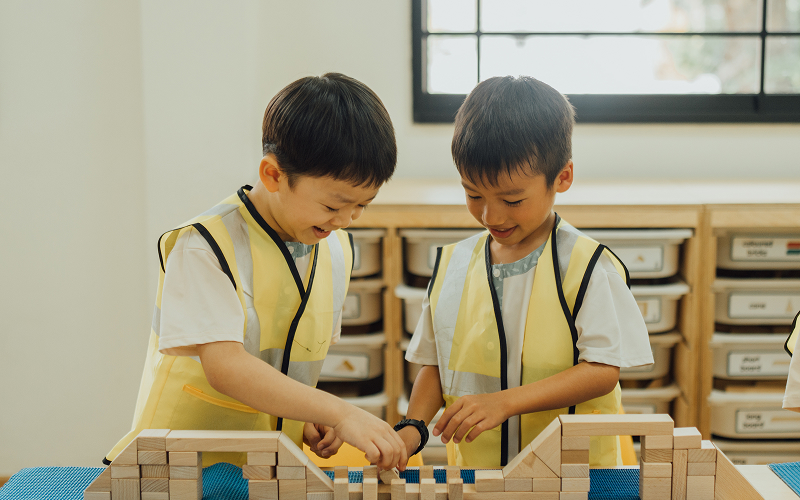
Two young boys in safety vests playing with wooden blocks.

Conclusion: Foundations That Extend Beyond the Classroom

The preschool years offer daily opportunities for children to practise patience, generosity, responsibility, and honesty in ways that connect directly to their lived experiences. Through steady routines and strong relationships, these moments gradually shape how children see themselves and how they participate in a community. In this way, developing core values becomes part of their growing identity rather than a lesson to memorise.

As a nurturing preschool in Singapore, Little Seeds Preschool integrates character development into everyday learning in practical, consistent ways. Our educators model the behaviours they hope to see, guide children through moments of reflection, and create classroom environments where respect, responsibility, and cooperation are part of daily life.

If you would like to learn more about our values-centred approach and how we support children’s development in the early years, we warmly invite you to connect with our team through a school tour and explore our preschool community.

Encouraging Executive Function Skills in Preschoolers

Key Takeaways:

  • Executive functioning skills shape how children manage emotions, follow instructions, solve problems, and develop independence.
  • Daily routines and self-help tasks such as dressing, tidying, and making simple choices strengthen focus, planning, and follow-through.
  • Predictable structure supports calmer transitions and helps children build steady self-regulation over time.
  • Space for trial and error encourages adaptability, resilience, and confidence when facing challenges.
  • Valuing effort and attitude over perfection nurtures long-term motivation and a positive approach to learning.

How Executive Functioning Skills Shape Confident, Capable Learners

Executive functioning skills shape how children handle everyday moments. They help a child wait patiently, follow simple instructions, cope with frustration, or decide what to do when something does not go to plan. These are not academic skills in the usual sense, yet they form the foundation for learning, relationships, and growing independence.

At their core, executive functioning skills include three key components. Working memory allows children to hold and use information, such as remembering a two-step instruction. Inhibitory control helps them pause before acting, manage impulses, and regulate behaviour. Cognitive flexibility enables them to adapt when plans change or when a different approach is needed. Together, these abilities support how children think, respond, and grow each day.

In the preschool years, these abilities develop most naturally through daily life. Routines, relationships, and repeated practice strengthen executive function development in early childhood far more effectively than drills or worksheets. When guided with care, these skills support emotional balance, steady focus, and lasting confidence.

Below are practical, age-appropriate ways families and preschools can nurture this growth.

1. Build Self-Help Skills Through Practice

Self-help tasks require children to plan their actions, sustain attention, and complete steps in order. Dressing supports working memory. Tidying builds organisation and follow-through. Washing hands reinforces sequencing and focus. Repeated daily routines strengthen preschoolers’ self-regulation skills in ways that feel natural and consistent rather than pressured.

Building independence in young children is not about expecting flawless results. It is about allowing time, offering guidance, and encouraging effort. When adults pause before stepping in, children learn to persist through small frustrations and experience the satisfaction of completing a task on their own. Confidence grows gradually, rooted in repeated practice.

In a nurturing preschool environment, these opportunities are woven into the day. Independence is guided with intention and patience, giving children steady support as they learn to manage tasks more confidently on their own.

2. Support Decision-Making with Simple Choices

Young children are learning how to weigh options and think ahead. Offering limited choices supports this growth. A question such as, “Would you like to read a book or build with blocks?” encourages a child to pause, consider, and decide.

Making small decisions strengthens working memory and early reasoning. It supports executive function development in early childhood by helping children reflect before acting instead of responding impulsively. Over time, they begin to think through preferences and possible outcomes more carefully.

Choice-making also builds a sense of agency. When children feel heard, they are more likely to participate and take responsibility for their actions. Simple decisions, repeated daily, lay the groundwork for confident and thoughtful judgement later on.

In a holistic preschool environment, choice is woven naturally into the day. Options are intentional and manageable, guiding children toward steady, thoughtful decision-making without overwhelming them.

3. Use Predictable Routines to Strengthen Self-Regulation

Children feel more secure when they know what to expect. Predictable routines reduce uncertainty and free up energy for learning. Consistency supports self-regulation skills by helping them anticipate transitions and respond more calmly.

Morning greetings, snack times, stories, outdoor play, and tidy-up periods create a rhythm that feels safe. With steady expectations, children practise waiting, listening, and moving from one activity to another without becoming overwhelmed. Impulse control develops within this sense of stability.

Routines also guide emotional regulation. When a child knows that outdoor play follows circle time, frustration is less likely to surface. Patience and sequencing are gradually internalised through repetition.

In a play-based preschool, routines provide structure without rigidity. The balance of consistency and flexibility allows children to strengthen executive function abilities within a steady, reassuring environment.

4. Encouraging Confidence Through Trial and Error

When a child tries something new, and it does not work, whether a puzzle piece will not fit, a tower collapses, or a drawing turns out differently than expected, that moment shapes how the child responds to challenge and builds confidence over time.

When children are given space to pause, adjust, and try again, they strengthen cognitive flexibility and resilience that extend well beyond the preschool years. Challenges become opportunities to rethink and adapt rather than signals to stop.

Executive functioning skills include the ability to shift strategies and persist. Cognitive flexibility allows children to consider alternatives. Resilience supports continued effort instead of withdrawal. These habits develop through steady guidance and calm encouragement.

A simple prompt such as, “What could you try next?” encourages reflection without criticism. Over time, children begin to internalise this approach. Mistakes are recognised as part of learning, strengthening both confidence and adaptability.

5. Valuing Attitude, Effort, and Growth

Focusing only on outcomes such as a finished drawing, a correct answer, or a neatly arranged shelf limits deeper growth. Executive function abilities develop more strongly when attention centres on effort, persistence, and approach rather than results alone.

Recognising how a child listens carefully, keeps trying, or adjusts after a mistake reinforces habits that matter over time. A comment such as, “Good job, you kept working on that even when it felt tricky,” draws attention to the process and encourages reflection.

When improvement is valued more than flawless performance, children are more willing to attempt new tasks and take manageable risks. Resilience strengthens. Confidence becomes grounded in effort rather than praise. These qualities support executive function development in meaningful and lasting ways.

Over time, children begin to evaluate their own effort and notice their progress. They adjust strategies independently and take greater ownership of their learning. This gradual shift towards self-motivation lies at the heart of building independence in young children.

Preschooler developing problem-solving skills on indoor rock climbing wall.

Why Executive Function Abilities Matter for the Long Term

Strong executive functioning skills shape far more than classroom behaviour. They influence how children manage friendships, handle setbacks, organise tasks, and adapt to new situations. Early strengths in these areas are closely linked to later academic progress and social confidence.

Development does not look the same for every child. Some need more time to build impulse control. Others benefit from added support with working memory or emotional regulation. Growth unfolds gradually and is shaped by consistent relationships and the environment.

This is why early childhood settings matter. In Singapore’s context, a strong foundation in these skills is essential for a smooth transition into primary school and beyond. In a preschool grounded in shared values, character and self-discipline grow alongside thinking skills. In a holistic setting, emotional and social development are seen as essential to school readiness. Within an inquiry-led programme, children learn actively through exploration and guided practice.

Supporting Executive Function Abilities at Little Seeds Preschool

At Little Seeds, executive functioning skills are woven into everyday classroom life. Children practice them when they tidy up, work through disagreements, take part in group activities, and explore new ideas. Educators model calm guidance, maintain predictable routines, and create space for thoughtful choices and reflection.

As a faith-based preschool that values character and community, we approach executive function development with care and purpose. Our focus is on nurturing children who are self-aware, emotionally steady, and able to adapt to challenges.

If you would like to learn more about how we strengthen self-regulation skills and support growing independence through daily practice, we invite you to connect with our team through a school tour and see whether our preschool community is the right fit for your family.

5 Healthy Ways to Introduce Technology to Preschoolers

Key Takeaways:

  • When technology is used intentionally with preschoolers, it can support learning without replacing play, movement, and real-world interaction.
  • High-quality, age-appropriate content is more beneficial than fast-paced or overly stimulating digital media.
  • Clear time limits help ensure screens do not crowd out outdoor play, creativity, and social experiences.
  • Co-viewing, active participation, and consistent adult modelling shape healthier digital habits in early childhood.

Understanding Technology in the Preschool Years

Technology is ubiquitous in modern life. It appears in homes, on commutes, and even in some preschool classrooms, so it feels natural that preschoolers are exposed to it too. When used with care, technology can spark curiosity, support creativity, and even extend learning in small but meaningful ways.

The challenge for many parents is not deciding whether screens are allowed, but figuring out how to use them wisely. How much screen time is appropriate? What kind of content is helpful? How do we ensure screens do not crowd out play, movement, and real conversation?

The goal is simple, even if it takes effort to maintain: technology should complement childhood, not compete with it. The ideas below offer practical ways to support mindful media use in early childhood, while protecting the balance that allows preschoolers to grow, explore, and thrive.

1. Prioritise High-Quality, Age-Appropriate Content

When it comes to screens, quality matters far more than quantity. One helpful way to think about digital content is in terms of low stimulation and high stimulation.

Low stimulation content is slower-paced, visually simple, and easier to follow. It usually has gentle sound effects, clear storylines, and space between transitions. This type of content gives preschoolers time to process what they are seeing and hearing, which better supports focus and comprehension.

High stimulation content, on the other hand, is fast-moving, visually intense, and packed with rapid scene changes or loud sound effects. It is designed to grab attention quickly and keep it there. While it may be entertaining, it can easily overwhelm young children and make it harder for them to regulate their attention afterwards.

When introducing technology to a preschooler, it helps to pause and ask: Does this content encourage curiosity and creativity, or is it simply designed to keep them watching? Thoughtful choices ensure technology supports development rather than distracting from it.

2. Follow Clear and Consistent Screen Time Limits

Even when content is educational, limits still matter. Clear screen time boundaries help families avoid daily power struggles and create a rhythm that feels steady rather than constantly negotiated. Children respond well to predictability, and transitions tend to feel calmer when they know what to expect.

Limits work best when they are not framed as punishment, but as part of a balanced routine. Screen use is easier to manage when the rest of the day includes outdoor movement, imaginative play, shared reading, building, and hands-on creative activities. This natural mix makes balancing screen time and play feel practical, not extreme.

Simple structures can make a big difference. For example, screen time might be limited to one short window a day, or offered only after active play. In a nurturing preschool environment, routines are designed with intention, ensuring that technology remains a small, supportive part of a child’s experience rather than the centre of it.

3. Make Screen Time Interactive Through Co-Viewing

Sitting with your child during screen time can transform the experience. When you watch or play together, you can ask simple questions, highlight interesting details, and help your preschooler connect what appears on the screen with real life. A short video about animals, for example, might lead to a conversation about pets, or a counting game could become an opportunity to spot numbers around the home.

Co-viewing supports mindful media use in early childhood because the screen becomes a shared activity, rather than an isolating one. Even a few minutes of engagement can make digital time more conversational and meaningful.

If you notice your preschooler zoning out or struggling to disengage from the device, it may indicate that the content is not well-suited or that it is time to switch to a hands-on activity. When introducing technology to a preschooler, connection should always come before convenience.

4. Encourage Active Participation Over Passive Consumption

Not all screen time is equal. Active use involves a child doing something, such as solving a problem, creating a drawing, making choices, or responding to prompts that require thought. Passive use, in contrast, mainly involves watching with little interaction.

To support healthy technology habits in children, it is helpful to prioritise digital activities that encourage creativity, movement, or simple problem-solving. Drawing apps, interactive storytelling, or age-appropriate puzzles can engage a child’s thinking more meaningfully than endless scrolling or autoplay videos.

A useful indicator is how your child feels afterwards. If they finish screen time feeling curious and wanting to discuss what they saw, this suggests engagement. If they seem listless or unusually irritable, the experience may have been too passive or overstimulating.

In well-designed preschool programmes, technology is used in ways that encourage participation rather than replace it. The goal is not to fill time, but to support learning while still allowing space for hands-on play and real-world discovery.

5. Model Healthy Technology Habits at Home

Children notice far more than we realise. They observe how often we check our phones, whether we stay present during conversations, and how we respond when a device pings for attention. When adults put away devices during meals, set phones aside during play, and demonstrate that screens have clear boundaries, children begin to see those limits as normal.

Modelling works because it shapes the overall tone of the home. Digital balance feels less like a restriction placed on the child and more like a shared family rhythm. Simple practices make a difference. Device-free dinners, phones kept out of bedrooms, and wind-down routines that rely on books or quiet conversation, rather than screens, all reinforce healthy patterns.

Over time, these small, consistent choices help children build healthy technology habits naturally, resulting in fewer battles, clearer expectations and a calmer relationship with screens.

Little Seeds teacher assisting preschoolers as they prepare for class.

Conclusion: Building a Balanced Digital Foundation

Technology is integral to childhood in the modern world, but it need not dominate it. At home and in preschool settings, the priority remains steady, balanced development. Choosing age-appropriate content, setting clear limits, co-viewing with intention, encouraging active participation, and modelling healthy boundaries all contribute to healthy technology habits for children.

The goal is not perfection; it is consistency. When screens are used purposefully, and alongside movement, conversation, creative expression and hands-on exploration, children begin to understand that technology is a tool, rather than a default setting.

At Little Seeds Preschool, this balanced philosophy shapes everything we do. Guided by the Reggio Emilia approach, we focus on inquiry, relationships, and meaningful real-world experiences. Children are encouraged to explore, question, create, and connect in ways that support deep and lasting learning.

To discover how we foster confident, thoughtful learners in today’s digital world, please connect with our team to discuss whether our preschool community is the right fit for your family.

How Faith-Aligned Values Shape Daily Classroom Experiences

Key Takeaways:

  • Values are absorbed through everyday experiences, where small interactions and routines shape how children understand respect, empathy, and responsibility.
  • In a faith-based education, beliefs are lived out consistently through relationships and daily practices, rather than taught as isolated concepts.
  • Educators play a central role by modelling behaviour, guiding interactions, and creating space for children to apply values in real situations.
  • A strong values foundation supports emotional security, social confidence, and a more balanced approach to learning that extends beyond the classroom.

Introduction

In the preschool years, values are not picked up through lengthy explanations or structured lessons. Instead, they form gradually, woven into the quiet rhythm of the day: a gentle tone of voice, taking turns without being reminded, or a teacher guiding a child through a small disagreement. These seemingly simple moments shape how children begin to understand care, respect, and what it means to be part of a community.

At Little Seeds Preschool, our faith-based education is rooted in this everyday experience. Values are not treated as separate lessons taught at specific times. Rather, they are woven into our interactions, our responses, and the way we foster an environment where each child feels seen and supported. When children experience consistency, care, and respect in tangible ways, these qualities begin to take root naturally.

What Faith-Aligned Values Look Like in Everyday Preschool Life

In a faith-based environment, values such as kindness, patience, integrity, and respect are not taught as distant ideas. Instead, they are lived out daily in the small, everyday moments children experience.

A teacher lowers herself to a child’s eye level, speaking calmly instead of rushing through instructions. A child instinctively offers help when a friend struggles with a task. Rather than being shut down, a disagreement during play is gently guided so both children can be heard. These moments may seem simple, yet they profoundly shape how children begin to understand others and their place within a group.

This is where values-based learning in early childhood gains true significance. Moral development is not separated from the rest of learning; rather, it is embedded within it. Through conversations, shared activities, and guided interactions, children begin to connect what they feel, what they do, and how they relate to others.

Within faith-based education, these everyday experiences give values their depth. Children are not merely introduced to them; they learn what those values look and feel like in real life, in ways they can recognise and carry forward.

How Classroom Routines Reflect Shared Values

Daily routines often feel simple, yet they carry quiet significance. From greeting one another in the morning to taking turns during an activity or putting materials back after use, these moments are more than mere habits. They provide children with repeated opportunities to practise consideration, responsibility, and awareness of others.

When the day follows a steady rhythm, children begin to feel secure. They know what to expect, and over time, they start to understand the purpose behind these actions. Returning a book to its shelf or waiting patiently, for example, is no longer seen as just a rule. Rather, it becomes a way of showing care for the space and for the people around them.

Within a thoughtfully designed preschool curriculum in Singapore, routines are not rushed through or merely treated as background elements. Instead, we approach them with intention, recognising that these everyday patterns help children internalise values in a way that feels natural, consistent, and readily applicable.

The Role of Educators in Modelling Faith-Aligned Values

Young children absorb far more than we often realise. Even before they can articulate values, they observe intently, noticing how adults respond, speak, and conduct themselves in various situations.

A calm response during a disagreement does more than simply ease the moment; it demonstrates steadiness. Listening without interruption reflects a respect they can truly feel. And choosing to guide rather than intervene too quickly gives them space to think, respond, and learn at their own pace.

This approach lies at the heart of character development in preschool. Children naturally absorb what they observe repeatedly around them. Our role extends beyond merely telling them what is right; it involves creating opportunities for them to experience these values firsthand. Over time, with gentle guidance and reflection, these behaviours become internalised, forming an integral part of how they act and relate to others.

Supporting Social and Emotional Growth Through Values-Based Interactions

Values truly come alive within relationships. Through shared play, group activities, and quiet conversations, children learn to navigate emotions and social situations, all while feeling safe and supported.

When a child learns to say, “I didn’t like that,” they begin to understand their own feelings. Similarly, one who responds with, “I’m sorry,” takes a vital first step towards empathy and making amends. These seemingly small moments gradually shape how children connect with others.

We nurture these interactions thoughtfully, allowing children time to pause, reflect, and consider different perspectives. Over time, this consistently builds emotional security and social awareness. In a faith preschool setting, these daily experiences are integral to a broader faith-based education, where relationships are fostered through respect, compassion, and mutual care.

Creating an Inclusive Environment Rooted in Respect and Belonging

A sense of belonging takes time to grow. It comes from consistency, from trust, and from the quiet reassurance of being seen and accepted.

We shape our learning spaces to reflect this. Materials are within reach, inviting children to explore with confidence. Conversations are approached with care, and every voice is listened to. Each child’s way of thinking, expressing, and engaging is recognised, allowing them to feel secure in their own identity while finding their place within the group.

Within a bilingual preschool setting, this sense of belonging is deepened further. Language becomes a natural bridge for connection, giving children more ways to express themselves and understand others. Over time, this not only supports communication but also nurtures an early awareness of different perspectives and cultures.

Why Faith-Aligned Values Support Holistic Learning

Values such as perseverance, integrity, and care extend far beyond mere behaviour. They profoundly shape how children respond to challenges, relate to others, and engage with learning.

A child who learns to persevere with a difficult task begins to build quiet confidence. Similarly, one who experiences empathy becomes more open to working alongside others. Over time, these qualities influence not just what children learn, but also how they approach new situations and relationships.

This reflects the heart of holistic early years education, where learning is not solely about academic progress. Instead, it encompasses the growth of dispositions, relationships, and a developing sense of purpose. When values are embedded in everyday experiences, children internalise these life skills, fostering a genuine and lasting interest in learning.

Conclusion

Values take root in the everyday moments children encounter: a kind word offered without prompting, a patient response during a challenge, a familiar routine that brings a sense of calm. Over time, these experiences begin to shape how children think, relate to others, and grow into their own identities.

At Little Seeds Preschool, our faith-based education is committed to nurturing the whole child through these meaningful, everyday moments. If you are seeking a preschool that thoughtfully prioritises character, relationships, and learning, we invite you to connect with us and explore how our environment can support your child’s journey of growth and discovery.

Creating a Safe Environment Where Children Feel Seen and Heard

Key Takeaways:

  • A secure foundation allows children to participate more fully, shaping how they approach challenges, interactions, and new experiences over time.
  • Emotional support is built through consistent, everyday responses rather than isolated teaching moments, helping children stay engaged even when tasks feel difficult.
  • Relationships, environment, and routines work together to create a safe learning environment that supports both confidence and independence.
  • When children feel acknowledged for how they think, express themselves, and interact, they develop a stronger sense of belonging and become more willing to contribute to a group.

Introduction

A child’s ability to learn, explore, and connect begins with feeling safe. At Little Seeds Preschool, we do not assume this will happen on its own. It takes shape through the day’s structure, the guidance of interactions, and our in-the-moment responses to children. A safe learning environment is reflected in the relationships children experience, their engagement with materials, and how they begin to see themselves as capable and valued.

In our classrooms, learning is intrinsically linked with emotion as children respond primarily to how they feel. When they feel secure, they lean in, take part, and try. When they feel unsure, even the most carefully planned activity can lose its impact. This is why fostering a sense of safety remains central to our approach to early years education.

Why Feeling Safe Matters In The Early Years

A sense of safety isn’t built from a single approach or activity. Rather, it grows gradually through consistent, everyday experiences. While routines offer structure, it’s how we respond within those routines that truly determines whether children feel supported and understood.

When a child struggles during an activity, we don’t immediately focus on correcting the outcome. We stay with the moment, acknowledging what the child is experiencing and gently guiding them to consider what they might try next. These small interactions foster emotional safety in preschool, helping children remain engaged rather than withdrawing.

Over time, this approach begins to shape how children respond to challenges. They become less likely to withdraw and more willing to persevere, knowing they are supported throughout the process. This is how a nurturing preschool environment encourages persistence and cultivates a more confident, self-directed approach to learning.

How Being Seen And Heard Supports Confidence And Belonging

At Little Seeds Preschool, being seen and heard is fundamental to our practice of child-led learning. Recognising that children express themselves differently, we cultivate a child-centred environment that embraces these individual variations.

In everyday moments, this might involve allowing a conversation to unfold at a child’s pace, without the pressure of a predefined outcome. It also means paying attention to quieter forms of expression. For instance, a child who repeatedly returns to the same activity or chooses to observe before joining in is still engaging meaningfully.

When these diverse forms of expression are recognised, children begin to build confidence in ways that feel natural to them. Over time, this consistent recognition in their early years helps children to contribute more openly, as they come to understand that their ideas are valued and that they have a place within the group.

The Role Of Relationships In Creating Emotional Safety

We understand that relationships are fundamental to a child’s sense of security in the classroom. Therefore, we prioritise building consistent, attentive connections, ensuring children know what to expect from the adults around them.

This foundational steadiness becomes particularly important during interactions between children. Rather than intervening to resolve conflicts immediately, we guide the process. Children are encouraged to express their perspectives, listen to one another, and collaboratively work towards a shared understanding.

Through these moments, social and emotional competencies are developed within our curriculum. Children learn not only how to interact effectively, but also how to interpret these interactions, fostering a stronger sense of stability and belonging as they grow.

How The Learning Environment Shapes A Sense Of Security

A child’s daily experience is profoundly shaped by their environment. At Little Seeds Preschool, our thoughtfully prepared classrooms foster independence and clarity, which are crucial elements of a safe learning environment.

Materials are placed within easy reach, spaces are clearly organised, and expectations remain consistent. This enables children to understand where to go, how to begin, and how to complete activities independently. Such predictability reduces uncertainty, allowing them to focus more fully on exploration.

Concurrently, open-ended materials invite children to experiment, solve problems, and make connections. Within our Singapore preschool curriculum, this balance of structure and flexibility supports exploration within safe boundaries, providing guidance without constant direction.

Supporting Expression Through Everyday Interactions

Expression is woven into the fabric of the day, rather than being treated as a separate activity. Opportunities for communication arise organically through play, group experiences, and one-to-one interactions.

We support communication as part of broader life skills, including perspective-taking and critical thinking. In our bilingual preschool setting, children are also encouraged to express themselves across languages, fostering confidence in ways that feel familiar and meaningful.

As children share ideas, respond to others, and make sense of different viewpoints, communication develops gradually. It becomes more confident and purposeful over time, nurtured through consistent interactions where children feel supported and understood.

Why Consistency And Predictability Matter

A consistent rhythm helps children move through their day with greater ease. At Little Seeds Preschool, we establish predictable routines, so children know what to expect, whilst always being responsive to individual needs.

As children become familiar with the flow of the day, transitions feel smoother, and uncertainty eases. However, we also remain flexible. Some children need a little more time to settle or move between activities, and we accommodate this without rushing the experience.

This balance between consistency and responsiveness helps children feel secure, whilst building their confidence to navigate new situations.

Creating A Culture Of Respect And Care

Values are shaped through children’s daily experiences. Rather than being taught as separate lessons, they are woven into everyday interactions.

Both positive and challenging situations are approached as opportunities for learning. Children are guided to recognise emotions, consider different perspectives, and respond with care. These moments are never rushed; instead, they are allowed to unfold naturally so children can fully make sense of them.

This reflects a values-based approach where character development is an integral part of daily learning. Over time, children begin to integrate these behaviours into their interactions, shaping how they relate to others both within the classroom and beyond.

Growing Within A Safe Learning Environment

A safe learning environment allows children to engage with learning in ways that feel natural and lasting. When children feel secure, they are more open to exploring, expressing themselves, and building relationships with others.

At Little Seeds Preschool, this sense of safety is fostered through the interplay of relationships, environment, and everyday experiences. Each part of the day is approached intentionally, supporting children as they grow in confidence, awareness, and their connections with others.

If you are looking for a preschool that integrates emotional development, values-based learning, and a thoughtful curriculum, we invite you to connect with Little Seeds Preschool to discover more about our approach to supporting each child’s growth and development.

Teaching Kindness and Respect in the Early Years Through Daily Interactions

Key Takeaways:

  • Kindness is shaped through everyday interactions, where children observe how adults and peers communicate, respond, and relate to one another.
  • Teaching kindness becomes more effective when it is embedded into daily routines, allowing children to practise cooperation, sharing, and consideration naturally.
  • Guided conversations, storytelling, and role-play help children recognise emotions and understand different perspectives in a safe and meaningful way.
  • A consistent environment that reflects inclusion, belonging, and clear values supports children in developing respectful and caring relationships over time.

Introduction

Kindness and respect are not instilled through one-off lessons or simple reminders. They grow slowly, shaped by the everyday moments children experience and participate in. In the early years, teaching kindness is less about instruction and more about immersion. Children begin to understand empathy, gratitude, and inclusion by observing how people around them speak, listen, and respond.

At Little Seeds Preschool, this understanding is embedded within a faith-based preschool rooted in strong values, where character formation is an integral part of daily life. Through our “Values Matter” curriculum, children consistently experience these values across routines, relationships, and learning experiences, rather than in isolation. Each interaction thus becomes an opportunity to nurture respect, shaping how children relate to others with care and intention.

How Young Children Learn Kindness by Observing Others

Young children are keen observers. The way a teacher kneels to listen, pauses before responding, or acknowledges a child’s feelings clearly conveys messages about how people interact respectfully. These actions are rarely labelled as lessons, yet they carry lasting influence.

In our classrooms, educators model attentiveness, patience, and thoughtful communication. Simple moments, such as guiding a child to say, “I hear you,” or “May I have a turn after you?” transform abstract concepts into tangible interactions. Over time, these repeated experiences shape behaviour. Children begin to mirror what they see, thus laying the foundations for empathy in preschoolers through observation and active participation.

Using Daily Routines to Practise Kindness and Respect

Kindness gains its true meaning through practice, not mere discussion. Daily routines provide a consistent rhythm for children to experience cooperation and shared responsibility, naturally teaching kindness throughout their day rather than treating it as a separate lesson.

During mealtimes, children learn to wait, pass items, and notice others. While tidying up, they work together towards a shared goal. In group activities, they practise turn-taking and collaboration. These are not separate lessons; rather, they are embedded within the day’s natural flow. Through these experiences, children begin to understand that respect in early childhood is expressed through small, consistent actions.

In a play-based preschool setting, these routines feel natural rather than imposed. Children engage readily because the environment invites participation, and expectations are clear yet gentle.

Little Seeds teacher guiding daily interactions during circle time.

Encouraging Empathy Through Stories and Shared Conversations

Stories offer a unique glimpse into perspectives beyond a child’s own. Through characters and narratives, children naturally explore a range of feelings, challenges, and relationships, sparking their own reflections.

In our classrooms, reading sessions are often followed by quiet conversations. A teacher might ask, “How do you think the character felt when that happened?” or “What could someone do to help?” These questions do not demand one correct answer. Instead, they encourage children to think, listen, and respond.

This approach mirrors principles of the Reggio Emilia approach, where dialogue and shared understanding are central to learning. Children begin to connect stories with their own real-life experiences, strengthening their capacity to recognise and respond to the emotions of others.

Supporting Children as They Learn to Express Care for Others

Young children are still developing the ability to express care in ways others can understand. They may experience concern but not yet know how to act upon it.

Through role-play and guided interactions, children are provided with opportunities to practise. A classroom scenario might involve comforting a distressed friend, offering assistance during a task, or resolving a disagreement with appropriate support. Educators gently guide these moments, not by dictating outcomes but by helping children consider their choices.

When a child shares a toy or checks in on a peer, such actions are purposefully acknowledged. Over time, children begin to associate kindness with connection. It becomes an intrinsic part of their interactions with others, rather than an act performed solely for approval.

Creating an Inclusive Environment That Reinforces Respect

The environment itself carries messages about belonging and value. A thoughtfully prepared space reflects diversity, encourages participation, and invites children to see themselves and others within it, thereby supporting the teaching of kindness through everyday experiences rather than isolated instruction.

At Little Seeds Preschool, we recognise that an inclusive environment supports children in understanding both difference and unity. Our displays, materials, and interactions are designed to reflect a range of cultures, languages, and family experiences. This helps children feel seen, while also learning to appreciate perspectives beyond their own.

This sense of belonging is not incidental; it is nurtured intentionally. It is rooted in our belief that each child has unique potential and purpose, and that community is built through mutual respect and care.

Reflecting on Kindness at the End of the Day

Reflection helps children connect actions with meaning. A simple end-of-day conversation, for instance, can illuminate moments that might otherwise go unnoticed, prompting children to pause and consider how their actions affected others.

A teacher might ask, ‘What was something kind you did today?’ or ‘Did someone help you?’ At times, children may need gentle prompts to recall specific moments, especially if an experience felt small or routine. Such discussions encourage them to consider not just the events, but also the feelings they elicited in themselves or others.

Over time, children begin to recognise patterns in their behaviour. They become more aware of how listening, sharing, or offering help shapes their relationships. Gradually, kindness becomes a deliberate choice. Instead of being externally prompted, it is guided by an emerging sense of awareness and responsibility.

Little Seeds kids and teacher playing together in playing ground.

Conclusion

Kindness and respect are nurtured through the countless small interactions that fill a child’s day. They are evident as children listen, respond, share, and include others. With consistent modelling, meaningful routines, and opportunities for reflection, teaching kindness becomes an intrinsic part of a child’s experience.

At Little Seeds Preschool, we do not overlook these moments; rather, we recognise them as essential for a child’s growth. Rooted in our values-based and faith-driven philosophy, we support children in developing empathy, building relationships, and thoughtfully engaging with the world.

If you are seeking a preschool where character, community, and learning are intrinsically linked, we invite you to reach out and discover how we nurture each child’s unique journey.

Helping Preschoolers Develop a Strong Sense of Identity Through Everyday Routines

Key Takeaways:

How do everyday routines support a child’s identity development?

  • Identity development in early childhood is shaped through consistent daily routines such as mealtimes, play, and transitions, helping children build confidence, emotional awareness, and a sense of belonging
  • Predictable routines create emotional safety, allowing children to feel secure, manage transitions better, and express themselves more freely within familiar environments
  • Simple daily choices and self-care activities help children develop independence, responsibility, and confidence in their own abilities over time
  • Calm, repeated routine moments support self-awareness by helping children recognise and understand their emotions through gentle guidance and interaction
  • Strong routines also build belonging by encouraging social interaction, peer learning, and inclusion within a shared classroom community
  • Consistency between home and preschool routines further strengthens identity development and helps children adjust more confidently to structured learning environments.

Introduction

A child’s sense of self is not formed through isolated lessons or one-off experiences. It develops gradually through familiar, repeated moments that feel safe and meaningful. In early childhood, identity development is closely tied to everyday routines such as mealtimes, play, and transitions. These moments provide a steady structure where children begin to understand who they are, how they feel, and how they relate to others.

For many parents, these daily experiences are often most visible during separation at drop-off, participation in group activities, or moments of emotional uncertainty. These situations can quietly raise questions about confidence, readiness, and social adjustment.

How Do Daily Routines Support a Child’s Sense of Identity?

Predictability Creates Emotional Safety

Consistent routines give preschoolers a clear sense of what to expect, which helps them feel secure. When children know what comes next, they can focus less on uncertainty and more on expressing themselves freely. This emotional safety plays a central role in identity development, as it allows children to explore their thoughts and preferences with confidence.

At Little Seeds Preschool, routines are introduced gradually and adapted across age groups. Younger children are supported more closely during transitions, while older children begin to take on greater responsibility within familiar structures. Educators continuously observe responses and adjust pacing accordingly.

Familiar Rhythms Help Children Feel Recognised

Daily routines such as greeting time, meals, and clean-up moments become opportunities for meaningful interaction. Educators acknowledge each child’s voice, preferences, and responses, ensuring they feel recognised as individuals rather than simply part of a group.

In some families, this focus on consistent care and shared values is also why they choose a faith based preschool, where daily routines are shaped not just around structure, but also around respect, belonging, and everyday relationships that help children feel grounded.

How Can Everyday Choices Build Independence?

Small Decisions Encourage Ownership

Simple choices within routines help children develop a sense of agency. Selecting a book, choosing how to begin an activity, or deciding how to participate in group time allows children to experience ownership in a meaningful way.

At Little Seeds Preschool, learning environments are structured to support increasing independence. Materials are made accessible, and children are encouraged to make decisions within safe and guided boundaries.

Self-Care Builds Confidence and Capability

Daily routines include self-care tasks such as handwashing, tidying up, and preparing for rest. These repeated actions allow children to practise responsibility and build confidence through consistency.

How Do Routine Moments Support Self-Awareness?

Emotional Safety Creates the Space to Reflect

A secure environment allows self-awareness to develop. When children feel safe within predictable routines, they are more open to recognising and expressing their emotions.

At Little Seeds Preschool, emotional safety is prioritised first, before deeper reflection is introduced. Educators use observation and judgement to determine when a child is ready for more reflective emotional guidance.

Calm Interactions Encourage Reflection

Routines create natural pauses in the day where children can begin to notice and understand their emotions. These moments support self-awareness in young children through gentle conversation and responsive interaction.

How Do Routines Create a Sense of Belonging?

Familiar Experiences Reflect Identity

A strong sense of identity grows when children feel that they belong. Everyday routines can include familiar languages, shared experiences, and culturally meaningful interactions that reflect each child’s background. For example, children may naturally switch between English and Mandarin during daily conversations, or take part in celebrating local festivals such as Chinese New Year or Deepavali through stories, songs, and classroom activities that connect learning to their lived experiences.

Community and Peer Interactions Shape Identity

Shared routines allow children to develop social understanding through collaboration, turn-taking, and problem-solving. At Little Seeds Preschool, educators guide these interactions thoughtfully. Children also begin to understand their place within a group as they observe, respond to, and learn from their peers during everyday interactions.

How Can Parents Support Identity Development Through Routines at Home?

Extending Familiar Rhythms Beyond the Classroom

Children benefit most when routines are consistent across both school and home environments. Communication between educators and parents supports this alignment.

At Little Seeds Preschool, ongoing communication helps parents understand how routines evolve as children grow. This shared understanding allows children to experience continuity, where expectations, language, and daily habits feel familiar in both settings, making transitions between home and school smoother and more secure.

Balancing Structure with Flexibility

While routines provide stability, they should not become overly rigid. Children need space to explore and adapt. A balanced approach allows routines to guide the day while still leaving room for curiosity, play, and unexpected learning moments. This flexibility helps children feel supported without feeling restricted, encouraging them to respond confidently when situations change or new experiences arise.

Conclusion

Everyday routines gently shape how children develop confidence, emotional awareness, and a sense of belonging, supporting identity development through steady and meaningful daily experiences.

At Little Seeds Preschool, these routines are thoughtfully guided and observed by our educators across all our centres, including Bukit Batok and Yishun, helping each child grow at a comfortable pace in a calm, supportive environment.

Explore Little Seeds Preschool to learn how daily routines can support your child’s early development and readiness for their next stage of learning.

How Storytelling Shapes Moral Understanding in Young Children

Key Takeaways:

  • Storytelling in early childhood education helps young children explore emotions, relationships, and moral choices through relatable characters and situations.
  • Stories make values such as honesty, kindness, and fairness easier for preschoolers to understand by connecting lessons to meaningful experiences.
  • Emotional engagement during storytelling supports empathy, reflection, communication, and social awareness in ways that feel natural and lasting.
  • Story-based learning encourages children to think critically, ask questions, and develop their own understanding through discussion and reflection.

Introduction

Stories are often among the first ways young children begin to make sense of emotions, relationships, and behaviour. Long before they can fully explain ideas such as honesty, fairness, or compassion, they start recognising these values through the experiences of storybook characters. A child may not yet have the words to define empathy, yet they can still understand the sadness of a character being left out or the comfort of someone showing kindness.

This is part of what gives storytelling in early childhood education such lasting significance. Stories allow children to explore choices, consequences, and emotions in ways that feel safe, engaging, and easy to relate to. Rather than being told what is right or wrong directly, children gradually come to understand these ideas through reflection, imagination, and discussion.

At Little Seeds Preschool, storytelling is woven naturally into everyday learning as part of our values-based and child-led approach to education. Through shared stories, meaningful conversations, and guided reflection, children build a deeper understanding of themselves, their relationships with others, and the world around them.

Why Children Connect Deeply With Stories

Young children are naturally drawn to stories because stories reflect experiences they are already beginning to navigate in everyday life. Characters face challenges, experience a range of emotions, make mistakes, resolve conflicts, and build relationships. Even when children cannot fully explain these situations in words, they often understand the feelings behind them instinctively.

A story about a child being left out during play or helping a friend who feels upset can feel deeply familiar to a preschooler. As children listen, they begin imagining what those experiences might feel like from another person’s perspective. This emotional connection helps nurture empathy and gradually encourages children to think beyond their own immediate feelings and reactions.

At Little Seeds Preschool, storytelling is not approached as mere passive listening. Children are encouraged to ask questions, share interpretations, imagine alternative outcomes, and express their thoughts openly. These conversations allow children to participate actively in the learning process rather than simply receiving information.

Our inspiration from the Reggio Emilia approach also shapes how stories are explored in the classroom. Through open-ended discussions, collaborative thinking, and opportunities for reflection, children are given space to develop their own understanding while learning from the ideas and perspectives of others.

Stories as a Safe Space to Explore Moral Choices

Young children are still learning how their words, actions, and decisions affect the people around them. Real-life situations can sometimes feel emotionally intense or difficult to process in the moment. Stories create a gentler space where children can explore these experiences from a comfortable distance.

A story about sharing, for example, allows children to notice how a character’s choices influence friendships and feelings without placing direct pressure on the child themselves. Stories involving honesty, responsibility, kindness, or forgiveness also help preschoolers encounter moral dilemmas gradually, giving them time to reflect and make sense of what they observe.

This is one reason storytelling in early childhood education plays such an important role in supporting moral development in young children. Rather than presenting behaviour as a fixed set of rules to follow, stories encourage children to think about situations emotionally, socially, and thoughtfully. Children begin asking why certain actions hurt others, why trust matters, or how kindness can change an outcome.

At Little Seeds Preschool, we believe children learn most meaningfully when they feel emotionally safe to explore ideas openly. As a faith-based preschool, we integrate our “Values Matter” programme into daily life, guiding children through thoughtful conversations and reflective questions. This approach encourages them to think about relationships, emotions, and behaviour in meaningful ways.

How Stories Turn Values Into Meaningful Experiences

Values such as kindness, honesty, fairness, and responsibility can feel quite abstract to young children when explained only through instruction. Stories help bring these ideas to life by placing them within situations that children can see, feel, and emotionally connect with.

When a character loses a friend’s trust after telling a lie, children begin to understand why honesty matters beyond simply “following rules.” A story about patience, courage, or forgiveness allows preschoolers to see how values shape relationships, emotions, and outcomes in everyday situations.

This is part of why teaching values through stories is often more meaningful and lasting than direct correction alone. Stories allow children to experience values emotionally before they are fully able to explain them in words. Instead of memorising behaviours mechanically, children gradually begin understanding the reasons behind them.

At Little Seeds Preschool, we intentionally nurture character and well-being through authentic learning experiences and meaningful interactions. Storytelling supports this by helping children connect values to real, relatable situations, rather than viewing them as isolated concepts disconnected from daily life.

Stories also encourage children to reflect on their own experiences. After hearing about a character resolving conflict calmly or showing empathy towards others, children often begin to recognise similar moments in their own friendships and classroom interactions. Over time, these reflections quietly shape how children approach relationships, communication, and decision-making in everyday life.

Emotional Engagement Helps Lessons Stay With Children

Children often remember stories not only because of what happened but also because of how they made them feel. Moments of excitement, sadness, relief, worry, or joy help shape how children process and remember experiences.

When preschoolers feel emotionally connected to a character, the lessons within the story become more personal and meaningful. A child who feels concerned for a lonely character or happy when someone shows kindness is already beginning to develop emotional understanding through that connection.

This emotional connection plays an important role in empathy development through storytelling. As children listen, they begin to consider perspectives beyond their own and recognise how emotions can influence behaviour, relationships, and decision-making.

At Little Seeds Preschool, emotional engagement is viewed as an important part of holistic learning. As a play-based preschool in Singapore that families trust for child-led, values-based education, we recognise that meaningful learning often occurs when children are emotionally engaged in the experience itself. Storytelling naturally supports this by encouraging children to reflect, respond, communicate, and build deeper social awareness through shared conversations and interactions.

Supporting Social and Cognitive Growth Through Stories

The value of storytelling in early childhood education extends far beyond moral learning alone. Listening to stories helps children strengthen language development, comprehension, attention span, and communication skills. Discussions during and after storytelling also encourage children to organise their thoughts, express their ideas more confidently, and listen respectfully to others’ perspectives.

Stories also introduce children to experiences, cultures, and viewpoints outside their immediate surroundings. Through different characters and situations, preschoolers begin to develop broader social awareness and a growing understanding that people may think, feel, and respond differently from them.

Within our classrooms, stories rarely end when the book closes. Children often revisit ideas from storytelling during dramatic play, artwork, group discussions, or collaborative activities throughout the day. A story about friendship may reappear during imaginative play, while a discussion about kindness may continue naturally during classroom interactions. These moments reflect how learning develops organically when children are given opportunities to explore ideas through experience and reflection.

Why Storytelling Fits Naturally Into Values-Based Preschool Education

Stories invite children into learning in a way that feels open, engaging, and emotionally safe. Rather than simply telling children how they should behave, storytelling encourages them to ask questions, think about different perspectives, and reflect on the choices characters make.

Children often take away different meanings from the same story. One child may notice the importance of honesty, while another focuses on friendship, perseverance, or kindness. These varied interpretations create valuable opportunities for discussion and deeper reflection within the classroom.

At Little Seeds Preschool, we believe children flourish when educators guide rather than control the learning process. Our role is to support children as they think, wonder, question, and gradually form understanding through shared experiences and meaningful conversations.

This approach aligns closely with our values-based philosophy, where emotional development, relationships, character formation, and identity are nurtured alongside academic learning. Through storytelling, children are not simply taught which values matter. They begin discovering why those values matter through emotional connection, reflection, and everyday interactions with others.

Growing Moral Understanding Through Everyday Stories

Stories hold a quiet yet lasting influence during the early years of childhood. Through relatable characters, emotional experiences, and meaningful conversations, children gradually develop empathy, fairness, honesty, and social awareness in ways that feel natural rather than forced.

This is part of what makes storytelling in early childhood education so meaningful. Stories give children opportunities to reflect on emotions, relationships, and behaviour through situations they can understand and connect with personally. Over time, these small but repeated experiences help shape how children relate to others and make sense of the world around them.

At Little Seeds Preschool, storytelling forms part of our broader commitment to nurturing the whole child through values-based, child-led learning. We believe children grow most meaningfully when they are given opportunities to explore ideas safely, connect emotionally with others, and reflect on experiences in ways that respect their individuality and pace of learning.

If you are looking for a preschool that values character development, reflective learning, and meaningful childhood experiences alongside academic growth, visit a Little Seeds Preschool centre to experience how our values-based approach supports each child’s growth and development.

Encouraging Gratitude and Empathy Through Simple Practices at Home and in School

Key Takeaways:

  • Children develop gratitude and empathy most meaningfully through repeated everyday experiences, conversations, and relationships rather than reminders alone.
  • Consistent practices between home and school help preschoolers build stronger emotional awareness, social understanding, and caring behaviours over time.
  • Simple routines such as reflecting on emotions, helping others, and acknowledging kindness help children connect feelings with actions naturally.
  • Supporting empathy in early childhood helps children develop respectful relationships, emotional confidence, and a deeper awareness of the people around them.

Introduction

In the early years, children are still learning to make sense of emotions, understand others’ feelings, and respond thoughtfully in everyday relationships. Gratitude and empathy rarely develop through reminders alone. Instead, they grow gradually through daily interactions, familiar routines, and meaningful experiences shared with trusted adults.

At Little Seeds Preschool, we believe children learn best when they feel seen, supported, and connected. Through nurturing relationships and reflective conversations, children are encouraged to discover more about themselves, the people around them, and the world they are growing into. These everyday moments help support both emotional confidence and empathy in early childhood in ways that feel natural, gentle, and lasting.

As a faith-based preschool, we view ordinary moments of care, appreciation, and connection as important opportunities for character growth. Whether through play, conversation, or shared experiences, children are guided towards developing compassion, awareness, and respect as part of their everyday learning journey.

Why Gratitude and Empathy Matter in the Early Years

Gratitude helps children recognise kindness, appreciate support, and become more aware of the positive experiences around them. Empathy allows them to consider how others may be feeling, even when those emotions differ from their own. Together, these qualities shape how children communicate, build relationships, and respond to the people around them with greater care and understanding.

During the preschool years, children are gradually beginning to realise that their words and actions can affect others. Small everyday moments, such as noticing when a friend feels left out or recognising when someone has helped them, become meaningful opportunities for emotional growth and social awareness.

At Little Seeds Preschool, our approach to empathy in early childhood is closely connected to our wider focus on values, social-emotional competencies, and life skills. Through our “Values Matter” programme, children are encouraged to develop moral understanding and positive learning dispositions through everyday experiences woven naturally across the curriculum.

Rather than viewing emotional growth and academic learning separately, we believe both are deeply connected. When children feel emotionally supported and socially aware, they are often more confident in exploring, communicating, and engaging meaningfully with learning experiences around them.

How Everyday Routines Support Gratitude and Empathy

Young children often learn through repetition, familiarity, and everyday experiences that gradually become part of how they see and respond to the world around them. Daily routines create natural opportunities for gratitude and empathy to take shape in ways that feel genuine rather than forced.

Simple moments throughout the day can carry meaningful lessons. Waiting patiently while another child speaks, helping to tidy a shared learning space, or thanking a friend for assistance may appear small at first glance, yet these repeated interactions slowly influence how children relate to others with greater awareness and consideration.

At Little Seeds Preschool, these moments are approached intentionally but gently. During snack time, teachers may encourage children to notice acts of kindness from friends or appreciate the care involved in preparing meals. During group activities, children are guided to think about how their choices and actions may affect the people around them.

Over time, children begin to understand that kindness, appreciation, and consideration are not reserved for special occasions or isolated lessons. They become part of everyday community life and daily interactions.

This reflects our belief that values are most meaningfully nurtured through authentic experiences, relationships, and shared moments rather than instruction alone.

Using Conversations to Build Emotional Awareness

Conversations play an important role in helping young children understand emotions, relationships, and social experiences. In the early years, children are still developing the vocabulary needed to express feelings clearly, which is why thoughtful and supportive dialogue can make such a meaningful difference over time.

At Little Seeds Preschool, teachers intentionally create space for calm, unhurried conversations about emotions, friendships, and everyday experiences. Rather than focusing only on correcting behaviour, discussions often encourage children to reflect on situations, consider different perspectives, and think about how others may feel.

A teacher might ask:

“How do you think your friend felt when that happened?”

“What could we do to help someone who feels left out?”

“What made you feel happy today?”

These open-ended conversations encourage reflection without pressure or judgement. Children gradually learn that emotions can be openly discussed and safely understood within a supportive environment.

This process supports both emotional literacy and the development of empathy in preschoolers, helping them become more aware of perspectives beyond their immediate experiences. Within our classrooms, respectful dialogue is never rushed. Children are given time to think, respond, and express themselves in ways appropriate to their stage of development.

As part of our broader approach to the Singapore preschool curriculum, these everyday conversations help nurture emotional awareness alongside communication, relationships, and lifelong learning dispositions.

Supporting Learning Through Shared Practices

Children often feel more secure and confident when the adults around them respond in consistent and reassuring ways. When families and educators share similar approaches, preschoolers receive clearer messages about relationships, behaviour, and emotional understanding across their daily lives.

At Little Seeds Preschool, we believe parents are a child’s first teachers, and we value strong partnerships between home and school. This shared approach helps children experience learning as connected and continuous rather than as something separated across different environments. A strong home and school partnership in the early years also allows children to encounter familiar values, expectations, and encouragement wherever they are.

Simple everyday practices can naturally reinforce important values, especially when they are repeated consistently across both home and school environments. These may include:

  • acknowledging effort rather than focusing only on outcomes
  • encouraging children to express appreciation
  • modelling calm and respectful communication
  • reflecting together on daily experiences
  • recognising acts of kindness and helpfulness

Even small moments, such as noticing when someone has been thoughtful towards others, can leave a lasting impression over time.

These familiar interactions help create a sense of continuity for children. When similar values are modelled both at home and at school, children are more likely to gradually internalise them through experience. This collaborative approach reflects our belief in building a caring community grounded in openness, trust, and meaningful relationships between educators, parents, and children.

Creating Opportunities to Practise Caring Behaviours

Children rarely develop empathy simply by being told to be kind. More often, they learn through participation, observation, and repeated experiences that allow them to connect emotions with actions in meaningful ways.

Within preschool environments, opportunities to care for others naturally arise throughout the day. A child may comfort a friend who feels upset, help tidy a shared space, or offer support during a group activity. While these moments may seem ordinary, they often play an important role in shaping how children understand compassion, responsibility, and relationships.

Our teachers intentionally recognise these everyday interactions as valuable learning opportunities. Rather than focusing only on outcomes or behaviour correction, attention is also given to the interaction itself and the emotional understanding behind it. This reflects our child-led and teacher-supported approach, where real-life situations become meaningful moments for reflection, growth, and connection.

For example, if a child notices another classmate struggling to carry art materials and chooses to help, a teacher may gently acknowledge the thoughtfulness behind the action. These responses help children become more aware of how their actions can positively affect others.

Over time, experiences like these support compassion, responsibility, and broader social-emotional development in preschool environments. When children are given opportunities to practise care and consideration in everyday situations, they gradually build a deeper understanding of relationships, emotions, and their role within a community.

Encouraging Reflection at the End of the Day

Reflection helps children become more aware of experiences that might otherwise pass by unnoticed. In the early years, children often move quickly from one activity to another, which means emotional moments can easily be forgotten unless they are gently revisited through conversation and reflection.

Simple end-of-day conversations can help children slow down and think more intentionally about their interactions and feelings throughout the day.

Questions like:

“What was something kind you did today?”

“Did someone help you today?”

“What made you feel thankful today?”

encourage children to pause and reflect on their experiences. These gentle conversations help preschoolers recognise moments of care, appreciation, and connection that they may not have fully noticed in the moment.

The goal of these conversations is not to evaluate children or look for perfect answers. Instead, they create safe opportunities for children to develop greater awareness of emotions, relationships, and positive social interactions. Over time, this reflective process supports stronger emotional understanding and deeper empathy in early childhood.

Within our classrooms, reflection forms part of how we nurture the whole child through thoughtful everyday experiences. Children are encouraged to build emotional awareness alongside confidence, communication, and meaningful relationships, reflecting the values-centred approach that shapes our holistic preschool environment.

Why Consistency Matters for Values Learning

Children often learn best in environments that feel emotionally safe, familiar, and reassuring. Consistency helps preschoolers understand expectations more clearly while building confidence in their relationships, routines, and daily experiences.

When children receive similar messages about gratitude, empathy, and care at home and at school, these values are reinforced more naturally over time. Familiar responses from trusted adults help children feel supported as they continue learning how to navigate emotions, relationships, and social situations.

Our approach to learning weaves values into everyday experiences rather than separating them into isolated lessons. Through daily interactions, routines, and shared experiences, children are encouraged to develop positive learning dispositions alongside emotional awareness and social understanding.

This reflects our belief that learning extends beyond academic development alone. Emotional growth, relationships, character, and self-awareness are equally important parts of a child’s journey during the early years.

Within our play-based learning environment, children are supported through experiences that encourage curiosity, reflection, communication, and meaningful connections with others.

Growing Compassion Through Everyday Moments

Gratitude and empathy often grow quietly through the small, repeated moments woven into a child’s daily life. A thoughtful conversation, a shared experience, or a simple act of kindness can gradually influence how children understand themselves, relate to others, and respond with greater care and awareness.

Through these everyday interactions, children begin developing stronger empathy in early childhood, learning that their words, actions, and choices can affect the people around them in meaningful ways.

At Little Seeds Preschool, we believe values are nurtured most meaningfully through relationships, shared experiences, and consistent care. Children are encouraged to grow emotionally, socially, and personally through everyday interactions that support compassion, reflection, confidence, and a sense of connection with others.

If you are looking for a preschool that values character development, reflective learning, and meaningful relationships in early childhood education, we invite you to learn more about how Little Seeds Preschool supports each child’s unique growth journey.

Why Values Education Matters More Than Early Academics in Preschool

Key Takeaways:

  • Early learning is shaped as much by values as by academic exposure, influencing how children think, behave, and relate to others over time.
  • Social and emotional growth develops through everyday interactions, where children learn to recognise feelings, respond thoughtfully, and build meaningful relationships.
  • Resilience and adaptability are strengthened through real experiences, allowing children to approach challenges with patience, reflection, and confidence.
  • Values education provides a lasting foundation that supports both personal development and a positive, lifelong relationship with learning.

Introduction

In early childhood, we are often tempted to measure learning by visible milestones like recognising letters or counting numbers. While these milestones offer a sense of progress, they only tell part of the story. For preschoolers, the most crucial foundations extend beyond academic achievements; they encompass the values that shape their self-perception, their interactions with others, and their responses to challenges. Values education, therefore, provides children with a stable moral and emotional framework that supports them well beyond their early years.

At Little Seeds Preschool, we view education as preparation for life itself, rather than merely a stepping stone to the next academic stage. Each child comes with abundant potential, and our learning approach is designed to honour their original design and nurture this potential through meaningful experiences. We value the journey of growth, recognising that the most profound and lasting impact on a child’s development often extends beyond academic learning.

Why Values Education Forms a Stronger Foundation Than Early Academics

While early academic skills are important, they do not consistently provide a lasting advantage as children grow. Over time, differences in reading and numeracy levels tend to equalise, especially once formal education becomes more structured. Values, however, continue to shape how children think, behave, and interact with the world around them.

As children acquire kindness, honesty, and responsibility, these qualities begin to guide their everyday decisions. For example, a child who understands fairness is more likely to consider others during play, and one who practises responsibility develops a growing sense of ownership over their actions.

At Little Seeds Preschool, we place character formation alongside academic learning, not secondary to it, ensuring that both develop together in a balanced way. Our curriculum is specifically designed to cultivate essential life skills and a lasting love for learning through a values-based approach.

How Values Education Supports Social and Emotional Growth

Social and emotional development does not happen in isolation. Instead, it unfolds through repeated interactions, small conversations, and moments that invite children to pause and reflect. In preschool, social-emotional learning experiences help children begin to recognise their own emotions while learning to understand those of others.

In practice, this may look like a teacher guiding a child through a moment of frustration, helping them put words to their feelings. Alternatively, it might involve children working through a disagreement, learning to listen, respond, and find a way forward together. These experiences support character development in early childhood, allowing children to build empathy, patience, and respect through real situations rather than abstract instruction.

Respectful interaction is not treated as a separate lesson. It is embedded in daily routines and relationships, where children learn through doing, observing, and reflecting.

Building Resilience and Adaptability Through Everyday Experiences

Daily life in a preschool setting naturally presents children with challenges. They might need to wait for a turn, adapt to a change in routine, or try again when something does not work out the first time. While these moments may seem small, they are crucial in shaping how children respond to difficulties.

Through values education, we support children in approaching these situations with patience and perseverance. Instead of focusing on immediate success, we encourage effort, reflection, and gradual improvement. Over time, children come to understand that mistakes are a natural part of the learning process, rather than something to be avoided.

This approach also fosters the development of executive function skills such as focus, self-control, and cognitive flexibility. These abilities empower children to manage impulses, consider different perspectives, and adapt to changing circumstances, laying a vital foundation for both learning and everyday life.

The Role of Play and Experience in Values Learning

Values cannot be effectively taught through memorisation or instruction alone. Instead, they are forged through experiences that enable children to practise them meaningfully. In a play-based learning environment, children naturally encounter situations requiring cooperation, negotiation, and shared decision-making.

For instance, when children build something together, they learn to listen to diverse ideas and collaborate towards a common goal. Through imaginative play, they adopt different roles, which helps them grasp perspectives beyond their own. Such experiences foster the natural development of values like empathy and fairness, rather than them being imposed externally.

At Little Seeds Preschool, learning is child-led and teacher-supported, with the environment actively shaping experiences. Open-ended materials and thoughtfully designed spaces encourage exploration and collaboration, enabling children to engage deeply with their learning and develop crucial social and emotional skills.

Why Values Education Encourages Lifelong Learning

A child’s approach to learning begins to form early, influenced by their experiences of success, challenge, and support. When children feel respected and capable, they are more inclined to engage with learning with curiosity and confidence.

Through holistic early childhood education, we cultivate positive learning dispositions such as persistence, responsibility, and openness to new experiences. These qualities naturally bolster academic development over time, as children become more willing to engage, ask questions, and persevere through challenges.

Rather than accelerating early academic outcomes, our approach centres on building a strong internal foundation. Children who develop these dispositions typically carry them forward, fostering a more consistent and meaningful learning journey as they grow.

Preparing Children to Participate Thoughtfully in Society

Children learn about community from their earliest group experiences. In a preschool setting, they have opportunities to share, cooperate, and contribute to a shared environment. These interactions help them understand they are part of something larger than themselves.

Through everyday routines and relationships, children experience values such as unity, integrity, and respect. They learn to appreciate differences, communicate openly, and build trust with others. At Little Seeds, we intentionally foster a sense of belonging, where each child is recognised and valued, and learns to support those around them.

Within our holistic preschool environment, these experiences help children grow into individuals who can participate thoughtfully and respectfully in their communities.

Conclusion

While early academics introduce important skills, they alone do not define a child’s long-term development. Instead, values provide the framework that gives these skills meaning, guiding children in applying what they learn in real-world contexts.

Values education remains central to the design of our preschool curriculum, shaping both the learning environment and the experiences within it. By focusing on character, relationships, and lived experiences, we help children grow into grounded, compassionate, and confident individuals.

If you are seeking a preschool that offers a thoughtful, balanced approach to your child’s development, we invite you to connect with Little Seeds Preschool and discover more about how we support each child’s unique journey.